Sean Bagshaw Outdoor Exposure Photography

Images from the edge

See all image results...

Search Criteria
Exact matches only
Search in title
Search in content
Content Type
Select all
Search Posts
Search Prints & Stock Photos
Search Events
Search Pages
  • About
    • Sean’s Biography
    • A Look Through My Lens
    • Social Media
    • Alliances
    • Website Tour
    • Interviews And Podcasts
    • CV
  • Tutorials & TK Photoshop Plugins
  • Learn Nature Photography
  • Videos From My YouTube Channel
  • Signed Prints
    • Favorites Of 2023
    • OREGON
    • CANYONS AND RIVERS
    • CITYSCAPES
    • COASTAL
    • DESERTS AND PRAIRIES
    • FLOWERS AND PLANTS
    • FORESTS AND TREES
    • MOUNTAINS AND LAKES
    • NATIONAL PARKS
    • STREAMS AND WATERFALLS
  • PRINT OPTIONS
  • Stock Photography
    • OREGON
    • NORTH AMERICA
    • THE REST OF THE WORLD
    • AGRICULTURE AND VINEYARD
    • BUILT BY PEOPLE
    • NATURAL BEAUTY
    • OUTDOOR AND ADVENTURE
  • Books & Calendars
    • Calendars
    • Washington Evergreen
    • Oregon, My Oregon
    • Photographing Through The Seasons
  • Workshops
  • Events
  • Photography Blog
  • Sign Up For My Newsletter
  • Contact
  •  

Recent Publications

August 20, 2010 by Sean Bagshaw 2 Comments

Recent Publications

In the past few months I have supplied images to a few different publications. For those interested in how landscape photographs are being used or what types of outdoor photographs are needed, both commercially and editorially, I thought I would share a selection of recently published images. In addition to the publications shown here, my images have also recently been licensed for use in websites, greeting cards, calendars and hotel interior design. I specialize in dramatic landscape photography as well as unique scenic and lifestyle images from the Rogue Valley and greater southern Oregon region. I have targeted my reach toward markets that are looking for high quality images in those niches, specifically photography magazines, lifestyle magazines, real estate agencies, higher education, hotels and retirement communities, medical and health clinics and nature publishers. Licensing my own images for publication is just one of the revenue streams for my business, but it has become one of the greater pieces of the puzzle in the last couple of years.

1859 Magazine hired me to photograph tree houses near Cave Junction for an article.
Digital Photo Magazine featured a gallery of my images.
Central Oregon Visitors Guide Cover

Chamber of Commerce Book

Bank Annual Report Cover
Phone Book Cover

Filed Under: Photography Business Tagged With: Recently Published Photography, southern oregon photography

Photography for a Commercial Marketing Campaign

June 2, 2010 by Sean Bagshaw 4 Comments

Photography for a Commercial Marketing Campaign

In 2009 Jeanne Pickens, the marketing director for Rogue Federal Credit Union, contacted me looking for professional photographs of the southern Oregon region to be used in an exciting new marketing campaign. She needed inspiring iconic images of southern Oregon to be used during the launch of their newest branch office in Medford, Oregon and to completely re-invent their company branding. In the past several months, she and I have worked together to find just the right images in my collection for their project.

Rogue Federal Branch Interior

The Rogue Federal Credit Union marketing plan has been an extensive undertaking for Jeanne and her team and has been met with critical acclaim and public appreciation. To date, my images have been used in a wide variety of marketing and branding materials including large wall murals, calendars, greeting cards, video terminals, credit and debit cards and vehicle wraps.

Rogue Federal Branch Exterior

Curious about the creative process behind the re-branding effort and how Jeanne and her team went about finding and selecting the images that would support their concept, I interviewed Jeanne to gain some insight. Following are my questions and Jeanne’s responses.

[Sean]: The Rogue Federal Credit Union marketing campaign is very impressive. Tell me a little about the concept your team came up with and the types of images that you were looking for.

[Jeanne]: Rogue began to go through the rebranding process in 2008. It began with extensive research on defining who and what Rogue stands for. One of the results of that research was a tagline, which is “Living Local … it’s a ROGUE thing!” At Rogue Federal Credit Union we get it, we know why Southern Oregon is such a great place to live and many of those reasons can be communicated through the images captured by Sean Bagshaw. We knew we wanted to communicate our brand through local imagery and when we set out to find a photographer that was in line with what Rogue stands for we hit a home run when we discovered Sean. We define “Living Local” as actively engaging in life here locally experiencing all that Southern Oregon has to offer. The big bold photographs of local landmarks carry this primary position and allows for us to connect with a broader target audience of why Southern Oregon is so special. It also communicates the fact that we are local and as a result builds trust within the community.

Rogue Federal Credit Cards

[Sean]: How did you go about finding the images that you needed for the campaign? Had you heard about my photography before you started or did you come across it as part of your image search? If you did an image search, where did you look?

[Jeanne]: We were searching for only Local photographers because part of our brand is only doing business with local businesses if at all possible. In our search we came across several local photographers, but Sean’s images definitely stood out amongst the crowd. Our search was done exclusively online.

Rogue Federal Vehicle Wrap

[Sean]: What kinds of placements and products are you using images in for this marketing campaign?

[Jeanne]: Where aren’t we using Sean’s amazing images? We started with the use of the images with the merchandising of our new branch located in North Medford, from there we have redesigned business cards, our debit and credit cards used by our members, membership cards, wrapping the corporate vehicles, brochures, promotional pieces, calendars, branch stretched canvas images, and many other branches have been rebranded as well. Any branch you go in, you can find pieces of Sean’s work.

Rogue Federal Office Mural

[Sean]: I heard that Rogue Federal Credit Union won an award related to this marketing campaign. Tell me about that.

[Jeanne]: Rogue entered our debit and credit card designs into a national competition for credit unions called the CUNA Marketing and Business Development Council. We won first place for our new card design in our asset category. We were very excited to win this award because it is a reflection of the brand we have developed and is a prestigious award for credit unions.

[Sean]: How has the public response to your photography based marketing materials been? Has it had the desired impact?

[Jeanne]: We receive compliments literally on a daily basis. Members love our new brand position in that we are supporting local and improving the communities in which we all live. With a new brand it takes some time to resonate, but our members and community have been very receptive and complimentary to our position we are taking!

Filed Under: Photography Business Tagged With: commercial photography, photography for marketing, sean bagshaw photography

The Art Of The Business Of Being An Artist

March 23, 2010 by Sean Bagshaw 20 Comments

The Art Of The Business Of Being An Artist

I recently gave a talk at the Ashland Art Center in which I shared some of the things I have picked up while pursuing a career as a photographer and being in the business of photography. It was requested that I put those thoughts down in writing for people to access here on my blog.

Many photographers, as well as other types of artists, have dreams about turning their art into a business and a profession as I did. The reality is that a creative mind and the demands of running a business often don’t mesh conveniently or successfully. The skills of an artist don’t necessarily foster business success, and operating in a business mode can be a killer for artistic creativity.

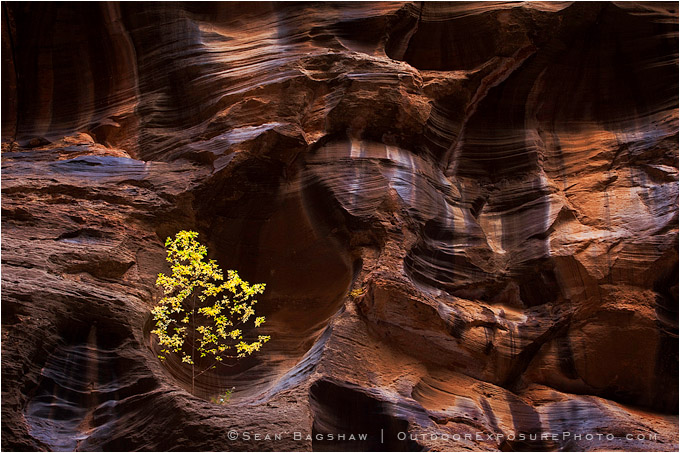
Story In Stone

My previous career was as a science teacher. When I left teaching to pursue photography full time I had some skill as a photographer (although looking back now it doesn’t seem like much), but I knew next to nothing about managing and owning a business, especially a photography business. Six years later can’t claim to be a great business mind, but I feel like I have learned from my trials and errors and so far my business is growing. I take that as a sign of luck, but also of getting some things right.

One of the most important things for anyone considering photography as a career is to be realistic about your goals. Do you want to make a little money from your photography to help pay for equipment and travel, or perhaps see one of your images published from time to time? Or do you intend for photography to be your soul source of income? I see a lot of people who treat photography like a hobby even though they wish it would generate income like a full time job. If your plan is to make a living, then you can’t approach it like something you do just for fun in your spare time.

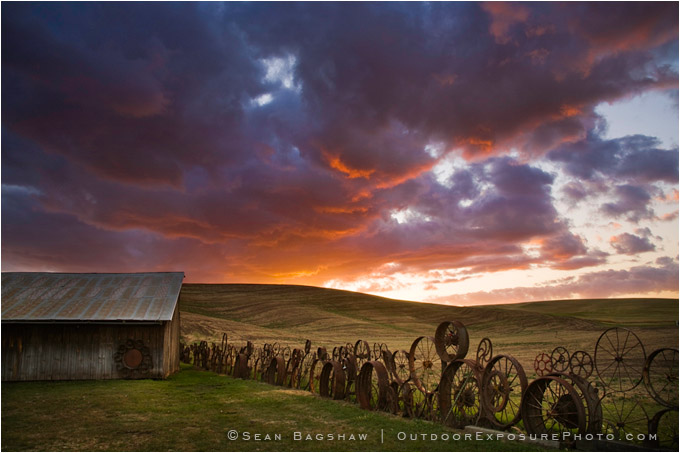
Forgotten

I haven’t necessarily built my photography career with perfect execution, but a few things have worked out pretty well. I wouldn’t say that my approach would work for everyone, but I think there have been a few things that have lead to me getting as far as I have. Take them for what they are worth.

  • I didn’t jump in without setting aside the time and financial means to build my business over several years.
      • Photography businesses like mine require many years to establish. My brother opened a bike shop and had customers from day one because he had a previous following from working in other bike shops, he had a physical storefront and he provides a needed service. When I started in photography I didn’t have any of these things.
      • Before I left my teaching career my wife and I developed a five year plan and made sure we had the financial means to both invest in the start of my company and sustain the family for that period of time. I didn’t know how long it would take to start seeing a profit from photography, but five years ended up being a pretty good gamble.
  • I constantly, honestly and critically assess the quality of my photography and compare it to what other top professionals are producing.
      • In the beginning I was too naive and uninformed, and I thought my photography was better than it was. Now I try to be brutally honest with myself.
      • I push myself to constantly improve and create work at the highest level. Over time I want to develop a style in my photography that will set my work apart from others.
      • I find it important to continually study the work of others, practice, learn, innovate, experiment, search for my vision, shake things up, and get criticized.
  • I put in a full day of work every day and maintain a strong and focused work ethic.
      • Being self employed was hard at first. I had to learn to organize my day and stay focused. It has been essential to set a strict work schedule for myself. Any illusions I had that self employed photographers work 4 hour days and take relaxing photography vacations quickly went away.
      • While I have more control over when I work, the total number of hours I work is greater than in any other job I have done. Fortunately I really like it.

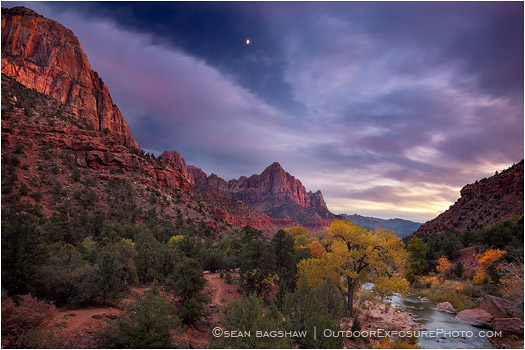
Zion Twilight Moon
  • I attempt to learn all that I can about doing business as an outdoor photographer.
      • I read everything I can get my hands on that pertains to being successful as a photographer. There are many books written on the topic, but I find blogs and forums often have the most relevant and current information.
      • I network with other outdoor photographers and we share ideas and information.
      • I go to conferences and do other professional development when I can.
      • My collaboration with with the other photographers on the Photo Cascadia team has been very valuable in exchanging professional insights.
  • I make as many connections as I can in my area of the business.
      • I submit my work to magazines, publishers, stock agencies, art consultants and photo buyers. I email, call, introduce, hand shake, visit, attend and network.
  • I look for multiple sources of revenue.
      • My original, sadly simplistic business plan was to sell ten $300 prints a month. That seemed like an easy way to make a $36,000 annual salary. However, that didn’t factor in expenses and overhead. It also didn’t take into account the fact that selling that many prints as a starting, unknown, marginally talented photographer proved to be far more difficult than I thought. Then, right as I began establishing myself and selling more prints, the economy tanked.
      • Now I have expanded my income sources. I bring in small portions of my overall income from print sales and stock licensing through my website, publishing in magazines, teaching workshops, architectural photography assignments, gallery sales, art consultant representation and stock agency representation. Posters, cards, calendars, books, iPhone apps and ebooks are other potential sources of income.

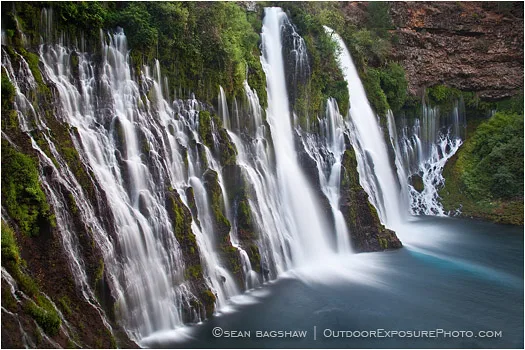
Burney Falls
  • I have invested a great deal of time and money in my website so that it has function, content and search engine visibility. My website is the main way people find my photography. I currently have between 3,000 and 5,000 monthly visits to my website. While that’s quite a bit more than the average photography portfolio site, I’d like to have 30,000 visits a month.
  • I have worked to develop a fan base and name recognition through a variety of means.
      • The advent of digital photography has allowed a vast number of people to become excellent photographers. There is so much great photography available that good photography alone won’t get you noticed. This is where a fan base, word of mouth and name recognition come in handy.
      • I spend a lot of time spreading the word through social media (blogging, Facebook, Twitter), press releases, branding, public exhibitions, contributing to online photography forums and speaking to groups and organizations. It all helps put my photography and my name in the eyes and minds of the public.
  • I share my time and knowledge. I like to share what I know and I owe a lot to people who shared their knowledge with me. Many doors have been opened by my willingness to share. I don’t have any secrets and I reply to every photography related email that comes in.
      • My blog, the Photo Cascadia blog, my Facebook page and Twtitter are places that I regularly share photographs, information, techniques and locations.
  • I place a high value on my work and charge what I think it is worth.
      • I have studied stock image pricing and negotiation as well as wholesale and retail fine art print pricing.
      • It is tempting to sell/license work for next to nothing just to get a sale, but once you set your standards and prices low, it is hard to raise them.
      • I consider my cost of doing business in determining my prices. It’s only a successful business if you can cover your expenses and salary.

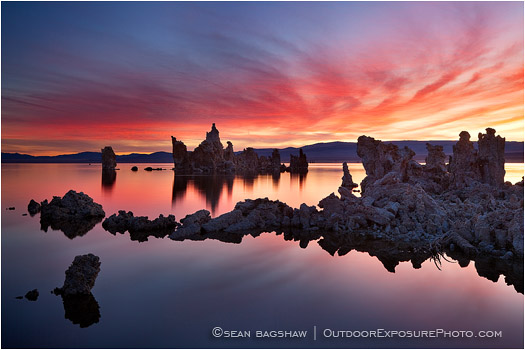
Dawn Fire At Mono Lake
  • I don’t take work that doesn’t help me toward my professional goals.
      • Early on I took any paying job that required a camera. Eventually I realized that unless I planned to make weddings, portraits, pets or sporting events the main focus of my photography business then taking jobs in those areas was only taking away from the time I needed to spend establishing myself as an outdoor photographer.
      • At this point all my focus goes into just two areas of photography: outdoor/travel and architecture…and I need to spend more time marketing my architectural photography if it is going to continue being profitable.

So, I don’t think I have shared any great discoveries here, just some things that have brought me to where I am. Hopefully there is something there that helps you, motivates you or brings you to the realization that photography is best left as fulfilling a hobby. I’ll keep working at my own business and in another six years I hope I can share a whole new list of things I have learned.

If you have questions or helpful ideas to add, feel free to leave a comment or send me your thoughts.

https://www.outdoorexposurephoto.com/photos/16742print_01_M.jpg

Filed Under: Photography Business Tagged With: Photography Business

Photo Cascadia Q&A

March 9, 2010 by Sean Bagshaw Leave a Comment

Last week a team of Pacific Northwest photographers, including myself, launched the website for and officially announced our group photography project called Photo Cascadia. The launch of Photo Cascadia was met with excitment and interest from friends, colleagues and the photography enthusiast community in general. If you missed it, you can read my previous post for the basic introduction to the Photo Cascadia team.

The launch of Photo Cascadia also generated some great discussion and several questions about the future plans of the group. Group founder, Adrian Klein, has posted answers to the most common questions about the group that we have recieved to date. Perhaps they are questions that are on your mind as well. Questions include:

  • There are few groups out there already that have collaborated on websites and other efforts in relation to Nature Photography.  What makes your team different and how was it started?
  • Why is the Photo Cascadia team all males? Where are the female photographers?
  • Does the Photo Cascadia team have Photo Cascadia specific workshops available?
  • How can I buy fine art prints of images I see in the Photo Cascadia galleries?
  • When will the Photo Cascadia team have additional products available for purchase such as calendars, books, cards, etc?

Read Adrian’s Q&A for answers to these questions and to submit any other questions you might have about Photo Cascadia.

Filed Under: Photography Business, Photography Journal, Uncategorized Tagged With: fine art photography, Photo Cascadia, Photography Workshops

Sharing Photography Via Social Networking

August 6, 2009 by Sean Bagshaw Leave a Comment

Sharing Photography Via Social Networking

Sean Bagshaw Photography on Facebook

Social networking is quickly surpassing more
traditional means of communicating and
sharing ideas and information on the web,
such as email and bulletin boards. In the
month since I started the official Sean
Bagshaw Photography
page on facebook the
number of fans (facebook’s term, not mine)
has grown to nearly 900 with members from every part of
the world. Facebook is an efficient way for
me to quickly share Outdoor Exposure Photography information, new
photos, photography tips and signed print
give-aways, much more efficient than my blog
or newsletters. Best of all, it provides a
platform for fans to participate by posting
their own thoughts, tips, questions and
photos.

Click here to follow my photography on facebook.

fbscreen

Twitter is a social networking site that I’m
just starting to experiment with. The idea
is that I can use twitter to post very short
dispatches from the field, photo tips of the
day and random thoughts from the day in the
life of an outdoor photographer.

Click here to follow me on Twitter.

Filed Under: Photography Business, Photography Journal Tagged With: follow a photographer, photographers on facebook, photographers on twitter, photography fans, sean bagshaw photography, social networking and photography, social networking marketing photography

Tips For Decorating An Office With Photography

August 4, 2009 by Sean Bagshaw 1 Comment

One of the groups of photo buyers that I market my photography to is professional and commercial office spaces such as law offices, medical clinics, dentists, banks, financial services, educational institutions and commercial buildings. The following are some helpful tips to consider when selecting photographs to decorate a professional office or commercial space.

  • Choosing a theme for a photography collection helps create continuity and flow. A theme might include a subject, such as mountain landscapes. It could also be a color palette, patterns, abstracts or something more conceptual, such as grandeur, grace or simplicity.

  • Simple, bold composition and abstracts can create a contemporary and sophisticated environment, while grand landscapes, colorful nature scenes and dramatic lighting provide a sense of place and visual intrigue while bringing the outdoors in. Intimate scenes, florals and close ups can provide a sense of peace and well being.

  • Arranging photos on the wall in groups can help break up a large space and allow groups of images to tell a visual story.
  • Wide mattes and frames create a neutral zone around the image that draws the eye inward toward the image and sets it apart from the wall. Narrower frames and mattes provide a window on the world feel and allow the image to speak for itself.
  • Colored walls and frame/matte combinations that bring out colors in the print or in the interior décor, help the photos stand out and help tie the room together.
  • Consider non traditional way of presenting photography. The current technology in photographic printing allows for a wide variety of print media and display options in addition to the traditional framed photographic print. Photos can now be printed on canvas, vinyl, fine art paper, linen, metal and transparent or translucent surfaces. Photographs can also be printed to wallpaper media and applied directly to the wall surface to create stunning and unique wall murals.

  • The Internet is an amazing resource for finding the right photography. Photographers are now able to market their work to a world wide audience through personal websites and on line photo agencies and forums. Photography buyers and collectors can easily access, browse and order prints right from their computers.

Filed Under: Photography Business Tagged With: decorate office with photography, fine art photography collection, how to decorate an office with photography, interior design and decor, tips for decorating with photography

Photography Collections for Commercial Offices

August 1, 2009 by Sean Bagshaw 1 Comment

Photography Collections for Commercial Offices

Distinctive contemporary professional office spaces including the lobbies of businesses , medical clinics, hospitals, law offices and financial services offices benefit from carefully planned interior design and décor. One hallmark of a well appointed office is original artwork. One way that high end professional and commercial offices put forward an image of sophistication, intellect and prosperity is by incorporating a collection of fine art within the interior design of their public spaces.

0400245-20060802

The right photography can very visually distinctive, and offer a wide range of choices in subject, color, style and mood. Landscape and nature images can also provide a powerful counterpoint to the urban office setting, bringing the outdoors in and helping to create a serene, peaceful atmosphere. The best part is that it is often possible to decorate an entire office with original, signed photography for the price of a single original painting from an established painter.

0400265-20060803

The office pictured in this blog was completely decorated with my images (www.OutdoorExposurePhoto.com) for less than $6,000 including framing. This cost would be what you could expect to pay for a single piece of art when considering other fine art forms.

0400296-20060803

Interior decorators, designers and art consultants can be a critical component in selecting, framing, hanging and lighting a fine art photography collection so that it has the intended visual impact and properly compliments the rest of the interior design. In addition, they will often have contacts with top photographers and will be able to provide samples of high quality imagery.

Filed Under: Photography Business Tagged With: affordable, art consultant, bringing the outdoors in, commercial office space, cost effective, create a serene peaceful atmosphere, distinctive photography, interior decorating, interior design, interior designer, law offices, medical clinics

Outdoor Exposure iPhone App

April 1, 2009 by Sean Bagshaw 5 Comments

Outdoor Exposure iPhone App

Outdoor Exposure for iEnvision iPhone app

While a fine art photographic print is still my favorite way to enjoy great photography, technology is rapidly changing the ways it is possible to view, access and share art. The images that move and excite us no longer have to be confined to a wall or the pages of a book. I love to share my photographs and want people to be able to access them in a way that best suits their needs and purpose. A large fine art print will always be available to those who have the resources and space, but size, cost and location are no longer limiting factors to accessing photography and other visual art.

The iPhone is one of the most innovative pieces of technology to recently come on the scene. It can be very valuable as a tool for communication and storing and accessing information, but it also has great potential in entertainment, education and access to media and imagry, includinig art.

iPhone app graphic

I recently partnered with the folks at Open Door Network in creating an iPhone application of my photography. The application is like a collection of slide shows that allow iPhone users to have a portable art gallery of my photographs right in their pockets. Photographs in the Outdoor Exposure for iEnvision app are organized into three collections including Landscape, Nature and Travel. Landscape includes photos of canyons, deserts, forest, lakes, mountains, oceans, streams and waterfalls. Nature displays abstracts, fall color, flowers, trees and winter. Travel takes you to Hawaii, Mexico and Nepal.

iPhone app graphic

In addition to viewing the gallery shows, the images can also be saved for use as iPhone wallpaper and each image links to the Outdoor Exposure Photography website for more information.

iPhone app graphic

Open Door Network’s flagship iEnvision web image browser, as well as their line of Envi iPhone image applications access and organize images from the Web into fun to view and share slide shows for the iPhone. Other iEnvision “Envi” apps include Art, Earth, Space, Mountain and Yosemite.

Filed Under: Past Events, Photography Business Tagged With: app, Apple, application, fine art photography, iPhone, iPhone slide show, iPhone wall paper app, iTunes Store, outdoor exposure photography, photo, photography, photography on the iPhone, photos, sean bagshaw, slide show, southern oregon photographer

Presentation: Climbing Denali

March 2, 2009 by Sean Bagshaw 3 Comments

Presentation: Climbing Denali

denali
Gripped perpetually by subfreezing temperatures and cloaked by five massive glaciers, the world famous mountain known as Denali (“the Great One”) beckons intrepid mountaineers from around the world. With a summit peak that is 20,320 feet above sea level, Denali (also known as Mount McKinley) is the highest peak in North America. An aspect that is painfully evident to climbers is that the peak rises 18,000 feet from its base (which is 6,000 feet more than Everest rises above its base, the Tibetan Plateau). There is also a higher risk of altitude illness for climbers than its altitude would otherwise suggest, due to its high latitude. It all adds up to a long and merciless climb to reach the summit, where climbers can encounter temperatures as low as -100 degrees below freezing.

So, you might ask, “What’s the big attraction?” I’ll be answering that questions and others as I present my multi-media program, “Above The Shadow Lands“ on Wednesday evening, March 4th, at The Stage Door Coffee House in Mt. Shasta. The presentation will focus on the story of my second ascent of the mountain in 2005.

walk-in-the-clouds

In 1998 I climbed Denali as part of a six person team. It was a great adventure, but we had a few difficulties. The size of the group was a challenge and the weather kept us on the mountain for three weeks. In 2005 I went back with my climbing partner, Brock. Better conditions, more experience and an efficient two person team made for smoother ascent. However, I still almost didn’t make it.

Climbing Denali is one of the hardest things I have ever done twice. The route we climbed isn’t particularly technical and I’m not a great climber. However, the mountain is big and cold. Setting the goal and then preparing for and experiencing everything it takes to live, survive and reach the summit in that harsh environment made it an enormously powerful and rewarding experience…both times.

This program is presented by the Mt. Shasta Trail Association. Admission is by donation at the door, and guests are encouraged to have dinner at The Stage Door previous to the program.

Stage Door Coffee House, 414 N. Mt. Shasta Blvd.
Wednesday evening, March 4th, 7pm.
More information: 926-5966

Filed Under: Past Events, Photography Business Tagged With: adventure, Alaska, climb, climbing, Climbing Denali, Climbing Mt. McKinley, mountaineering, Mt. Shasta Trail Association, multi media presentation, photography, sean bagshaw, southern oregon photographer

Recent Developments For Outdoor Exposure Photography

March 11, 2008 by Sean Bagshaw Leave a Comment

Recent Developments For Outdoor Exposure Photography
The Northwest Magazine Cover

Over recent months there have been some new developments for Outdoor Exposure Photography that are worth sharing. A new lifestyle magazine called Northwest, which is being distributed in 15 States through Barnes and Noble and Borders Book Stores, has begun publishing many of my images, including the cover of the upcoming issue. Photo Researchers, a large stock photography agency in New York, is now representing my photography and marketing it to publishers across the US and in 35 other countries. I am also being represented by a new art consultancy out of Colorado called Western Photo Gallery which sells fine art prints to corporate clients. BetterPhoto.com is the premier website for online photography courses and critiques from top professionals. Their monthly photo contests receive as many as 40,000 entries and their newsletter goes out to over 25,000 individuals. Several of my photos have recently been recognized by BetterPhoto including two second place awards and two photo of the day features.

Filed Under: Past Events, Photography Business

Inkjet Printer vs. Print Lab

March 7, 2008 by Sean Bagshaw 2 Comments

I recently went through a significant change in the way I have my photos printed. For about 7 years I produced all my own prints using ink jet printers. First a Canon and then an Epson Stylus PRO 7600 with Ultrachrome ink. I loved that I could be in control of the entire process, print on demand and easily print test proofs. I also thought it was the most cost effective way of printing and that the quality was on par with any print lab.

Within the last year I have had a change of perspective and have now switched over to using a professional print lab to produce all my prints. Two factors contributed to my switch. First, as my 7600 got a couple of years under its belt, combined with the fact that I sometimes go for a couple weeks without printing anything, it began to have issues with ink nozzles clogging, creating banding in my prints. I would then need to spend as much as two hours running the cleaning cycle to clear the nozzles. The time lost, as well as the cost in wasted paper and ink, became a source of stress and frustration. Admittedly, I have many photographer friends who properly maintain their printers and don’t suffer similar issues.

The second factor was my discovery that when printing on coated, non-absorbent papers (referred to as RC papers), such as glossy or semi-gloss, solvents in the inks are not absorbed by the paper and instead evaporate over time. When such a print is framed, the evaporating solvent condenses on the inside of the glass leaving a visible foggy residue. The issue is widely commented on in web forums and the offered solutions include waiting several weeks to frame prints, or to layer newsprint between prints and stack books on them for 48 hours to draw out the solvent. I didn’t have any luck with the newsprint approach, and some other prints that I let cure for a month and a half still fogged the glass when framed. To read an article specifically about the fogging problem click HERE. Much more can be found with a quick Internet search.
The combination of the two problems drove me crazy enough that I began having West Coast Imaging produce all my prints. They aren’t cheap, but the quality is amazing and they deal with maintaining the equipment and stocking paper and ink. Since the evaporation issue isn’t a problem with canvas and fine art papers, I have them print these with their Epson ink jet printer. For all my glossy and semi-gloss prints, I have them use their Chromira printer, which uses traditional chemistry based “wet” printing. In the end, I think that wet printing on glossy paper give superior results in color and contrast and it eliminates the strange reflections created by different ink densities when viewing ink jet prints at an angle. In addition, I like the selection of papers, such as Fuji Crystal Archive and FujiFlex super gloss, that are available with Chromira prints. Most importantly, the prints can be framed right away and don’t leave any residue on glass.

I still think that ink jet printers offer great color and quality and a lot of control and convenience for amateur and professional photographers alike, as long as one has the time and patience to maintain them and the evaporating solvent issue isn’t a concern. If you know anyone who wants to buy a 7600, mine is available for a really good price. I’ll probably get a 13″ ink jet for test prints and printing cards and small prints on matte papers.

Filed Under: Digital Photography Tips, Photography Business, Photography Equipment

Questions About The Photo Biz: Part 2

March 6, 2008 by Sean Bagshaw Leave a Comment

Q: How would you advise a budding photographer such as myself or classmates to begin marketing themselves? And how do you market yourself now if different than before?

A: A lot of marketing depends on the type of photography you plan to specialize in. Portrait and wedding work is a very different business from commercial photography or photo journalism and they all require different approaches. Landscape, nature and travel photography like I do is different again. I can’t speak too specifically about portrait, commercial and journalistic photography, but there are tons of good websites, books and seminars out there. Portrait and commercial photography probably have the greatest potential to make money.

My goal is to work for myself, shoot what I want to shoot on my own schedule and then find markets for the images I create. At this time, my main markets are art collectors, corporate art collections, print media (magazines, calendars, cards, posters, etc.), advertising and web design. For students interested in this type of photography, word of mouth and name recognition is huge. Developing a web presence is critical these days by building a professional web site, blogging, posting on photo forums, and entering contests on a regular basis. I also keep a growing email client list and send out regular email newsletters. At the student level, this is also a good time to begin making contacts in the industry and getting to know publishers, gallery owners, seasoned photographers, art consultants and so on. Assisting an established photographer or working for a publisher can give a good idea of how the system works. Getting your work out in public is another key factor. Look for contests, community art shows, restaurants, banks, galleries, art fairs, offices and any place else that shows photos to the public. Don’t count on selling a lot of work early on in these venues, but look at it as good exposure, a chance to meet people, share your ideas, get reactions from the public (wear your thick skin), see what others are doing, learn how to develop a first class way of presenting and try to stir up some buzz around your name.

I’m at the point where I also give presentations to groups, send out postcards to potential photo buyers, submit images to magazines and publishers and work with galleries, art consultants and stock agencies that help to market me and get me out to even broader audiences. It takes time and constant work to build this all up. I’m not sure I’m doing much different now than before, I just keep adding new branches to my strategy, improving my approach and broadening my reach.

Q: Have you dealt with stock photo companies at all? If so what are your thoughts on them?

A: I work with a couple of stock agencies that represent my work. There are many dedicated stock photographers who make a good living. To succeed solely as a stock photographer, you have to be willing to shoot any subject that there is a need for (puppies, babies, medical equipment), have an understanding of the elements of what makes a valuable stock image and produce huge quantities of work every month. There is an old adage that says you can expect your stock sales to average out to $1 per image per year. That means to make $30,000 a year you need to have 30,000 images on file and being actively marketed, and those images need to be constantly added to and updated.

That being said, I know that I can’t produce enough quantity, nor am I willing to shoot things I’m not interested in, to support myself strictly on stock. However, I have an ever growing collection of images that I might as well have available for licensing as one of my sources of income. I license stock through my own website and with two other agencies that market to different types of clients. Some agencies will want you to sign an exclusive contract that doesn’t allow you to work with anyone else. Almost all stock agencies will want exclusive rights to market the specific images you submit to them for a period of a few years.

It is important to find the right fit when deciding how to represent your stock. Self representation gives you the most control and the most profit, but it is hard to have the kind of reach and connections that an agency does. The right agency can get your photos out to a much bigger audience, but of course they take a cut.

The big thing to watch out for is the new trend of stock agencies on the web that will take pretty much anyone and all you need to do to be represented is pay a monthly or yearly fee for hosting your gallery. Such outfits don’t actually care if they sell a single image since their income comes from the fees and the more photographers they get to join, the more they make without the need to sell anything. Agencies that only get paid when they sell images have a much bigger incentive to bring in good photographers, aggressively market your images and actively search out and stay in contact with reliable photo buyers. Avoid any stock agency that wants you to pay them a fee to represent you.

Q: As far as your intent goes when it comes to taking photo’s do you have a client or market in mind when you shoot a photo? Or do you seek potential clients after you have the images?

A: I do some of both. I really like to shoot for myself and chase my personal vision, but I also go after specific shots if I think there is a market for them. However, I do this all within the framework of my style of landscape, nature and travel photography. I have never set up a studio shoot, or hired models to create photos that I thought would sell. However, when I’m out shooting the landscape, I will also look for compositions that include roads in them because I work with an agency that provides backdrops for computer generated car ads. Normally I would rarely include a road in my photos. I also try to shoot some of my images composed in a way that would allow for text to be added or to be conducive to fitting in an ad layout. I also do assignment work from time to time, where I’m hired to create specific photos. This is when I most often end up shooting something I wouldn’t otherwise, such as furniture, architecture, cars and people.

Q: What would you have done differently (in regards to your photography career), knowing what you do now?

A: If I could start all over I would get into it as a career much earlier, when I was still single, so that I could have moved around, taken a variety of types of jobs, spent time on the road, lived on a modest income and spent more time being in the main flow of the industry. I also would have looked for some formal education in running a business instead of learning it the hard way. On the other hand, I think starting out later like I did I’m much more confident, focused, mature and world wise than I would have been starting out in my early 20’s, so perhaps I’m doing it right.

Filed Under: Photography Business, Photography Journal

Questions About The Photo Biz: Part 1

March 4, 2008 by Sean Bagshaw Leave a Comment

Preston, an aspiring photographer and photography student at U of O recently had some questions for me to help him in preparation for a class presentation. Below is the first part of our Q & A. Part two is to follow.

Q: Is your photography your main source of income? If not what is?
A: Photography is my main source of income, but let me qualify that a bit. First off, I didn’t leave teaching and go full time photographer until I had the financial resources to support myself while I built my business. I gave myself 5 years to replace my teacher’s salary. I’m coming up on year 4 as a full time photog. I’m optimistic that I’m going to get there. Also, I have a very understanding and supportive wife who has been the major source of family income over the last 3 1/2 years. I couldn’t do this without her. On the other hand, I started this career after I was already married, had house payments and two kids. Without those responsibilities I would be more free to invest time and money in my business without the pressure to turn a substantial profit right away.I don’t think that the kind of photography that I do and the way that I do it is a get rich quick kind of a career move, but I’m confident that it will continue to grow. Most outdoor photographers I know who are well established have been in the business for 20-30 years and even then, most of them aren’t wealthy…but job satisfaction is high.

Q: Where in your travels, is your favorite place to photograph?

A: I have a real connection to the mountainous regions of the world. The Himalayas certainly tops my list, but getting there and spending enough time to do the region justice is difficult and cost/time prohibitive for me at this stage. I also love the American West, especially the southwest. However, this is an area that is largely over-photographed in my mind. I want to take photos that are fresh and different. As I evolve as a photographer, I’m finding that my favorite work comes from the Pacific Northwest where I live and have a lifetime of knowledge and experience. I think my familiarity and proximity to the northwest allows me to make much more personal, nuanced and original images than anywhere else.

Q: How did you first start shooting professionally?

A: In the late 1980’s and into the 1990’s I started doing a bit of adventure travel and participating in climbing expeditions. I was the guy willing to get up for the sunrise, hike ahead to get a photo, carry the extra equipment and deal with taking pictures when no one else wanted to, so I was usually elected to be the team photographer. Since I was the guy with the photos, by default I was also the guy who would present slide shows of the climbs and provide photos for newspaper articles and the like. Every once in a while I would get lucky and take a photo that was more than just a record of what we were doing…something nice to look at. I began trying to take photos that had some sort of artistic or dramatic element to them. Around that same time I became aware of Galen Rowell, first as a climber and then as a photographer. I was greatly inspired that he was able to create such powerful artistic images of the places, people and landscapes he visited and also realized that photography was actually a real career. By that time I had already started my career as a science teacher, but I began to read up on photography techniques and teach myself how to be a better photographer. My trips slowly shifted from being all about climbing to being all about photography. About 8 years ago I built my first web site, printed some business cards that said “Photographer” on them and began selling a few of my best shots in my spare time for about $20 each. Looking back, they probably weren’t worth that much. It was a fun hobby and I always wanted to have more time to devote to it. After my second son was born about 4 1/2 years ago I found it difficult to be as good a teacher as I had been and as good a father as I wanted to be. That’s when I made the decision to “take the plunge”, as they say, and try to make my part time hobby a full time career.

Q: Who inspires you professionally?

A: As I said above, and like so many others, Galen Rowell was the first big influence on me. Artistically I am very excited by the work of William Niel, Michael Kenna, David Lorenz Winston, Art Wolf, Frans Lanting and John Wimberly to name a few. Professionally I see people like Art Wolf, Tom Till, George Lepp, Frans Lanting and Tom Mangleson as being masters of marketing and getting their work known by the public. There are also some young, high energy photographers from Oregon who are really breaking boundaries and setting new standards in outdoor photography right now. Marc Adamus and Zack Schnepf are two of my favorites.

Q: What has been your greatest career accomplishment so far?

A: Wow, that’s a hard one to answer. Every time I sell or publish a photo, or get acknowledged in a competition I feel validation as a photographer. For me, however, when I feel I have created something new, better and different, or reached a new level of knowledge and skill as an artist, that feels like my greatest accomplishment. It’s really a personal thing, but if it leads to generating income or public interest in my work, then that’s a bonus.

Q: What has been your biggest struggle in your career?

A: The biggest struggle in my career has probably been my lack of training and skill as an entrepreneur and business owner. That, combined with the fact that I live in an area that is off the beaten path of the photography industry have made it a real challenge for me to make the right contacts and know how to sell myself and my work. Those pieces have been more time consuming and challenging than the photography.

Filed Under: Photography Business, Photography Journal

Sean Bagshaw Photography Screensavers

March 1, 2008 by Sean Bagshaw Leave a Comment

Sean Bagshaw Photography Screensavers
Rogue Valley Screensaver

One of the things I enjoy most about being a photographer is sharing my images, vision and experiences with others, and I’m always looking for ways to make my photography accessible. Fine art prints are a great way to experience the full impact of my work, but books, posters, cards, slide shows and even my website are other ways that I have been able to share my photos publicly. For quite a while I have wanted to offer sceensavers featuring collections of my images because it is an inexpensive way for people to acquire a collection of my work, but I didn’t have a good way to create screensavers files.

I’m excited to say that I have found a solution to that problem. A software application I recently discovered, called Pictures to EXE, allows me to create stand alone screensaver files that can be delivered via email and easily installed in the Windows screensaver menu. Each screensaver can also be run as a slide show, independent of the screensaver mode.

landscape and nature screensaver

At this time I have completed two screensaver collections, which are available HERE. The Landscape and Nature screensaver features 30 of my most dramatic and well known outdoor images. The Rogue Valley screensaver is a collection of 30 iconic images from around the Rogue Valley which is my home.

In the future I will be adding additional screensaver collections with themes like Winter, Mountains, Adventure and Water. The images in my screensavers have been optimized for viewing on a computer monitor and have amazing color, sharpness and contrast.

The screensavers are safe and easy to use on any Windows based PC computer. They arrive as an email attachment which you save on your hard drive. Once saved, right click on the file and select “Install” and it will be added to your screensaver menu. By double clicking on the screensaver file it can also be viewed as a slide show independent of the screensaver mode.

Unfortunately, the screensaver file format created by Pictures to EXE is not supported by the Mac operating system, so my screen savers are only available to PC users at this time.

Filed Under: Past Events, Photography Business, Photography Journal

Photography Business FAQ's

December 4, 2007 by Sean Bagshaw 2 Comments

Even though I consider myself a newcomer in professional photography, a career in which it can take decades to become established, I often receive inquiries about the business from photography students and amatures who are interested in going pro. I recently answered a series of questions from a photography student that I thought represented the type information that people are usually interested in. I have posted those questions and my responses here in the hopes that others might find them useful.
1. Please tell me about yourself and your business.
My name is Sean Bagshaw and I live in southern Oregon with my family. I was a science teacher for 12 years and did a fair amount of traveling, adventuring and shooting photos as a hobby. The more I got into photography the more I started looking at it as a potential career. About four years ago I found myself in a position to leave teaching and start a full time photography business. I’m still a beginner in the pro photography world, but I work hard and I’m encouraged by the growth of my business. Right now my income comes from range of sources: print sales through my website, stock image licensing, gallery sales and assignment work. Most of my work is landscape, nature and travel based, but I also do some commercial architecture photography. I tried doing some portrait work for a while, but it isn’t my bag.

2. What was your greatest challenge in starting your business?
Pretty much everything. I’m a self-taught photographer and I have no prior experience in running a business. I am learning everything, step by step as I go. Living in a rural area I don’t have easy access to the resources and markets that I might living in a bigger city. I also don’t have large amount of money to invest in my business (marketing, equipment, inventory, etc.) so I do it in small steps and pay as I go. Perhaps the biggest obstacle was getting to a place financially where I could quit my teaching job and spend a few years building the photography business while still supporting the family.

3. Is there any particular method you recommend for obtaining and keeping clients?
To obtain clients I get the word out in every way I can…public art shows, galleries, giving presentations and talks, direct mail, blogging, photography forums, creating a high profile web site and so on. Word of mouth takes a while to get going, but with the right effort it eventually starts to build. To keep clients I try to be a true professional, provide top service, follow through on my word and back up my work with an unconditional guarantee.

4. What marketing/promotional strategies work best for you?
My web site, direct mail and word of mouth have done best for me, as well as making direct inquiries to establishments who might publish my work.

5. What is the competition like in your geographic area you operate your business in?
For the type of photography that I do, I live in a pretty good spot. There are not a lot of other photographers taking the types of photos I do in the southern Oregon area, although there are loads of portrait photographers. When I go to Colorado or Utah I find myself side by side with many other photographers. Around here, I rarely run across someone else. As a result, I have photos that not everyone has.

6. What advice do you have for a student photographer desiring to enter the business?
Learn everything you can about the business end of being a photographer, make as many contacts in the industry as you can and be prepared to spend several years to become established. For most of us this is a long term project, not a get rich quick affair. If you are single and not tied to a location or needing to provide income for a house and a family, take advantage of the opportunity to experiment, explore, work for established photographers, take far flung assignments, hone your skills, develop your style and immerse yourself in your work. Doing it the way I did, starting at 36 years old with a wife, kids and a house, had some advantages in the areas of wisdom, life experience and work ethic, but many opportunities were not available to me. I didn’t have the luxury to be able to move around, take big risks, live on a minimal income or devote myself to the work and nothing else.

7. Name the top three threats to your business that exist today.
I’m not sure that I could identify threats other than general competition and the basic challenges of getting a business off the ground. I know that some more established photographers who are used to doing business a certain way are struggling to keep up with changes, such as stock licensing practices, internet marketing, digital technology and the proliferation of people trying to break into the business. Since I’m one of the ones breaking in, it all seems par for the course.

8. Do you ever use assistants or interns?
I haven’t, but that time is coming as my business grows. However, with the type of photography that I do, I’m more likely to need an office manager or marketing agent than an assistant.

Filed Under: Photography Business

Overcoming Public Perception In The Digital Photography Age

October 24, 2007 by Sean Bagshaw Leave a Comment

Overcoming Public Perception In The Digital Photography Age

In a recent discussion with a friend of mine who owns an art gallery, and is herself a photographer, she confided that she finds it much more difficult to sell photography to collectors than other types of art. I attribute this phenomenon, in part, to photography’s history as a documentary tool and, in part, to the public perception that it is a product of technology, not a skill of the body and mind. Now that cameras are ubiquitous, there may also be the impression that, while not everyone can paint or sculpt, anyone can take a photograph.
In the last decade digital technology has completely revolutionized photography, not only making it possible for more people to easily and economically shoot, print and electronically share images, but also for art photographers to access a whole range of creative tools that were previously expensive, required specialized equipment or were not even possible. And yet, the new creative possibilities seem to have only decreased photography’s artistic value in the eye of some of the public. In fact, digital photography may now fall into a new category in the public view that is separate from and, for some people, lesser than, traditional film photography.

Through my own experience and conversations with professional art photographers and gallery owners, I have noticed a perspective that troubles me. With increasing regularity, people confronted with a stunning photograph that they clearly find engaging and pleasing are compelled to ask if it is a digital image, and if so, what’s been done to it. The general perception that seems to be emerging is that film photographs are more valuable as art than digital photographs. Additionally, digital photographs that have been digitally processed in any way often are given the least artistic value despite the fact that nearly all digital images are processed to some extent either in the camera or later on. I attribute this attitude, once again, to the technology involved and the access the general public has to it. Film photography is now seen as something a bit more archaic and requiring a set of skills not readily available to just anyone, while digital photography can be done by anyone with a cell phone camera. In addition, some would think that since digital processing or enhancing an image requires even more technology, it therefore requires less skill. With the use of Photoshop, people perceive that anyone willing to spend the time on a computer can turn any digital snap shot into a work of art. I also sense that the viewing public is wary of digitally processed images because of the potential to add, remove, drastically alter or completely fabricate the content of an image. It is accepted that a painting is simply a portrayal of the artist’s vision and not necessarily reality. In many styles of abstract painting the artist is intentionally trying to get away from reality. However, people tend to want their photography to be “real”, although real is very hard to define in any visual medium.

Computer technology certainly has enhanced the ability to do all sorts of interesting things, combining components of various images, adding textures, modifying colors and even entirely and virtually generating an image. However, even though I greatly admire and appreciate this as a completely valid art form, I’m inclined to call this type of art photo illustration or digital illustration, not pure photography. The knowledge that such manipulations are possible may partly be to blame for the public’s paranoia that any visually captivating digital image must have been created in this way. However, I strongly believe that digital photography that doesn’t require these techniques is equal to traditional photography.
I would like to think that with some education, the art viewing public can learn to have a much greater appreciation for the techniques, skill, craft, creativity and mastery required to produce fine photography, whether it is film or digital. Like painters, true photography masters spend years developing their eye, style and technique and they both have the goal of creating an image that communicates an idea or emotion, defines an element of design or embodies the personal vision of a scene. Photographers, like painters, use a variety of tools and techniques to best achieve this goal. Some of these are done in the camera at the time the photo is taken, while others are performed later in the process, but all require a level of competence and ability not possessed by the unpracticed. Many photographers spend days, weeks or years waiting for the right combination of elements to come together in a photograph, and even the masters may only be able to create a few truly great photos in their career.

The public does appear to accept the darkroom processing of black and white film, even though the skill isn’t necessarily understood or properly appreciated. I have yet to hear someone ask, “how has this been altered”, or “is that what the scene really looked like” in regard to a black and white darkroom print, but these are the most common questions asked of digital photos. However, a great black and white photo wouldn’t be nearly as great without superb darkroom skills and creative techniques. Ansel Adams is an obvious and overused example, but many people don’t realize just how much time he spent working on each of his famous images in the darkroom to get them to convey his vision the way he intended. Earlier in his career he was often frustrated by the lack of skill and technology needed to create a print that matched his vision. Much later he went back and remastered many images using new techniques and improved skill. I attended a show of his work that exhibited some of his original prints side by side with the remastered ones. There was no doubt in my mind that the latter photos were better and I didn’t hear anyone complaining that the remastered images were products of technology, not a sign of his matured mastery.

digital before
digital after

I would like to see digital processing achieve the same level of acceptance and respect as darkroom processing and for fine digital photography to rise above its “anyone with a camera could do that” reputation. I spend a lot of time carefully composing what I hope are visually captivating images, searching out exquisite light and using my knowledge of the physics of photography to get as much quality and detail from my equipment as possible. However, similar to a great black and white film print, the job is not done when I press the button. A digital sensor does not see in the way a human does, with mental filters of emotion, perception, context and experience. A raw digital image can be very flat and lifeless. Not unlike the traditional photographer, nearly every image I take requires some degree of processing using software, such as Photoshop, in my computer or “digital darkroom”. My goal is to get each image to adequately express my personal vision. Four different photographers will create four different photographs from the same location and time. This is partly due to where they decide to point the camera, but it is also due to the fact that each one of them experiences the scene differently depending on mood, perception, personality and prior experience. The digital darkroom is one of the most important tools for bringing out this individual and personal vision.

Unless I’m intentionally trying to create a photo illustration or composite, I do not alter or significantly manipulate the content of a photo. I do, however, regularly use technique and craft to adjust the contrast, correct the color, enhance or tone down saturation and vary luminosity in my images. These are very painstaking steps in the processing of an image in an attempt to bring out what I saw, felt and experienced at the time I took it. Some images require only a few seconds of my time to bring them to this state, while others I work on and struggle with for hours or days. Some images never achieve what I had hoped. Like Ansel Adams, as I learn new techniques or get better at old ones, I often go back and rework images in the hopes of making them better. My purpose is rarely to deceive or mislead (unless it is inherent in the natural composition or light), but rather to create and enlighten. The processes that I use are not a short cut and they are not an example of technology doing the work. Like a painter, or a film photographer, I use tools, as well as long practiced skills and techniques to achieve my intended final piece. Photoshop is a critical and necessary tool.

It may just be a matter of time, but my hope is that one day digital photography will be respected for the skill ,craft and mastery required to do it well in the same way that fine art film photography and other forms of art are. I look forward to a time when a digitial photo is appreciated for its content and the skill involved in creating it instead of questioned suspiciously, as if the photographer had somehow faked his ability to create something pleasing, engaging, controverial or interesting to look at and enjoy.

Filed Under: Digital Image Editing Tips, Photography Business, Photography Journal

Thoughts On Developing My Photography Website

October 19, 2007 by Sean Bagshaw 1 Comment

The following is my response to a photographer friend from the UK who had some questions about photography website development. I thought my reply might be of help or interest to others so I have posted it here.

David,
Pertaining to your questions about my website, it has been a constant process of evolution over the past four or five years and it will be something I will work on my entire career, I suspect. I don’t have the money and time required to make it exactly what I envision all at once, either functionally or aesthetically, but it is slowly getting there in small increments.

I am currently getting about 6,000 to 9,000 visits per month, but it has taken me three years to get to that. Up until this time last year I was getting less than 1,000 visits per month. My goal is to get 20,000 to 40,000 visits per month eventually. My web designer and I have been implementing several different strategies. The large number of pages that are interlinked is one way. Large sites with a complex link structure and consistently new content look more important to search engines and get ranked higher. I have also done a careful job of placing key wording and metatags in various strategic places. My blog has also done a lot to increase traffic to my site. Most of it isn’t necessarily photo buyers, but at least it is creating exposure, reputation and name recognition. I also send out an email newsletter about once a month to an ever growing mailing list (up to about 600 people now).

I have also added some pages specifically for the purpose of attracting specific searches. For example, search engines were cataloging my site as an image or picture site, but not a photographer site. So, in searches for “southern Oregon photos” or “southern Oregon images” I would come up near the top, but if you searched for “southern Oregon photographer” then I was nowhere to be found. We added a random page with information about me as a photographer, where I photograph and what photography services I provide and linked it to every image in my site related to the southern Oregon region. Now when people search for a photographer in our region, my site comes up much closer to the top.

Initially, to create a large and complex page structure for my site I added tons of images, even ones that I felt were slightly sub-par. As my photography and reputation has grown, I have been slowly removing lesser images and replacing them with better ones. As I did this I realized that my website was shrinking instead of growing. This is where the idea for the stock archives came in. By creating a separate stock section I can now add tons of images that are fine for stock, but not up to the standard of “art”. I can now be much more selective about which images I place in “Signed Art” while still growing my site rapidly with “Stock”. I am just completing another round of removing about 50 lesser images from Signed Art, while adding only a few new ones, but my stock section always grows.

As I said, the main reason for adding the stock section was to increase site content, link structure and site relevance, but a side benefit has been that I now get a modest amount of stock image requests. I am by no means a stock shooter, which is why I have not pursued any of the large stock agencies like Almay. With tens of millions of images in these agencies, a stock shooter has to be producing thousands of new images a month and be willing to shoot whatever is selling in order to make a living. At one point the formula was that a good stock shooter could make an average of $1 per stock image per year. So, to make $30,000, 30,000 stock images would need to be on file and constantly updated. Now, with all the royalty free stock, it is probably far more than that. I’m not interested in going that route. Instead, my stock is targeted at a very narrow population, but one which often has difficulty finding the specific images that I have. Specifically, most of the images I license are of the local Pacific Northwest region and I license them to local or regional businesses and publishers. Even on a big site like Almay it is hard to find a good quality image of the city of Ashland or the Rogue River, so they end up finding my site and coming to me. So, the stock is a way to make my site more relevant to search engines, and it also gets me some extra income. At this point I probably license about $2,000 to $5,000 per year. As my business grows I hope that will increase.

The reason I am negotiating each stock image separately is because I haven’t been able to afford to have an automated system built for me, but hopefully that will be coming. Ideally I would make most of my images royalty free and then users could download them directly from my site. The price would be determined by the resolution and size of the image file. There may also be third party software that I could use for this for not much expense, but I haven’t had time to research it too much yet. I try to curb the time I spend working on the computer so that I remain a photographer and don’t accidentally become a web programmer.

Hope that info helps. I’m sure there are better ways of going about all this, but I just keep forging ahead without much of a blueprint. For me it is fun to experiment and see what happens. I’m in this for the long haul, so I don’t mind seeing things slowly grow and making lots of mistakes. I’m steadily becoming more known and more and more people are familiar with my work. It will be fun to see where I am in ten or twenty years.

Filed Under: Photography Business

© 2026 · Sean Bagshaw Outdoor Exposure Photography