
Sean Bagshaw Outdoor Exposure Photography

Images from the edge

See all image results...

Search Criteria
Exact matches only
Search in title
Search in content
Content Type
Select all
Search Posts
Search Prints & Stock Photos
Search Events
Search Pages
  • About
    • Sean’s Biography
    • A Look Through My Lens
    • Social Media
    • Alliances
    • Sign Up For My Newsletter
    • Website Tour
    • Interviews And Podcasts
    • CV
  • Tutorials & TK Photoshop Plugins
  • Learn Nature Photography
  • Videos From My YouTube Channel
  • Signed Prints
    • Favorites Of 2023
    • OREGON
    • CANYONS AND RIVERS
    • CITYSCAPES
    • COASTAL
    • DESERTS AND PRAIRIES
    • FLOWERS AND PLANTS
    • FORESTS AND TREES
    • MOUNTAINS AND LAKES
    • NATIONAL PARKS
    • STREAMS AND WATERFALLS
  • PRINT OPTIONS
  • Stock Photography
    • OREGON
    • NORTH AMERICA
    • THE REST OF THE WORLD
    • AGRICULTURE AND VINEYARD
    • BUILT BY PEOPLE
    • NATURAL BEAUTY
    • OUTDOOR AND ADVENTURE
  • Books & Calendars
    • Calendars
    • Washington Evergreen
    • Oregon, My Oregon
    • Photographing Through The Seasons
  • Workshops
  • Events
  • Photography Blog
  • Contact
  •  

On Landscape Photography, Digital Image Developing and Artistic Expression

February 28, 2011 by Sean Bagshaw 4 Comments

On Landscape Photography, Digital Image Developing and Artistic Expression

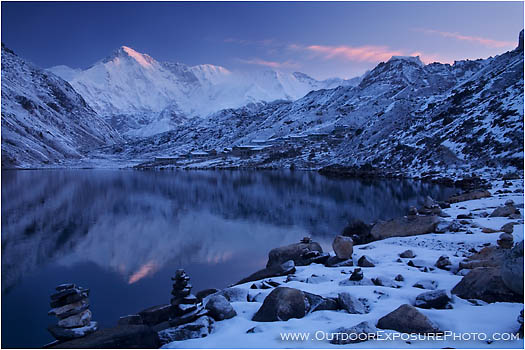
One of the mindsets that guides my photography is that the human eye and the camera don’t experience the world in the same way. Photographs are more limited than human sight in many ways, but can also see in ways that we can not. It is my goal to understand what the camera sees so I can manipulate and coax it to capture a photograph that reconciles with my own view of the landscape. To some this goes against tradition. We have been conditioned to believe that a photograph portrays, or at least should portray, an accurate record of the world and we must accept what the camera gives us. In truth, the very act of taking a photograph significantly alters a scene from how we perceive it in any number of ways. I’m less interested in the literal and more interested in what I can communicate and create. Artists have always endeavored to express themselves, their experiences and their impressions through their medium. A camera is a tool to do just that, to paint an artistic vision of the world. I want to capture something that excites me and hopefully resonates with others. In a recent interview my friend, professional musician and fellow photographer, Chip Phillips said, “The main thing to make the [musical] performance successful is to stir up an emotional response in the listener, and the same is true with a photograph.”
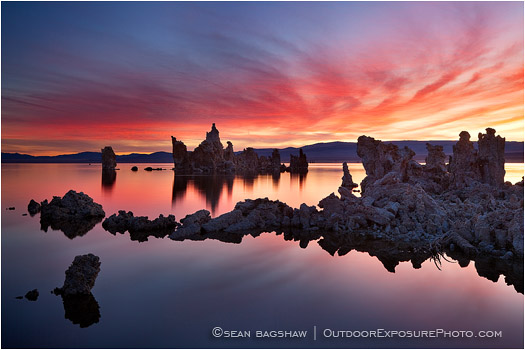
Both the way that we capture and develop our images have entered a new and exciting phase. Early on I embraced the changes digital technology brought to the art form. The digital age has allowed photographers to overcome many shortcomings and limitations of cameras that have frustrated them from the beginning. The new tools of photography enable me to be more creative and to express my experiences and vision more fully than ever before. I will always be fan and a student of traditional landscape and nature photography, venturing into the land to work with the raw materials of light, form, color and texture. And while the photographic tools and techniques are evolving, the motivation and the thought processes of the nature photographer remain unchanged. If anything, I find that it is more important than ever to be on top of my game. It takes skill in traditional photography techniques as well as skill in digital developing to get my images to approach what I hope for them.
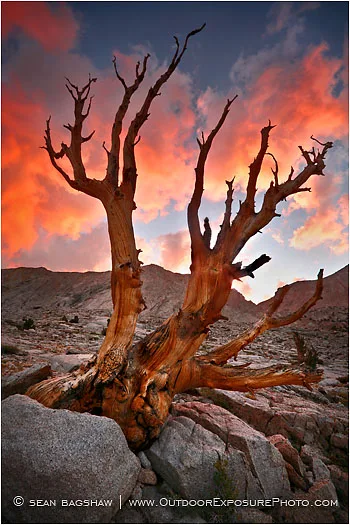
There are those who worry that digital photography has lowered the bar. I can say my experience has been just the opposite. All the principles of light and composition continue to apply and proper camera technique is still essential. In fact, the way that I work with the camera in the field these days is more involved and creative than it ever could have been with film. I shoot thinking several steps ahead to how I will want to develop the image later on. In just a few seconds I might capture a range of frames utilizing different exposures, apertures and focal points in order to collect all the visual information in the scene I’ll need to develop the finished piece. Learning how to think and work with so many variables while simultaneously pre-visualizing the future processing has been far more interesting and challenging than working within the confines of a single frame of film ever was. Far from being a shortcut or a creativity killer, digital photography allows us to express a new and exciting vision, not unlike the way film photography did when it was introduced over a century ago.
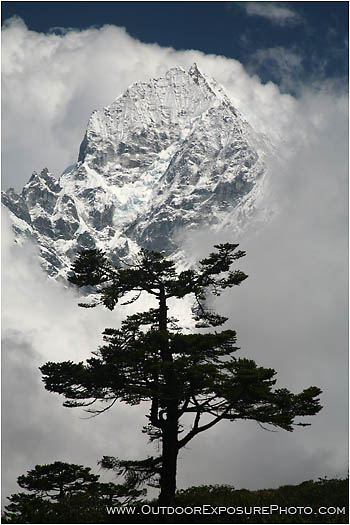
For further musings on the topics of photography, artistic expression and where current digital developing techniques come to bare I would point you toward Guy Tal’s recent article: Lie Like You Mean It.
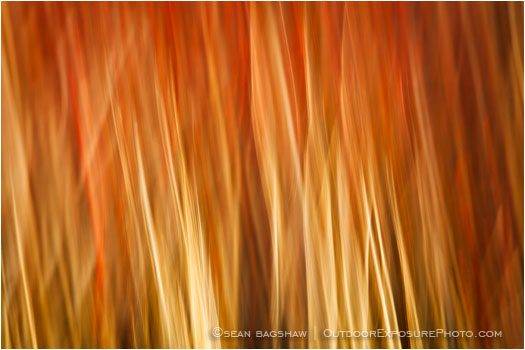
There are so many great activities one can be involved in in life. For many of us, one of those activities is the magic of exploring the world with our cameras in hand, capturing moments and trying to make lasting memories of the scenes that impress upon us.

Links that might be of interest:

Upcoming image processing classes and outdoor photography workshops.

Instructional videos on fine art image processing.

In my photography I am aware that the human eye and the camera don’t see the world in the same way. Photographs are more limited than human sight in some ways, but can also see in other ways that we can not. Since its invention we have been conditioned to accept that photography portrays a “literal” record of the world. However, as an artist, I’m less interested in the literal and more interested in how I can communicate my own experience and personal artistic vision. Artists have always endeavored to express themselves, their experiences and their impressions through their medium. My challenge is to use the camera to do just that, to paint an artistic vision of the world as I see it. I strive to do it well enough that it resonates with others.

I am a fan of traditional landscape and nature photography. I derive great pleasure from venturing into the land and working with the raw materials of natural light, form, color and texture. The earth is my palette. But I also want to go beyond photography as a mere technical pursuit or objective record of natural history. In my photos I struggle to express something beyond a literal representation of the scene. Through the use of traditional photography techniques as well as careful digital developing I struggle to project my own human impressions, experiences and imagination. I hope that those who view my images are able to experience the same sense of adventure, mystery, drama, exploration and beauty that I do when I am out in the world.

Photography has entered a new and exciting era. Early on I embraced the changes digital technology brought to the art form. The digital age has allowed photographers to overcome many shortcomings and limitations of cameras that have frustrated them from the beginning. It is an exciting time to be a landscape artist. The new tools of photography enable me to be more creative and to express my experiences and vision more fully than ever before.

For those wondering if digital cameras have lowered the bar in photography, I can say my experience has been just the opposite. All the principles of light and composition continue to apply and proper camera technique is still essential. In fact, the way that I work with the camera in the field these days is more involved and creative than it ever was or could have been with film. I shoot thinking several steps ahead to how I will want to develop the image later on. In just a few seconds I might capture a range of frames utilizing different exposures, apertures and focal points in order to collect all the visual information in the scene I’ll need to develop the finished piece. Learning how to think and work with so many variables while simultaneously pre-visualizing the future processing has been far more interesting and challenging than working within the confines of a single frame of film ever was. Far from being a shortcut and creativity killer, digital photography allows us to express a new and exciting vision, not unlike the way film photography did when it was introduced over a century ago.

Filed Under: Photography Journal Tagged With: digital photography, digital workflow, fine art photography, landscape photography, oregon photographer

Exploring Hart Mountain Wildlife Refuge In Winter

February 23, 2011 by Sean Bagshaw 2 Comments

Exploring Hart Mountain Wildlife Refuge In Winter

Admittedly, winter is not my most prolific photography season. Cold, darkness and unpredictable weather often get the better of my psyche and I find myself making excuses or prioritizing office work. However, once or twice a winter I do manage to gear up and head someplace windswept and snowy with my camera. This winter Chuck Porter, one of my oldest and best friends, and I spent a couple days exploring the lonesome high desert in the Hart Mountain Antelope Refuge. Back when we were more energetic Chuck and I spent a lot of time climbing cliffs and mountains all over the western US and spurring each other on to complete questionable feats of endurance. Once we hiked the entire length of the Wild and Scenic Rogue River Trail, all 40 plus miles, in a day. Another time we climbed Mt. Shasta, Mt. McLoughlin and Mt. Thielsen in a 21 hour push. These days we are happy just to get out and camp for a weekend and do a little ski touring.

Hart Mountain National Antelope Refuge is a national wildlife refuge on Hart Mountain in southeastern Oregon, which protects more than 422 square miles and more than 300 species of wildlife, including pronghorn antelope, bighorn sheep, mule deer, sage grouse, and redband trout. The refuge, created in 1936 as a range for remnant herds of pronghorn antelope, spans habitats ranging from high desert to shallow playa lakes, and is among the largest wildlife habitats containing no domestic livestock. Located in a remote region of southeastern Oregon at an elevation over 6,000 feet, Hart Mountain is a wild and desolate place any time of year. In winter, blanketed by snow, it becomes a quite and seemingly endless surreal landscape.

During our visit, Chuck and I skied through a couple of different areas, both very small in the total scale of the refuge. We talked about coming back one winter and skiing all the way across, but we’ll see if I ever get the winter motivation to take that on. The two areas we explored on this visit were the hot springs basin below Warner Peak and Petroglyph Lake. Petroglyph Lake is sheltered on one side by a low cliff band that houses several panels of Native American rock art.

Instead of going on at length about the skiing, sleeping in the car, eating bad food and all the other standard tales from a trip like this I’ll just let the photos speak for themselves. You can click on each image to see it larger and then hit the back button to return to the article.

Hart Mountain rising out of the clouds above Hart Lake.
Old building at park headquaters.
Winter Landscape
Rok Chuk
Hotsprings basin black and white
Meandering hotsprings stream
Skiing toward Petroglyph Lake
Desolate and windswept
Warner Peak above the high desert plain
Skiing around Petroglyph Lake
Petroglyphs
Petroglyphs
Petroglyphs
Wind sculpted snow
Skiing in a snow shower

Filed Under: Adventure Journal, Photography Journal, Photography Travel Journal Tagged With: landscape, landscape photography, nature photography, oregon photographer, Oregon Photography, outdoor photography, sean bagshaw, travel photography

Pacific Northwest Photography Podcast Interview

December 7, 2009 by Sean Bagshaw Leave a Comment

Pacific Northwest Photography Podcast Interview

Talented outdoor photographer, Adrian Klein, is now producing a great podcast called Pacific Northwest Photography. Adrian recently interviewed me for his podcast, which you can listen to on the player above. During our conversation we chatted about favorite locations, adventures and photography equipment. I also give the behind the scenes tales of the two images below. You can also get the complete story behind my intolerance of goat flavored food products.

I highly recommend checking out Adrian’s photography at www.adrianklein.com

and his photography blog at http://adriankleinphoto.blogspot.com/

On Adrian’s home page you can subscribe to his PNWP Podcast by clicking the red musical note.

Lunar Eclipse Over Mt. Shasta
Double Falls, Glacier National Park

Filed Under: Photography Journal Tagged With: digital photography, landscape photography, nature photography, northwest photography, oregon photographer, outdoor photography, photography interview, photography podcast, photography techniques, professional photographer, sean bagshaw, southern oregon photographer

Jefferson Wilderness, Jewel of the Oregon Cascades

August 4, 2009 by Sean Bagshaw 2 Comments

Jefferson Wilderness, Jewel of the Oregon Cascades

The Jefferson Wilderness in the Oregon Cascades, located to the north of Santiam Pass, east of Salem and West of Sisters, is one of the most amazing natural mountain environments on the west coast. Mt. Jefferson itself is awe inspiring as the second highest peak in Oregon and host to the largest glaciers in the state other than those found on Mt. Hood.

Warm sunset light on Mt. Jefferson and Bays Lake

In days past I have trekked into Jefferson Wilderness on several occasions, either backpacking or to climb Three Fingered Jack or Mt. Jefferson itself. This was my first time to visit specifically to take photographs. The wilderness is home to some extremely photogenic countryside. For the dedicated photographer willing to backpack in with camera gear and spend a couple days exploring it is a wonderland.

In July I spent a memorable week with fellow photographer, David Cobb (www.dmcobbphoto.com), photographing in two different parts of the wilderness area.

Mt. Jefferson reflected in Rock Lake

First, we backpacked in to the popular Jefferson Park area via the Woodpecker Ridge Trail which is accessed by a forest road (road 040) a few miles to the east of the town of Detroit. Jefferson Park can be overcrowded on weekends in August, but midweek in July, when there is still quite a bit of snow on the ground and the mosquitoes are at their peak, we only saw three or four other parties in three days. Jefferson Park is popular for a reason. The flat alpine basin at over 6,000 feet of elevation has several lakes and numerous small tarns that reflect some of the best views of the mountain available. As the snow melts wildflowers carpet the marshy meadows. The position of the Jefferson Park area on the north side of the mountain means that in summer the peak gets great side light for photography at both sunrise and sunset.

Snow filled tarn in Jefferson Park

After three days on the north side of the wilderness we hiked out, drove over Santiam Pass and down the east side of the cascades where we drove along more forest roads (road 12 to 1230 to 1234) to reach the Canyon Creek trail head. The Canyon Creek trail starts at Jack Lake ascends toward Canyon Creek eventually arriving at Canyon Creek Meadow at the base of the north east side of Three Fingered Jack. Three Fingered Jack isn’t the highest of the Oregon Cascades, but it is one of the cragiest with the most interesting geologic patterns of colors and layering. Canyon Creek Meadow is located in a glacier carved basin directly at the base of the sheer north face of Three Fingered Jack. In late July it is home to one of the most amazing wildflower blooms in the state. We were a week or two too early for the peak of the flowers, so I look forward to getting the timing better next year. Even still the early morning light on the peak with winding streams, reflecting pools and green meadows below made it one of the more memorable campsites and photography locations I have had. A high ridge blocks the late evening light, so we cooked dinner and hid from the voracious mosquitos in the tent. However, the morning light is sublime. We spent over an hour finding one composition after another as the warm glow of the rising sun slowly progressed down the mountain face.

Paint brush in Canyon Creek Meadow below Three Fingered Jack

Greg Vaughn gives good directions and photography suggestions for both these locations in his book Photographing Oregon.

Three Fingered reflection

Filed Under: Featured Photos, Photography Journal Tagged With: canyon creek meadow photography, cascade range wilderness, Jefferson Wilderness, oregon photographer, photographing mt. jefferson, photographing three fingered jack, photography by sean bagshaw, photography in jefferson park, photography in the jefferson wilderness, southern oregon photographer, wilderness areas in oregon

© 2026 · Sean Bagshaw Outdoor Exposure Photography