Sean Bagshaw Outdoor Exposure Photography

Images from the edge

See all image results...

Search Criteria
Exact matches only
Search in title
Search in content
Content Type
Select all
Search Posts
Search Prints & Stock Photos
Search Events
Search Pages
  • About
    • Sean’s Biography
    • A Look Through My Lens
    • Social Media
    • Alliances
    • Sign Up For My Newsletter
    • Website Tour
    • Interviews And Podcasts
    • CV
  • Tutorials & TK Photoshop Plugins
  • Learn Nature Photography
  • Videos From My YouTube Channel
  • Signed Prints
    • Favorites Of 2023
    • OREGON
    • CANYONS AND RIVERS
    • CITYSCAPES
    • COASTAL
    • DESERTS AND PRAIRIES
    • FLOWERS AND PLANTS
    • FORESTS AND TREES
    • MOUNTAINS AND LAKES
    • NATIONAL PARKS
    • STREAMS AND WATERFALLS
  • PRINT OPTIONS
  • Stock Photography
    • OREGON
    • NORTH AMERICA
    • THE REST OF THE WORLD
    • AGRICULTURE AND VINEYARD
    • BUILT BY PEOPLE
    • NATURAL BEAUTY
    • OUTDOOR AND ADVENTURE
  • Books & Calendars
    • Calendars
    • Washington Evergreen
    • Oregon, My Oregon
    • Photographing Through The Seasons
  • Workshops
  • Events
  • Photography Blog
  • Contact
  •  

Tangerine Dream – Badwater, Death Valley

March 24, 2017 by Sean Bagshaw Leave a Comment

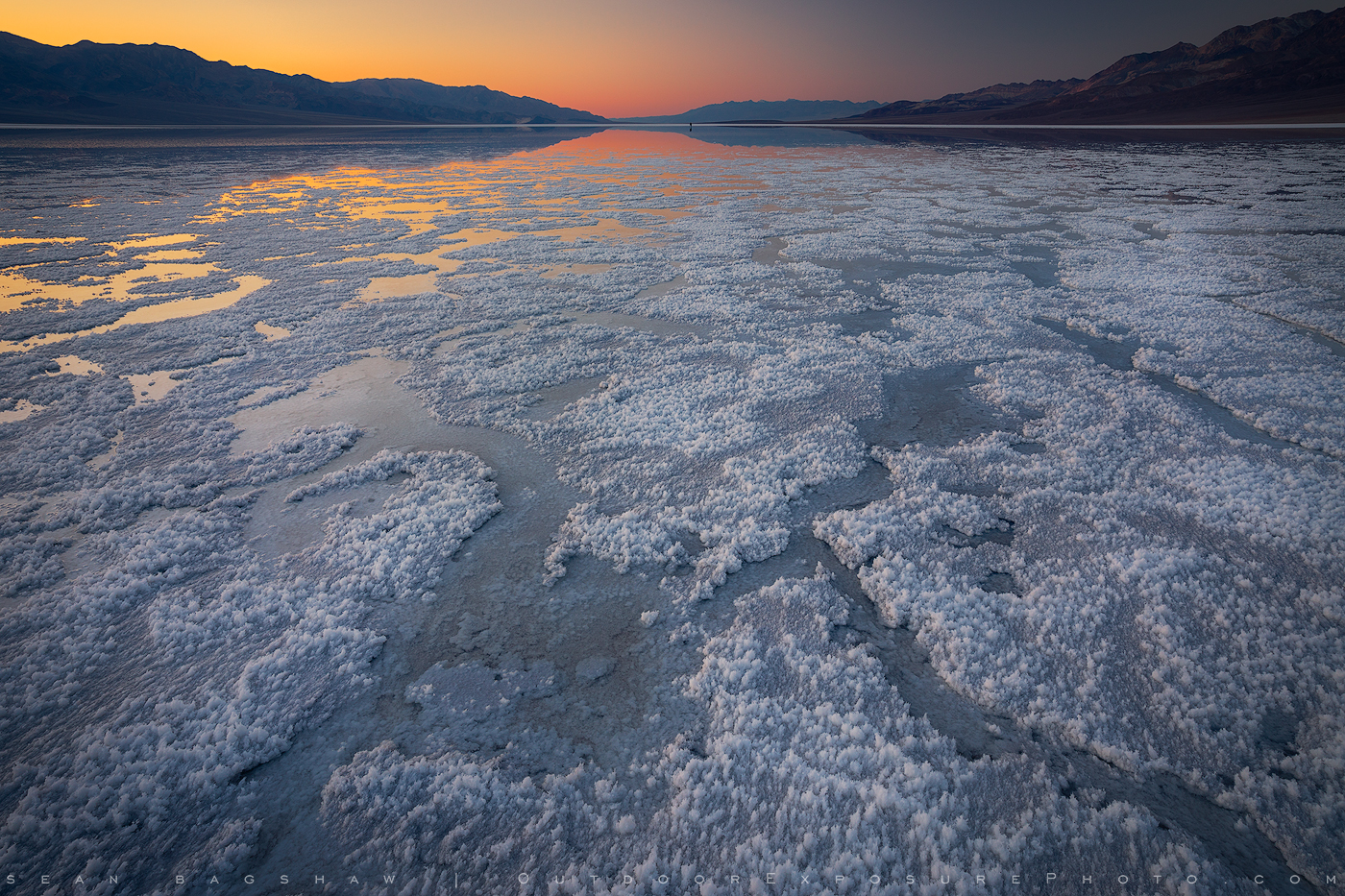
Tangerine Dream – Badwater, Death Valley

Tangerine

The rain this winter allowed a thin layer of water to pool on the Badwater salt flat in Death Valley National Park. Zack, David and I spent the twilight hour exploring the patterns, reflections and glowing light one evening on our recent road trip. The next day my shoes were completely encased in a crusty rime of salt. For scale, if you look closely you may see another photographer out in the water toward the horizon.

Canon 5DMK4, 22mm, polarizer, 1 second, f/16, ISO 100. The expanded dynamic range of the 5DMK4 allowed me to capture this scene in a single exposure quite easily. The dynamic range wasn’t extreme, but too much to get it all in one exposure with good shadow quality on the 5DMK3.

Filed Under: Featured Photo, Photography Journal Tagged With: outdoor photography, travel photography

Red Racer – Death Valley National Park

March 24, 2017 by Sean Bagshaw Leave a Comment

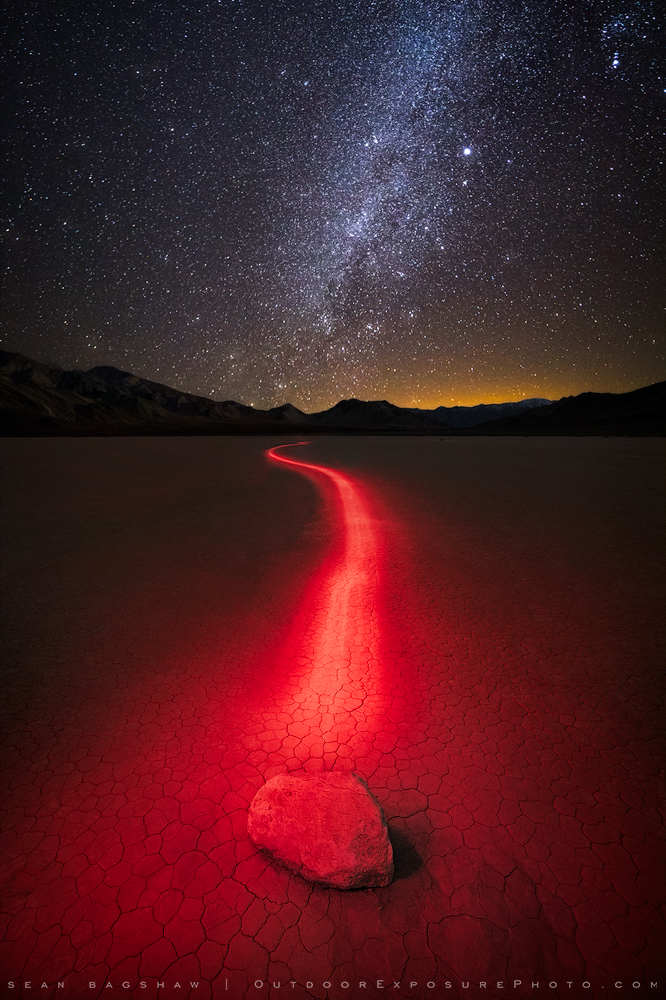
Red Racer – Death Valley National Park

Red RacerI finally made it out to the Racetrack in Death Valley while road-tripping with the boyz a couple weeks ago. Super clear skies were calling out for a starry night shot. Zack and I spent a chilly hour or two experimenting with different light painting techniques. The one I liked the most was the red “night vision” setting on Zack’s headlamp. We selected this particular sailing stone because it had a wonderful S-shaped track. For the land exposure, we set the long exposure timer for 4 minutes, carefully walked the track with the light pointed at the ground, groped our way back to the cameras in complete darkness…and then adjusted our technique and repeated. We had lots of screw ups. For developing I blended one 2-minute natural starlight exposure together with the red, light painted exposure. The starry sky is from a third25-secondd exposure to avoid star-trailing.
If you aren’t familiar with the Racetrack or how the famous “Sailing Stones” move around the playa check out THIS VIDEO.

Canon 5D4, Rokinon 14mm lens. Natural light exposure: 2 minutes f/5.6, ISO 6400. Light painted exposure: 4 minutes, f/5.6, ISO 1600. Sky exposure: 25 seconds, f/2.8, SIO 6400.

Filed Under: Featured Photo, Photography Journal, Photography Travel Journal Tagged With: travel photography

"Frost Light" – Yosemite Falls, Yosemite National Park

March 10, 2017 by Sean Bagshaw Leave a Comment

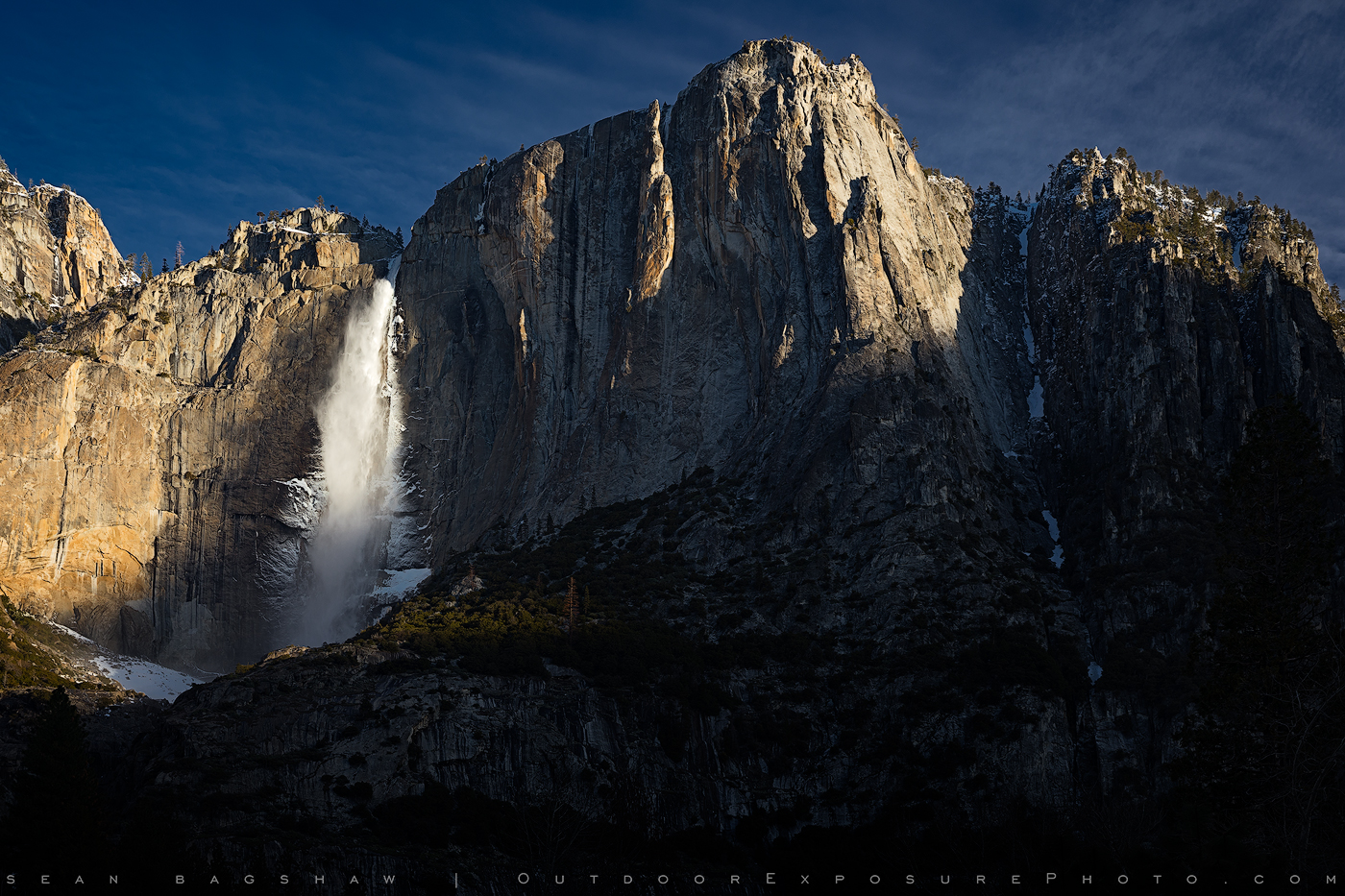
"Frost Light" – Yosemite Falls, Yosemite National Park

Frost-Light
Yosemite Falls resplendent in frost and glancing morning sun with the valley still shrouded in shadow. I took this while out on road trip with my good buds, David Cobb and Zack Schnepf last week. We shacked up in the Falcon for seven days. More bad jokes, laughing and flatulence than most people could handle.

Canon 5D MK4, 47mm, polarizer, 1/20 second, f/11, ISO 100.

Filed Under: Photography Journal Tagged With: landscape photography, outdoor photography, travel photography

Ghost Forest – Torres del Paine National Park, Patagonia, Chile

February 8, 2017 by Sean Bagshaw Leave a Comment

Ghost Forest – Torres del Paine National Park, Patagonia, Chile

Ghost-Forest

Fires have burned large sections of Torres del Paine NP in the last 20 years, many of them apparently set off accidentally by backpackers. I never like to see beautiful landscapes burn, but fire is part of the ecological process and these burned out trees do create impact and help tell this particular visual story.

Canon 5DsR, 25mm, Polarizer. 1/10 second @ f/18, ISO 100.

Filed Under: Featured Photo, Photography Journal, Photography Travel Journal Tagged With: landscape photography, travel photography

Trip Report: Photographing Oregon's Owyhee Country

May 17, 2011 by Sean Bagshaw 6 Comments

Trip Report: Photographing Oregon's Owyhee Country

Malheur County may be one of the least known and least visited parts of Oregon. It is located in the extreme southeast corner of the state bordering Idaho and Nevada. Geographically it is one of the largest counties in Oregon with a total area of about 10,000 square miles, but it has one of the lowest population densities at just 3 people per square mile. Most of the population is centered around Ontario and Vale in the northern 15% of the county. Almost everything to the south is open range land managed by the BLM. There is just one paved road, Hwy 95, and one town, Jordan Valley.

But out in the arid scrub and ranch land of Malheur County lies the Owyhee River. The Owyhee drains a remote area of the high desert plateau on the northern boundary of the Great Basin and flows northward to the Snake River. The various arms and tributaries of the Oywhee cut deep canyons through the Owyhee Plateau, many with vertical rock walls that in places can be over 1,000 feet deep. 120 miles of the Owyhee River Canyon were designated as Wild and Scenic in 1984.

The southern reaches of the river can only be accessed by dirt roads, some fairly well maintained and others not more than jeep tracks. Even then there are just a handful of spots where it is possible to reach the river by vehicle. Most of the Owyhee and it’s tributaries can only be explored by backpacking or rafting.


People have been suggesting I check out the Owyhee country for years. As it is not along any usual route of travel and many hours from just about anywhere I had never visited this part of the state until this spring. I went to do some exploring and take some photos with fellow photographer, David Cobb, who had previously hiked and photographed portions of the river.

Finishing the morning shoot at the Cliffs of Rome.

I was absolutely drawn in by the beauty and scope of the canyons and the surrounding high desert. Along the drive south from Ontario the dirt road first takes you through Succor Creek Canyon which is just a small preview of what’s to come, but very scenic in its own right.

Succor Creek Canyon

Leslie Gulch is the main attraction along the Lake Owyhee reservoir and provides the easiest access to the river in this area. Throughout the gulch and all along Lake Owyhee the rock spires and escarpments are very reminiscent of Smith Rock State Park only, as David says, “on steroids”. We explored the main Leslie Gulch road and made a couple of forays up side canyons. The area to the north known as the Honeycombs looks particularly enticing but can only be reached by backpacking in or taking a boat over from the west side of the lake.

North of the town of Jordan Valley you can follow the Jordan Craters Road for about 30 miles into a large lava flow that originates at the Coffee Pot Crater.

Coffee Pot Crater

Spatter Cone at Jordan Craters
View from inside a spatter cone

Continuing on a side road from there you can wind your way down steep switchbacks and reach the river at the historic Birch Creek Ranch. This is one of the main takeouts for rafters floating the river.

Cliffs at Birch Creek Ranch
Birch Creek Ranch

Southwest of Jordan Valley is the community of Rome. Near Rome there are several dirt roads that offer access to the river canyon as well as the nearby Cliffs of Rome and Chalk Basin further to the north.

Pillars Of Rome

South of Hwy 95 between Rome and Jordan Valley, Three Forks road makes it’s way across about 30 miles of high desert to join the Owyhee River at Three Forks. David and I were glad to have my 4×4 for this road as we found it heavily rutted after winter rains. We also had to make about three creek crossings, the deepest of which engulfed my front bumper. From the map we saw that we could stop along the road a few miles north of Three Forks and hike out the the canyon rim. Photographing a roadless portion of the wild and scenic Owyhee at sunset sounded appealing, but after a few steps off the road we discovered ticks clinging to our pants. Despite giving David a serious case of the willies we continued on and were able to access a sweeping vista of the canyon before sundown. By the time we completed our hike back in the fading light we had found over 100 ticks between us! A strip search in the headlights revealed several more. I managed to find all of the ones on me, but David found several more lurking on him during the night and didn’t get a wink of sleep.

David trying to ignore the ticks

Three Forks is a popular put-in for rafters and the presence of hot springs make it an attraction for others as well. My main interest in returning to Three Forks is that this is where the adventurous backpacker can access the branching web of the upper Owyhee Canyon and it’s various tributaries. Radiating out from the Three Forks area are no less than six deep and narrow canyons including the Big Antelope, Louse and Middle Fork.

While I was able to take some exciting photographs on this scouting trip I am excited to get back soon. Future trips will include spending several days rafting and photographing the Owyhee proper as well as doing some back country packing up the tributary canyons south of Three Forks.

Filed Under: Photography Journal, Photography Travel Journal Tagged With: landscape photography, Oregon Photography, outdoor photography, southern oregon photography, travel photography

Exploring Hart Mountain Wildlife Refuge In Winter

February 23, 2011 by Sean Bagshaw 2 Comments

Exploring Hart Mountain Wildlife Refuge In Winter

Admittedly, winter is not my most prolific photography season. Cold, darkness and unpredictable weather often get the better of my psyche and I find myself making excuses or prioritizing office work. However, once or twice a winter I do manage to gear up and head someplace windswept and snowy with my camera. This winter Chuck Porter, one of my oldest and best friends, and I spent a couple days exploring the lonesome high desert in the Hart Mountain Antelope Refuge. Back when we were more energetic Chuck and I spent a lot of time climbing cliffs and mountains all over the western US and spurring each other on to complete questionable feats of endurance. Once we hiked the entire length of the Wild and Scenic Rogue River Trail, all 40 plus miles, in a day. Another time we climbed Mt. Shasta, Mt. McLoughlin and Mt. Thielsen in a 21 hour push. These days we are happy just to get out and camp for a weekend and do a little ski touring.

Hart Mountain National Antelope Refuge is a national wildlife refuge on Hart Mountain in southeastern Oregon, which protects more than 422 square miles and more than 300 species of wildlife, including pronghorn antelope, bighorn sheep, mule deer, sage grouse, and redband trout. The refuge, created in 1936 as a range for remnant herds of pronghorn antelope, spans habitats ranging from high desert to shallow playa lakes, and is among the largest wildlife habitats containing no domestic livestock. Located in a remote region of southeastern Oregon at an elevation over 6,000 feet, Hart Mountain is a wild and desolate place any time of year. In winter, blanketed by snow, it becomes a quite and seemingly endless surreal landscape.

During our visit, Chuck and I skied through a couple of different areas, both very small in the total scale of the refuge. We talked about coming back one winter and skiing all the way across, but we’ll see if I ever get the winter motivation to take that on. The two areas we explored on this visit were the hot springs basin below Warner Peak and Petroglyph Lake. Petroglyph Lake is sheltered on one side by a low cliff band that houses several panels of Native American rock art.

Instead of going on at length about the skiing, sleeping in the car, eating bad food and all the other standard tales from a trip like this I’ll just let the photos speak for themselves. You can click on each image to see it larger and then hit the back button to return to the article.

Hart Mountain rising out of the clouds above Hart Lake.
Old building at park headquaters.
Winter Landscape
Rok Chuk
Hotsprings basin black and white
Meandering hotsprings stream
Skiing toward Petroglyph Lake
Desolate and windswept
Warner Peak above the high desert plain
Skiing around Petroglyph Lake
Petroglyphs
Petroglyphs
Petroglyphs
Wind sculpted snow
Skiing in a snow shower

Filed Under: Adventure Journal, Photography Journal, Photography Travel Journal Tagged With: landscape, landscape photography, nature photography, oregon photographer, Oregon Photography, outdoor photography, sean bagshaw, travel photography

Photographing Southern Baja, Mexico

December 28, 2010 by Sean Bagshaw 8 Comments

Photographing Southern Baja, Mexico

Mexico is one of my favorite places to travel and photograph. Although it has recently been getting negative media coverage for events occurring mostly in cities near the US border related to drug trafficking issues, my experience is that many areas in Mexico pose minimal risk for travelers; certainly less risk than places within the United States. Millions of Americans live in cities with higher crime and violence rates than the places I visit in Mexico. Americans think very little of visiting places such as Los Angeles, New York and Washington DC. However, I do meet people from other countries who avoid visiting those cities based on what they see on TV.

In the past couple of years I have traveled to and photographed several locations in Mexico in which I felt very safe and saw no signs of the problems being reported in the news. Some of the locations in Mexico that I have been to recently can be seen in my Mexico photo galleries including Guanajuato, Sayulita, Puerto Escondido, Mineral de Pozos and San Miguel de Allende.

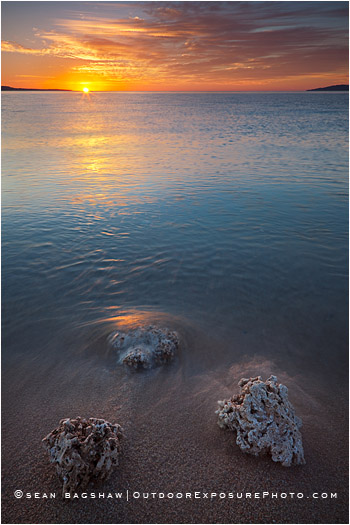
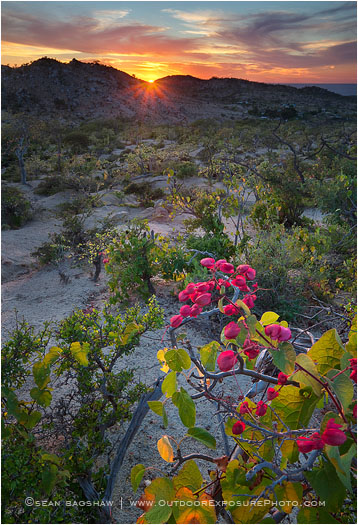
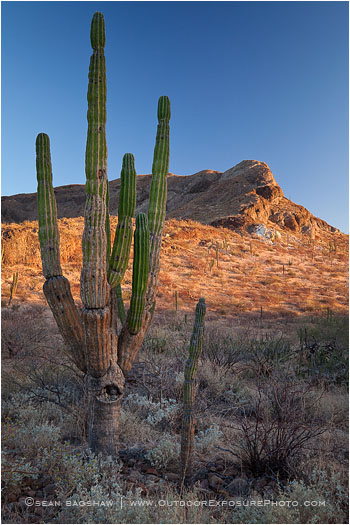
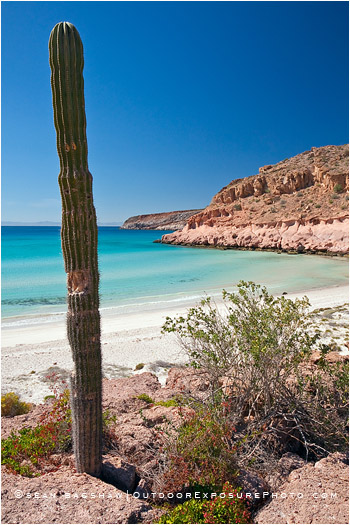
Most recently I spent eight days traveling extensively through southern Baja California. I passed through several towns including La Paz, Todos Santos, Cabo San Lucas, San Jose Del Cabo, Santiago and La Ventana while scouting for a photography workshop that I’ll be leading with professional photographers David M. Cobb and Christian Heeb in November of 2011. The remote end of the finger of land known as the Baja Peninsula is further from the troubles of northern Mexico than many places in the US. Largely uninhabited, Baja presents an otherworldly desert landscape filled with towering cardon cactus and bordered by the achingly clear turquoise waters of the Sea of Cortez. The lifestyle we found there was very relaxed and peaceful. The small but well maintained two lane roads through the desert had very little traffic and the people were gracious and welcoming. Very few places I have visited have felt as safe or as accessible.


The best part of the trip was the variety of new and different subjects to photograph which are not part of my familiar NW landscapes. The other best part was the fact that in November, when my home town is engulfed in freezing fog and rain, the weather was about as perfect as it could be. It was comfortably cool at night, warming up to the high 80’s during the day with relatively low humidity for the latitude. The crystal clear water of the Sea of Cortez was the temperature of a heated swimming pool.

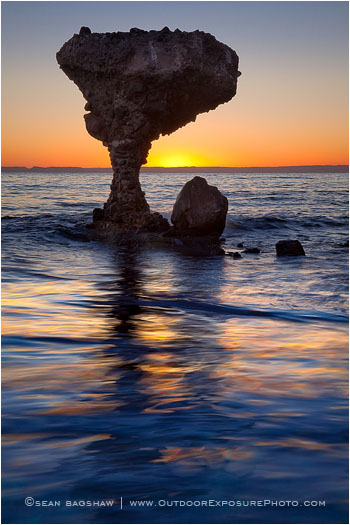
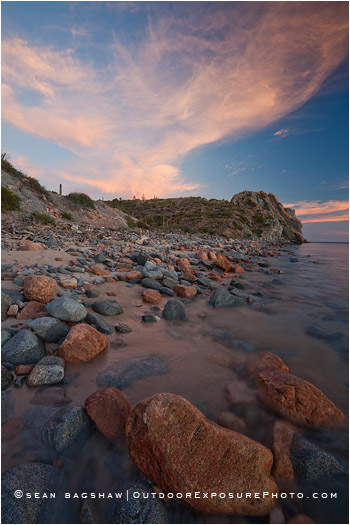
The entire Gulf of California was designated a Unesco World Heritage Site in 2005. One of the highlights was hiring small fishing boats to take us out to some of the nearby islands, most notably Isla Espiritu Santo, but also Isla Cerralvo. These islands have been protected as wilderness and are teaming with wildlife, both above and below the sea. If you have ever seen photos of cactus perched above pristine turquoise bays there is a good chance it was on Espiritu Santo. This may also be one of the few places where you can easily snorkel with sea lions and sea lion pups without need of a wet suit.

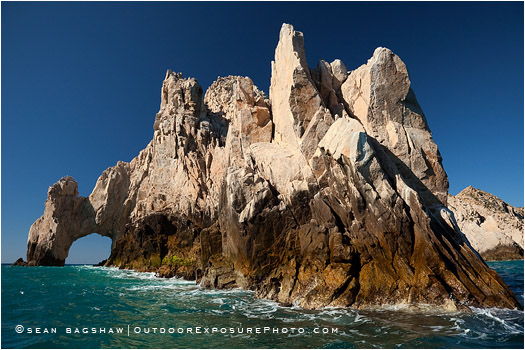
The most intimidating place in southern Baja I visited was Cabo San Lucas and that was almost entirely due to the Americans spilling out of cruise ships, visiting dance clubs, chartering fishing boats and building mansions on precipitous cliff above the sea. At one time the landscape at the southern most point of Baja must have been a true natural wonder, but now it is almost completely developed. Still, the beaches and rocky cliffs at Land’s End are so beautiful that they are worth seeing and photographing even in their current state of development. The towering arch on the southern most tip known as El Arco is a wonder to behold.

We discovered a wonderful Oasis in Cabo, Los Milagros hotel. The quiet garden courtyard setting, attractive rooms and friendly owner made it hard to believe it was located in the center of Cabo. We are making a point to stay at Los Milagros with the photography workshop next year. We also found similar quiet, friendly and comfortable lodging at el Angel Azul in La Paz and at the Ventana Bay Resort in La Ventana.

Los Milagros El Angel Azul

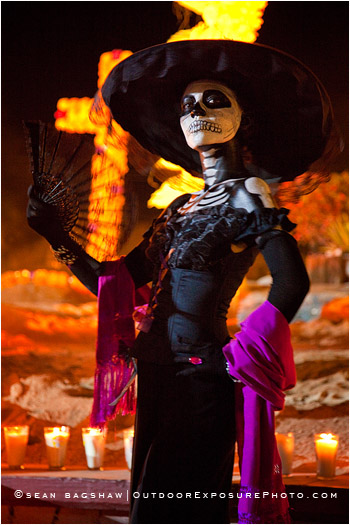
One of the highlights of the trip was photographing the Dia de los Muertos or Day of the Dead celebrations in La Paz. This Mexican festival held in Early November honors and remembers those who have died. While the Day of the Dead is not nearly as popular in Baja as it is in other parts of the country, La Paz has a wonderful event at the city’s outdoor theater that features a beauty pageant, dancing, poetry readings and theatrical performances. The colors, lights and costumes all made for some great photo opportunities and a true departure from my normal nature focus. We are timing the 2011 workshop to allow us to photograph this event again.

Even though I had wanted to travel to southern Baja for some time, the experience exceeded my expectations. It provided a near perfect combination of safety, adventure, culture, comfort, weather, great people and photographic interest. With at least three more months of hard winter weather coming up here in the NW I’m already anticipating my next visit. Perhaps the best part will be the opportunity to share it with the photographers who join us for the workshop. No matter where these workshops take me it’s always with a great groups of folks who enjoy expanding their photography skills and having a rip roaring good time.

If you would like more information on the November 2011 Baja California photography workshop it is available on my Workshops Page.

Filed Under: Photography Travel Journal Tagged With: Baja, Mexico, photography workshop, travel photography

New Horizons In Photography With Better High ISO Performance

January 29, 2010 by Sean Bagshaw 6 Comments

New Horizons In Photography With Better High ISO Performance

Several months back I upgraded cameras from my trusty Canon EOS 5D to the newer model, the Canon EOS 5D Mark II. The Mark II boasted a range of new features that made it a worthwhile investment, including a larger and clearer LCD screen, a stronger and more weather proof build, easier to navigate menus, customizable settings, HD video, a sensor dust cleaning function as well as greater resolution (21 MP), updated processors and firmware and reportedly better image quality. Over time I have found that, really, just one feature of the newer camera has fundamentally changed the way I can take photos. That feature is the greatly improved performance at higher ISO settings.

Hand held at 1/40 second, f/9, ISO 500

ISO is the standard by which the sensitivity of film or a digital sensor is measured. Better sensitivity, lower noise and improved in-camera noise reduction at higher ISO settings are hallmarks of the latest generation of digital SLR cameras, and high ISO performance will surely continue to improve in the near future. I have always used Canon digital cameras by choice, but the most current high end digital SLRs from Nikon, Sony, Minolta and others all have much better high ISO performance than their predecessors.

Hand held at 1/100 second, f/8, ISO 320

I haven’t done quantitative tests to compare the high ISO performance of older DSLRs and current ones, but the improvements are so dramatic to be readily apparent with a simple inspection of the image files at 100%. There are plenty of independent testers out there who have done careful scientific comparisons if you want the raw data. My goal in this article is simply to share some images I have taken recently that either would have previously been impossible or would have required more equipment and more labor intensive techniques. Of course, you would need to see high resolution image files to get a complete understanding of the image quality, but for the purpose of this article I think these screen size images give you the main idea. I should also point out that in addition to improvements in ISO performance, improved noise reduction algorithms in software like Adobe Lightroom and Camera RAW, as well as improved image stabilization technology in lenses take some of the credit.

Hand held at 1/13 second, f/4.5, ISO 3200

How does better high ISO performance allow for new opportunities in photography? As the sensor becomes more sensitive to light as the ISO setting is increased, the camera is able to maintain faster shutter speeds in lower light conditions and still get a proper exposure. Essentially it means you can shoot in lower light situations or with smaller aperture settings without the need for a tripod. However, with past cameras the increased sensitivity to light at higher ISO settings came with an unacceptable trade off; increased image noise or digital grain. Until I acquired the Canon 5D Mark II, the higher ISO settings were generally useless to me. My images need to be very clean and sharp, so I would always shoot at the lowest ISO setting (ISO 100) to ensure adequate image quality. This almost always meant the need for a tripod to get a sharp image.

Hand held at 1/15 second, f/5.6, ISO 3200

Experimenting with the ISO capabilities of the 5D Mark II during my travels in Mexico this month have left me impressed and excited about the possibilities. I still use my tripod most of the time, but I find that in situations where a tripod is impractical, time prohibitive or creatively limiting I can often raise the ISO to between 200 and 500 to allow for fast enough shutter speeds for hand held shooting with a very slight loss in overall image quality. Images at these ISO settings are certainly good enough for publishing and even fine art printing. There are times when having the ability to photograph without a tripod is extremely freeing and allows for flexibility, mobility, spontaneity and creativity that wasn’t possible before.

Hand held at 1/20 sec, f/4, ISO 3200

What’s more, I have found that I can also hand hold my camera in minimal light situations, such as indoors or for night time city scenes, by increasing the ISO dramatically. I have increased the ISO to as much as 3200 and still been able to capture very usable images. A slight degree of noise in these images is acceptable to me for the fact that they would have been almost impossible to get otherwise. While I still return to the tripod if image quality is essential, it is exciting to be able to photograph people and other moving objects in low light conditions and not have them be blurred. Most of my night city photography does not include people because of the blurring of objects in motion with slow shutter speeds.  Being able to hand hold the camera and get sharp images of moving subjects indoors and at night opens a whole new world of possibilities.

Hand held at 1/30 second, f/4, ISO 3200

I’m sure the technology in ISO performance will continue to improve for some time. Within a couple of years there will be cameras that allow us to photograph in almost complete darkness with fast shutter speeds and produce noise free images. Until then it is exciting to know how good the ISO performance is right now, and that photographers have the ability to take photographs that were previously impossible or impractical.

Hand held at 1/15 second, f/7.1, ISO 500

If you found this article helpful, informative or otherwise useful, feel free to share it on the social media network of your choice using the handy links below. If you have anything to add, feel free to leave a comment. Thanks!

Hand held at 1/30 second, f/4, ISO 3200

New Photography Possibilities with high ISO Performance

Several months back I upgraded cameras from my trusty Canon EOS 5D to the newer model, the Canon EOS 5D Mark II. The Mark II boasted a range of new features that made it a worthwhile investment, including a larger and clearer LCD screen, a stronger and more weather proof build, easier to navigate menus, customizable settings, HD video, a sensor dust cleaning function as well as greater resolution (21 MP), updated processors and firmware and reportedly better image quality. Over time I have found that one specific attribute of the newer camera has had a bigger impact on the way I can take photographs than any other. That feature is the greatly improved performance at higher ISO settings.

I haven’t run any objective tests to make quantitative comparisons between older DSLRs and current ones, but there are plenty of independent testers out there who have if you want the raw data. My goal in this article is to share some images I have taken recently that either would have been previously impossible or would have required more equipment and more labor intensive techniques.

Better sensitivity, lower noise and improved in-camera noise reduction at higher ISO settings are hallmarks of the latest generation of digital SLR cameras, and high ISO performance will surely continue to improve in the near future. ISO is the standard by which the sensitivity of film or a digital sensor is measured. I have always used Canon digital cameras by choice, but the most current high end digital SLRs from Nikon, Sony, Minolta and others all have much better high ISO performance than their predecessors.

How does better high ISO performance allow for new opportunities in photography? As the sensor becomes more sensitive to light with increased ISO settings the camera is able to maintain faster shutter speeds in lower light conditions and still get a proper exposure. Essentially it means you can shoot in lower light situations or with smaller aperture settings, without a tripod, than at lower ISO settings. However, with past cameras the increased sensitivity to light at higher ISO settings came with an unacceptable trade off; increased image noise or digital grain. Until I acquired the Canon 5D Mark II, the higher ISO settings were generally useless to me. My images need to be very clean and sharp, so I would always shoot at the lowest ISO setting (ISO 100) to ensure adequate image quality. This almost always meant using a tripod.

Experimenting with the ISO capabilities of the 5D Mark II during my travels in Mexico this month have left me impressed and excited about the possibilities. I still use my tripod most of the time, but I find that in situations where a tripod is impractical, time prohibitive or creatively limiting I can often bump up the ISO to between 200 and 500 to allow for fast enough shutter speeds for hand held shooting with a very slight loss in overall image quality. Images at these ISO settings are certainly good enough for publishing and even fine art printing. In some situations the ability to photograph without a tripod can be very freeing and allow for creativity and camera positions that weren’t possible before.

What’s more, I have found that I can also hand hold my camera in very low light situations, such as indoors or with night time city scenes, by increasing the ISO dramatically. I have increased the ISO to as much as 3200 and still been able to capture very usable images. The value of these images in greatly enhanced by the fact that they would have been almost impossible to get otherwise. While I still return to the tripod if image quality is essential, it is exciting to be able to photograph people and other moving objects in low light conditions and not have them be blurred. Most of my night city photography does not include people because of the blurring of objects in motion. Being able to hand hold the camera and get sharp images of moving subjects in low light opens a whole new world of possibilities.

I’m sure the technology in ISO performance will continue to improve for some time. Within a couple of years there will be cameras that allow us to photograph by moonlight without a tripod and produce noise free images. Until then it is exciting to know that ISO performance is at a level right now that allows for types of shooting that were previously impossible or impractical.

Filed Under: Digital Photography Tips, Photography Equipment, Photography Travel Journal Tagged With: digital photography, Guanajuato, night photography, photography techniques, travel photography

Subterranean Guanajuato

January 22, 2010 by Sean Bagshaw Leave a Comment

Subterranean Guanajuato

Guanajuato, Mexico is as visually interesting as any city I have photographed. What many visitors might not realize, however, is that to find some of the most surreal parts of town you have to go underground.

The entire city sits atop an extensive subterranean tunnel system. The tunnels were originally dug by mining operations starting in the 16th century to divert the river and keep the town and mines from flooding.

From its beginnings in the mid 1500s the city was built to maximize useable space on the steep hillsides. Houses were stacked on top of one another with only the narrowest of alleys between them. Much of the charm of Guanajuato comes from the fact that it was never intended to accommodate cars.

But cars were inevitable. In a huge engineering project in the 1960’s, as car traffic in the narrow streets became more of a problem, the river was diverted yet again and the tunnels were converted into an underground system of roads. New tunnels have since been added, creating an ever expanding underground even Batman would be envious of. Drivers who know and understand the complex catacombs can quickly get from one part of the city to another. There are many entry and exit points making it possible to dive underground in one neighborhood and surface in another the next valley over.

Most of the tunnels are deep underground, dark and full of car exhaust, but in places they break out to the surface where they are lined with buildings, bridges and arches.

The subterranean channels and tunnels create an entirely different and mysterious dimension to a town that already has so much interesting character. It is a little hard to locate the best parts of the subterranean tunnels at first, and it can also be very disorienting trying to navigate through the tunnels. Often I’ll emerge in a part of town that I have never been in before.

If you enjoyed this photo essay consider sharing it on your social media network of choice using the handy links below.

Filed Under: Photography Journal, Photography Travel Journal Tagged With: fine art photography, Guanajuato, Mexico, night photography, travel photography

Doors And Windows of Guanajuato

January 21, 2010 by Sean Bagshaw 6 Comments

Doors And Windows of Guanajuato

One of my favorite photography projects in Guanajuato is exploring the callejons (narrow alleys) in search of interesting doors and windows. Many of the home owners in this town take great pride in their houses. Bright colors are popular and particular attention is paid to doors and windows. While some doors are kept carefully, other doors are neglected and have an authentic patina of time.

With a rumored two thousand callejons in the city, all lined with buildings, there is no lack of doors and windows. Every door is different. Some are pristine, with carved and crafted hardwood and hand forged metal parts. Others are weathered and full of character. Some are precariously set in crumbling stone and brick and covered with graffiti. Each one tells its own story.

As a photographer, I love the way light is reflected at different times of day in Guanajuato. The alleys are narrow enough that they transmit light in a way similar to a desert slot canyon. Direct sun striking the upper reaches of a deep alley can bounce back and forth off of the buildings, projecting a soft, radiant light deep into the shadows. A fully lit alley wall can also reflect a very strong glow onto the adjacent wall or around corners.

The light is constantly changing, so part of my challenge is to find doors and windows that have special character and then return to photograph them when they are illuminated by particularly intriguing lighting conditions.

These are just a few of the door and window photos I have taken on this visit so far. I also took a bunch last time I was here and I’ll probably photograph some more before I leave. I’m not sure what I’m going to do with all the door photos. Photographing them is mostly a compulsion. I suppose I’ll publish some of the best ones on greeting cards. I have also had requests for a “Doors of Guanajuato” poster, which I think is a pretty good idea.

If you enjoyed this photo essay consider sharing it on your social media network of choice using the handy links below.

Filed Under: Photography Journal Tagged With: fine art photography, Guanajuato, light, Mexico, photography technique, travel photography

Guanajuato City Scenes

January 17, 2010 by Sean Bagshaw Leave a Comment

Guanajuato City Scenes

An important element of photographing while traveling in other countries is the ability to take what comes. Last Saturday I carefully penciled out my shooting schedule for the next three weeks in and around Guanajuato, Mexico. That night I came down with some sort of stomach ailment that confined me to bed until Wednesday. While feeling much better a week later, I’m still regaining my strength and can’t wander too far from a bathroom. As a result I didn’t get nearly as much photography done as I hoped and now I need to adjust my plans. But that’s OK. There are some things you can’t control when in another country.

Pink House on Calle Tecalote

As my condition improved through the week I went out to take photos as I was able. The weather has remained mostly cloudy and a bit drab, but there have been moments of the brilliant light that that Guanajuato is known for.

The unusually cold and wet conditions reminded me of some tips for making the best of urban photography at times when the weather is less than ideal. First, since cities provide their own light, twilight and night photography are opportunities for great light even when the weather is poor. There are two periods each day, around sunrise and sunset, when cities come alive with their own light, even on overcast days. During twilight a dull gray sky will appear blue while city lights glow in a variety of colors. A second tip is to be prepared to move quickly during weather breaks. I was able to quickly jump into action a couple of times when sun broke through the clouds for brief periods. The photo ops didn’t last long, but the light was particularly dramatic.

Brief Sunbreak at Sunset

The images in this post are of city vistas and of some of the notable landmarks around Gunajuato. I took them either in twilight or night time lighting conditions, or during a few breaks in the cloudy weather. I hope you enjoy.

Templo San Diego
Templo San Diego
Basílica de Nuestra Señora de Guanajuato
Teatro Juárez
Teatro Juárez
Iglesia de San Francisco
Stormy Sunrsie
Stormy Sunrise

Filed Under: Photography Journal Tagged With: Guanajuato, light, night photography, photography tip, tips, travel photography

Rain In The City Makes Magic

January 10, 2010 by Sean Bagshaw Leave a Comment

Rain In The City Makes Magic

Plaza de la Paz
Plaza de la Paz, Guanajuato

Normally I get a little bummed when I get up early for photo shoot to find it raining. But on our second day in Guanajuato I was perfectly happy with the light drizzle. Night cityscape photography is just about the only time I like to shoot in the rain. The mix of colorfully painted buildings and well lit callejones (alleys) in Guanajuato make night photography here particularly beautiful anyway. But one thing that can enhance that beauty is if the cobbles are wet, causing them to shimmer, reflecting the color and light.

Calle Tecalote in the Rain

It wasn’t raining hard, but I still got thoroughly soaked as I wandered around the streets in the dark. Keeping the camera lens dry was also a challenge, especially for the 20-30 second exposures that were required while using a circular polarizer and an aperture of f/16 in low light. In the northwest US, rain is common enough that there are usually awnings or covered entries to hide under when shooting cityscapes in the rain. Not only are awnings rare in this arid part of the world, but most buildings don’t even have any sort of eaves to hide under. I was only able to take a few images before my gear and I were wet enough to call it a morning. Still, I’m excited about the images I did get and hope to have another chance to photograph in the rain while I’m here. On the other hand, I might give up that chance if it meant I could get some warm, sunny weather. I’m layered up and freezing at the moment since the houses don’t have insulation, double pane windows or weather stripping.

Guanajuato Streets in the Rain

Filed Under: Photography Journal Tagged With: Guanajuato, long exposure, Mexico, night photography, travel photography

Mountain Mining Towns of Mexico

January 8, 2010 by Sean Bagshaw Leave a Comment

Mountain Mining Towns of Mexico

For the entire month of January I’m taking my photography in a slightly different direction and exploring the colonial mining towns of central Mexico. My blog will act as my travel journal. I’ll be posting images and stories about the project here every couple of days.

Guanajuato Sunrise
Guanajuato Sunrise

So, why this particular region of Mexico? Several reasons actually. Guanajuato, the city that I will be based out of, is the sister city to my home town, Ashland, Oregon. The two towns share geographic and cultural similarities. Both are located in valleys in the mountains, both are university towns and both have theater festivals and strong art culture. Since the two towns became “sisters” there has been a continuous exchange of students, teachers, musicians, artists and city leaders. My wife has been coming here for several years to attend Spanish language school. This year our sons are old enough to begin taking Spanish lessons, so we decided to move the entire family down for a month of language immersion. I made a short trip to Guanajuato about three years ago and fell in love with the photographic potential of the architecture, character and beauty of the town. During this more extended stay I hope to do the kind of in depth photography that comes with familiarity with a place and also travel to some of the other towns and environs in the region.

Early colonists came to the mountains of central Mexico to mine for metals and minerals. The towns are often built on steep hillsides in narrow valleys. In Guanajuato, most of the roads are in tunnels beneath the city and the town is accessed via pedestrian streets and very narrow and steep alleys. The colorful houses are stacked upon each other like a big game of tetris and the alleys can be almost as narrow, deep and winding as slot canyons in Utah. Needless to say, Guanajuato and the other mining towns in the region are popular with photographers.

Calle Potrero
Calle Potrero, Guanajuato, Mexico

My focus this month is to continue the photography that I started on my previous visit and try to create the most beautiful, dramatic and expressive images of the area that have ever been taken. I have a virtual office set up here so I can continue to work and do business via the Internet. Processing images on my laptop is difficult. The lesser contrast, resolution and speed mean that the images I post during the trip will be as good as I can get them, but will be in rough draft form. All of them will need to be remastered when I get home, but hopefully they will give you an idea of what I’m going for.

For those of you who think I’m in Mexico to relax in the sun, not quite. Guanajuato sits almost 7,000 feet above sea level and the average temperature is 62 degrees F. January is the coldest month and temperatures at night can drop into the 30s. Today it is cold and rainy. So, this isn’t a Mexican beach vacation I’m on here. While I like to sit on the beach and surf as much as anyone, the culture, scenery and history of this place will make it a very rich experience of living, learning, spending time with my family and doing my work.

Filed Under: Photography Journal, Photography Travel Journal Tagged With: Guanajuato, Mexico, Mining Towns of Mexico, travel photography

Sean's Top Twelve Totally Tricky Travel Photography Tips on the Travel Essentials Site

June 18, 2009 by Sean Bagshaw Leave a Comment

Sean's Top Twelve Totally Tricky Travel Photography Tips on the Travel Essentials Site

Travel Essentials is a travel equipment and clothing store based in Ashland, Oregon that also does a lot of business across the country via the internet. Each summer they host a travel photography contest that attracts some highly talented amateur travel photographers from around the US. The winning photos in the past few years have been submitted from all parts of the country and were shot in locations around the world. This year I am working with Travel Essentials as a judge and guest photographer. In my career I have had the opportunity to photograph in some exotic locations such as Nepal, Tibet, Costa Rica, Mexico, Hawaii, Alaska and many of the National Parks in the western US. To help kick off the contest I wrote an article outlining some of my top tips and suggestions to help travelers achieve their best results when photographing on a trip.

The following is the list of my top twelve travel photography tips. In the article I explain the importance of each one and give ideas on how to integrate them into your travel photography repertoire.

  1. Don’t get too wrapped up and weighted down with gear when traveling.
  2. Carry your photo equipment with you on the plane.
  3. Make time to photograph on your own.
  4. Photograph during the magic hours for magical photographs.
  5. Vibration is not your friend.
  6. Get the lay of the land.
  7. Control depth of field for different artistic effects.
  8. Add drama with high and low perspective or a unique point of view.
  9. While on the move, adopt a rapid fire shooting style and let the chips fall where they may.
  10. Make it move.
  11. Lose the clutter.
  12. Edit mercilessly.

You can read the full article and find out more about my 12 travel photography tips on the Travel Essentials Website.

Then head out on your summer travels with your camera in hand and bring back a winning shot to enter in the Travel Essentials Photo Contest.

Filed Under: Past Events, Photography Travel Journal Tagged With: photo contest judge, professional photographer photo tips, Travel equipment and clothing, travel photographer, travel photography, travel photography contest, travel photography tips

© 2026 · Sean Bagshaw Outdoor Exposure Photography