Sean Bagshaw Outdoor Exposure Photography

Images from the edge

See all image results...

Search Criteria
Exact matches only
Search in title
Search in content
Content Type
Select all
Search Posts
Search Prints & Stock Photos
Search Events
Search Pages
  • About
    • Sean’s Biography
    • A Look Through My Lens
    • Social Media
    • Alliances
    • Sign Up For My Newsletter
    • Website Tour
    • Interviews And Podcasts
    • CV
  • Tutorials & TK Photoshop Plugins
  • Learn Nature Photography
  • Videos From My YouTube Channel
  • Signed Prints
    • Favorites Of 2023
    • OREGON
    • CANYONS AND RIVERS
    • CITYSCAPES
    • COASTAL
    • DESERTS AND PRAIRIES
    • FLOWERS AND PLANTS
    • FORESTS AND TREES
    • MOUNTAINS AND LAKES
    • NATIONAL PARKS
    • STREAMS AND WATERFALLS
  • PRINT OPTIONS
  • Stock Photography
    • OREGON
    • NORTH AMERICA
    • THE REST OF THE WORLD
    • AGRICULTURE AND VINEYARD
    • BUILT BY PEOPLE
    • NATURAL BEAUTY
    • OUTDOOR AND ADVENTURE
  • Books & Calendars
    • Calendars
    • Washington Evergreen
    • Oregon, My Oregon
    • Photographing Through The Seasons
  • Workshops
  • Events
  • Photography Blog
  • Contact
  •  

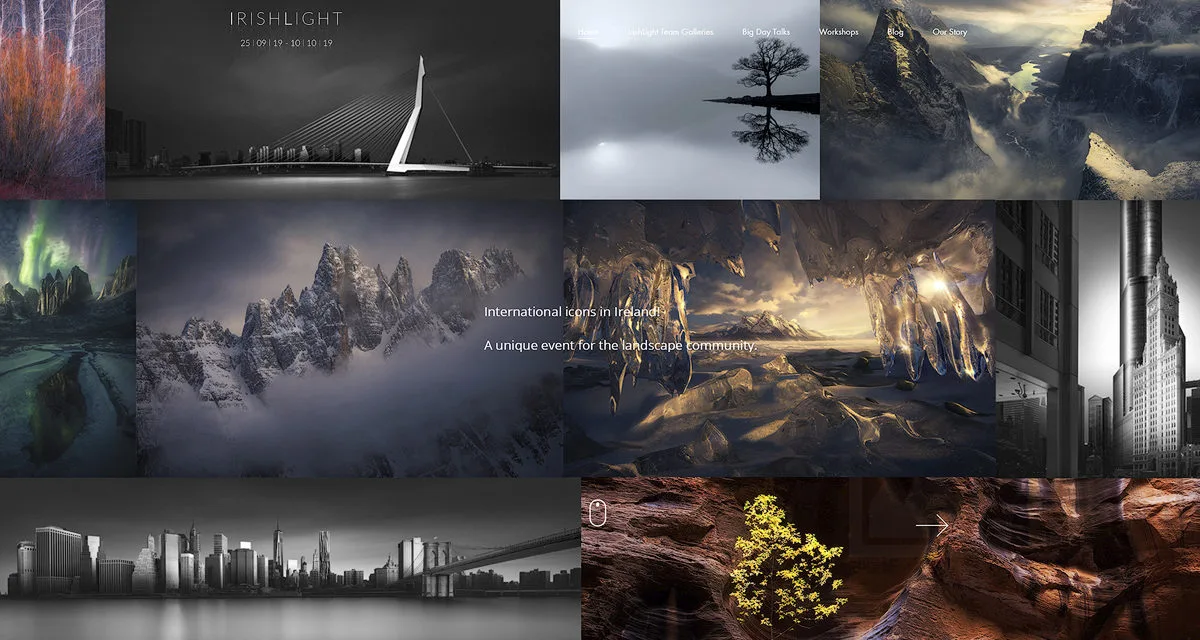
Sean speaks at IrishLight Landscape Photography Festival in Dublin, Ireland

April 4, 2019 by Sean Bagshaw

Registration and more information

“IRISHLIGHT is a landscape photography festival with a range of events that we hope will help to inspire and educate the landscape community in Ireland and abroad.

The festival is run by Peter Gordon and Jelena Derk as a forum to pull the best professional Irish based landscape photographers together, bring international photographers to Ireland while also mobilizing the amazing enthusiast talent that exists both here and abroad.”

Presenters this year include Marc Adamus, Joel Tjintjelaar and Paul Sanders.

Sean will be speaking on October 6th at The Royal Marine Hotel in  Dun Laoghaire, Dublin, Ireland.
 

Tagged With: digital photography, digital workflow, fine art photography, landscape photography, light, nature photography, outdoor photography, photography technique, sean bagshaw photography

TKActions V5 Quick Tips

June 6, 2017 by Sean Bagshaw Leave a Comment

Periodically I am posting short video quick tips for how to use the TKActions V5 Panel on my YouTube channel. You can view the first four quick tips here. Subscribe to my YouTube channel so you can get notified each time I add a new one.


Filed Under: Digital Image Editing Tips, Video Tagged With: digital workflow

Grants Pass Presentation: Photographing and Developing for High Dynamic Range

January 13, 2015 by Sean Bagshaw Leave a Comment

Grants Pass Presentation: Photographing and Developing for High Dynamic Range

Grants Pass Camera Club Third Wednesday Meeting

First Christian Church Fellowship Hall
305 SW H St Grants Pass, OR

Wednesday, January 21, 2015 7 – 9 pm

Presentation: Photographing and Developing For High Dynamic Range free and open to the public

Club website and contact

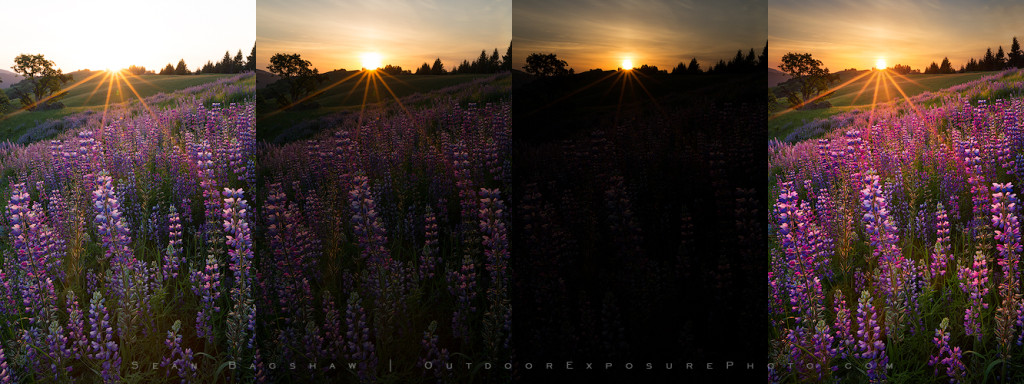
Bracketed-Series1

A common occurrence when photographing the landscape is that our images don’t match what we saw. The brighter areas in an image may be completely overexposed or shadow areas may appear totally black. This is because the dynamic range, or contrast, we encounter in nature is often at the edge of or beyond what our cameras can record in a single exposure. Fortunately, there are many ways to overcome challenges of high dynamic range light, both in the camera and in developing. Sean’s presentation will look at different types of natural light, how to evaluate the dynamic range in a scene and several techniques for controlling the dynamic range in your images.

Filed Under: Past Events Tagged With: digital workflow, Exposure Blending, landscape photography, Photography Presentation, Photoshop techniques

Sizing Images Made Easy (Easier?) On The PhotoCascadia Blog

September 14, 2011 by Sean Bagshaw Leave a Comment

Sizing images for screen and print output may be one of the most confusing and misunderstood concepts in digital photography, which is deceiving because it appears pretty basic on the surface. Even after more than a decade of moderately hardcore Photoshop use I still find new ways to confound myself in this area. This topic is steeped in misunderstanding, urban legend, faulty logic and general confusion. Screen resolution vs. print resolution? What is the correct resolution for the web? To resample or not to resample? How much can I enlarge an image for printing? Why shouldn’t I upload a bunch of full resolution 21 megapixel images to Facebook or email them to grandma?

I have published an article on the Photo Cascadia Blog that I hope will help clear things up a bit and allow folks to get a firm grasp on exactly how best to size images for different purposes. However, if you are a recreational photographer who isn’t concerned with optimal image output, you should maintain your blissful state of mind and avoid reading this article at all cost.

If you are already involved in using Photoshop or other photo processing applications to size your images then it could be a worthwhile read. You might be interested to know that screen images don’t need to be 72 ppi (pixels per inch) and that, in fact, ppi resolution doesn’t have any affect on how images appear on the screen? And what about always printing at a certain resolution such as 300 or 360 ppi? The reality is that resolutions as low as 180 ppi can produce prints that look the just as good to the eye as higher resolutions and sometimes even better. Check out the article to learn more and find out my personal guidelines and workflow tips for sizing images.

Filed Under: Digital Image Editing Tips Tagged With: digital photography, Digital Photography Tips, digital workflow, Photoshop techniques

Image Developing Workshop Review

April 15, 2011 by Sean Bagshaw 2 Comments

Steve Cole, a photographer based in Washington, recently attended two of my digital image developing classes in Bend, Oregon. Steve is serious about photography and has spent a lot of time researching techniques and developing his skills. He drove to Bend from Seattle hoping that he could add some new techniques and skills to his repertoire.

Steve, it turns out, is also a very good writer. After the class he was motivated to pen a detailed review of the classes. His description of what goes on during the class and what content was covered is better than I could do myself. For a well written, unsolicited overview of what we were up to in Bend I encourage you to give Steve’s article a read.

Here is a short excerpt. “So were the two classes worth it? Without hesitation, I can say YES. From the minute you first meet him, Sean is friendly and engaging without any elitism or arrogance. He is just a guy who is passionate about nature and photography and who doesn’t love that? Before becoming a “pro” photographer 8 years ago, Sean was a middle school teacher and that really shows in his ability to teach and explain concepts.”

As Steve says in the article, I haven’t yet scheduled these classes again in the near future. If you have a venue and a group of 10 to 15 people who are interested give me a call.

Steve’s Blog: scolephoto.blogspot.com

Steve’s Website: www.scolephoto.com

Filed Under: Photography Journal Tagged With: digital photography, digital workflow, Exposure Blending, nature photography, photography workshop

On Landscape Photography, Digital Image Developing and Artistic Expression

February 28, 2011 by Sean Bagshaw 4 Comments

On Landscape Photography, Digital Image Developing and Artistic Expression

One of the mindsets that guides my photography is that the human eye and the camera don’t experience the world in the same way. Photographs are more limited than human sight in many ways, but can also see in ways that we can not. It is my goal to understand what the camera sees so I can manipulate and coax it to capture a photograph that reconciles with my own view of the landscape. To some this goes against tradition. We have been conditioned to believe that a photograph portrays, or at least should portray, an accurate record of the world and we must accept what the camera gives us. In truth, the very act of taking a photograph significantly alters a scene from how we perceive it in any number of ways. I’m less interested in the literal and more interested in what I can communicate and create. Artists have always endeavored to express themselves, their experiences and their impressions through their medium. A camera is a tool to do just that, to paint an artistic vision of the world. I want to capture something that excites me and hopefully resonates with others. In a recent interview my friend, professional musician and fellow photographer, Chip Phillips said, “The main thing to make the [musical] performance successful is to stir up an emotional response in the listener, and the same is true with a photograph.”

Both the way that we capture and develop our images have entered a new and exciting phase. Early on I embraced the changes digital technology brought to the art form. The digital age has allowed photographers to overcome many shortcomings and limitations of cameras that have frustrated them from the beginning. The new tools of photography enable me to be more creative and to express my experiences and vision more fully than ever before. I will always be fan and a student of traditional landscape and nature photography, venturing into the land to work with the raw materials of light, form, color and texture. And while the photographic tools and techniques are evolving, the motivation and the thought processes of the nature photographer remain unchanged. If anything, I find that it is more important than ever to be on top of my game. It takes skill in traditional photography techniques as well as skill in digital developing to get my images to approach what I hope for them.

There are those who worry that digital photography has lowered the bar. I can say my experience has been just the opposite. All the principles of light and composition continue to apply and proper camera technique is still essential. In fact, the way that I work with the camera in the field these days is more involved and creative than it ever could have been with film. I shoot thinking several steps ahead to how I will want to develop the image later on. In just a few seconds I might capture a range of frames utilizing different exposures, apertures and focal points in order to collect all the visual information in the scene I’ll need to develop the finished piece. Learning how to think and work with so many variables while simultaneously pre-visualizing the future processing has been far more interesting and challenging than working within the confines of a single frame of film ever was. Far from being a shortcut or a creativity killer, digital photography allows us to express a new and exciting vision, not unlike the way film photography did when it was introduced over a century ago.

For further musings on the topics of photography, artistic expression and where current digital developing techniques come to bare I would point you toward Guy Tal’s recent article: Lie Like You Mean It.

There are so many great activities one can be involved in in life. For many of us, one of those activities is the magic of exploring the world with our cameras in hand, capturing moments and trying to make lasting memories of the scenes that impress upon us.

Links that might be of interest:

Upcoming image processing classes and outdoor photography workshops.

Instructional videos on fine art image processing.

In my photography I am aware that the human eye and the camera don’t see the world in the same way. Photographs are more limited than human sight in some ways, but can also see in other ways that we can not. Since its invention we have been conditioned to accept that photography portrays a “literal” record of the world. However, as an artist, I’m less interested in the literal and more interested in how I can communicate my own experience and personal artistic vision. Artists have always endeavored to express themselves, their experiences and their impressions through their medium. My challenge is to use the camera to do just that, to paint an artistic vision of the world as I see it. I strive to do it well enough that it resonates with others.

I am a fan of traditional landscape and nature photography. I derive great pleasure from venturing into the land and working with the raw materials of natural light, form, color and texture. The earth is my palette. But I also want to go beyond photography as a mere technical pursuit or objective record of natural history. In my photos I struggle to express something beyond a literal representation of the scene. Through the use of traditional photography techniques as well as careful digital developing I struggle to project my own human impressions, experiences and imagination. I hope that those who view my images are able to experience the same sense of adventure, mystery, drama, exploration and beauty that I do when I am out in the world.

Photography has entered a new and exciting era. Early on I embraced the changes digital technology brought to the art form. The digital age has allowed photographers to overcome many shortcomings and limitations of cameras that have frustrated them from the beginning. It is an exciting time to be a landscape artist. The new tools of photography enable me to be more creative and to express my experiences and vision more fully than ever before.

For those wondering if digital cameras have lowered the bar in photography, I can say my experience has been just the opposite. All the principles of light and composition continue to apply and proper camera technique is still essential. In fact, the way that I work with the camera in the field these days is more involved and creative than it ever was or could have been with film. I shoot thinking several steps ahead to how I will want to develop the image later on. In just a few seconds I might capture a range of frames utilizing different exposures, apertures and focal points in order to collect all the visual information in the scene I’ll need to develop the finished piece. Learning how to think and work with so many variables while simultaneously pre-visualizing the future processing has been far more interesting and challenging than working within the confines of a single frame of film ever was. Far from being a shortcut and creativity killer, digital photography allows us to express a new and exciting vision, not unlike the way film photography did when it was introduced over a century ago.

Filed Under: Photography Journal Tagged With: digital photography, digital workflow, fine art photography, landscape photography, oregon photographer

How Many Exposures To Bracket For Exposure Blending Or HDR?

September 8, 2010 by Sean Bagshaw Leave a Comment

As photographers we frequently struggle to overcome the limitations of our equipment in order to create the photographs we envision. One of the biggest limitations of traditional photography is the narrow dynamic range of light that can be contained in an image compared to what we see.

Techniques for blending exposures vary from simple to highly complex. They can be accomplished using skilled layer masking techniques in Photoshop. We also have the option to use one of a rapidly growing list of exposure blending programs commonly referred to as High Dynamic Range (HDR) software.

One of the most common questions I’m asked in classes and workshops on the topic of bracketing exposures for exposure blending and HDR imaging is, “how do you know how many exposures you need to bracket?”

The goal is to capture all the dynamic range tonal information in a scene in a series of exposures. The sequence of images below shows four exposures I took of a high dynamic range scene on the Columbia River. Having all the shadow and highlight information recorded in the various exposures allowed me to blend them using layer masks to create the final image. I could have also used one of many HDR applications to blend the exposure values.

To read the full article I wrote on the Photo Cascadia Blog go HERE.

In the first exposure I noticed that both the shadows and highlights extended beyond the ends of the histogram.
By underexposing a stop I was able to contain most of the highlights.
Underexposing two stops enabled me to retain detail in even the brightest highlights.
Finally I overexposed by two stops to get an exposure in which no shadow detail was clipped. I did take an exposure one stop over exposed but didn't end up using it in the final image.
After careful blending using layers masks I did some additional processing for color and contrast to arrive at the final image.

You can read the complete article on the PhotoCascadia.com blog.

Please leave a comment or question below.

Filed Under: Digital Image Editing Tips, Digital Photography Tips Tagged With: digital photography, Digital Photography Tips, digital workflow, Exposure Blending, HDR photography, photography technique

Organizing The Digital Photography Workflow

January 23, 2009 by Sean Bagshaw 4 Comments

Organizing The Digital Photography Workflow

I recently had the opportunity to take an amazing one day workshop on digital photography workflow from Mac Holbert, co-founder of Nash Editions, widely known as the world’s first digital printmaking studio focusing solely on photography. Prior to Nash Editions, Mac Holbert was the Tour Manager for the music group Crosby, Stills & Nash. He co-founded Nash Editions with Graham Nash in 1987. If you aren’t familiar with Nash Editions or Mac Holbert I recommend reading this interview by John Paul Caponigro. John and Mac are both instructors with the Epson Print Academy.

Mac Holberts’s workshop revolutionized how I approach my workflow in Photoshop. While Mac knows and willingly shares a wide range of Photoshop actions, adjustments and techniques, it is his suggestions for how to organize and approach the digital photography workflow that I found most enlightening. As the saying goes, “give a man a fish and he eats for a day, teach a man to fish and he eats for life”. Mac refers to specific Photoshop techniques as the fish, but a well organized and purposeful work flow as knowing how to fish. He also points out that with a program as powerful as Photoshop, there are many ways to get to any single photoshop destination, but having a well organized workflow ensures that you don’t end up at the wrong destination, such as with damaged pixels or with workflow steps that can’t be reversed.

Mac emphasizes that the digital workflow should begin with adjustments that directly affect pixels (those not made on adjustment layers) and more global adjustments and then proceed toward more and more localized adjustments. He also suggests that your Photoshop layer stack be organized to reflect this progression.

A workflow following this type of progression might go something like this: start with adjustments that affect pixels, such as cloning, noise reduction and perspective adjustments. Then proceed to global tonal and color adjustments (made with curves adjustment layers) such as setting the black point, gray point, global contrast and global brightness. After those adjustments are made it is time to start targeting smaller regions of the image that need adjusting such as regional dodging and burning and targeted tone, saturation and contrast adjustments. Finally, the workflow is finished up with specific “spot” adjustments such as manual dodging and burning, tonal adjustments, midtone enhancement, local sharpening and so on.

Keeping the layer stack organized to reflect this progression is paramount. The following graphic is the one the Mac uses to give a basic illustration of what a well organized layer stack might look like.

My old workflow, largely self-taught, generally allowed me to achieve what I wanted with an image, but it was highly haphazard and disorganized, and I often worked myself into corners or created hard to resolve issues. I knew that there was a better, more efficient and less damaging approach. Mac’s suggetions were just what I was looking for. If you ever get the chance to attend one of Mac’s workshops, through the Epson Print Academy or elsewhere, I highly recommend it.

Filed Under: Digital Photography Tips Tagged With: best photography workflow, digital darkroom, digital photography, digital photography workflow organization, digital workflow, Epson Print Academy, John Paul Caponigro, Mac Holbert, Nash Editions, organizing your digital workflow, Photoshop techniques, Photoshop tips, sean bagshaw photography

© 2026 · Sean Bagshaw Outdoor Exposure Photography