Sean Bagshaw Outdoor Exposure Photography

Images from the edge

See all image results...

Search Criteria
Exact matches only
Search in title
Search in content
Content Type
Select all
Search Posts
Search Prints & Stock Photos
Search Events
Search Pages
  • About
    • Sean’s Biography
    • A Look Through My Lens
    • Social Media
    • Alliances
    • Sign Up For My Newsletter
    • Website Tour
    • Interviews And Podcasts
    • CV
  • Tutorials & TK Photoshop Plugins
  • Learn Nature Photography
  • Videos From My YouTube Channel
  • Signed Prints
    • Favorites Of 2023
    • OREGON
    • CANYONS AND RIVERS
    • CITYSCAPES
    • COASTAL
    • DESERTS AND PRAIRIES
    • FLOWERS AND PLANTS
    • FORESTS AND TREES
    • MOUNTAINS AND LAKES
    • NATIONAL PARKS
    • STREAMS AND WATERFALLS
  • PRINT OPTIONS
  • Stock Photography
    • OREGON
    • NORTH AMERICA
    • THE REST OF THE WORLD
    • AGRICULTURE AND VINEYARD
    • BUILT BY PEOPLE
    • NATURAL BEAUTY
    • OUTDOOR AND ADVENTURE
  • Books & Calendars
    • Calendars
    • Washington Evergreen
    • Oregon, My Oregon
    • Photographing Through The Seasons
  • Workshops
  • Events
  • Photography Blog
  • Contact
  •  

Peeling The Moon

November 16, 2009 by Sean Bagshaw Leave a Comment

Peeling The Moon
0581166-20091026-Edit
Peeling the Moon - Cracked desert mud near Escalante, Utah.

David Cobb and I came across this cracked, peeling mud layer in a wash while hiking in the desert along Hole in the Wall Rd in Utah. We were drawn, not only to the curled and cracked patterns, but the pock marks that must have been left by a rain shower. Without the cracks it would be hard to tell apart from a high altitude view of the moon’s surface.

There was harsh 10 o’clock light at the time, so I shaded the area with my jacket and noticed a great warm glow on the curled portions which was reflecting from the brightly lit bank of the wash. There was also a very slight blue cast in the flat sections which were reflecting the sky. The RAW file has pretty low contrast, but after working a bit in both RAW conversion and in PS to draw out the histogram and increase the contrast, this is the result. I often look for low contrast scenes to photograph knowing that the effect of enhancing the contrast later will give results that I find visually exciting.

Canon 5DII, 24-105mm f/4L IS, 1/6 sec @ f/22, ISO 100

Filed Under: Featured Photo, Photography Journal Tagged With: desert photography, fine art photography, how to photograph in mid day light, photography in escalante-grand staircase, utah photography

Blurred Water Effect

October 19, 2009 by Sean Bagshaw Leave a Comment

Blurred Water Effect

I recently had a question from a photographer about achieving the classic blurred water effect that many landscape photographers use during full daylight. The blurry water effect comes from using a long shutter speed (.5 sec to 10 sec depending on speed of water) to allow the motion of the water to appear smooth.  In low light situations it can be easy, and sometimes unavoidable, to get a long enough shutter speed without any assistance. When more exposure time is needed also make sure you are using a tight aperture (f/22+) to let in less light and a low ISO (50-100) to decrease your camera’s sensitivity to light. In slightly brighter conditions a polarizing filter, which holds back about 1 stop of light, can help give a long enough shutter speed to get blurry water. In brighter daylight conditions you might also need to use a neutral density (ND) filter, or combinations of ND filters, to block some light (3 stop up to 10 stops depending on how bright it is) and give you a slower shutter speed. Singh-Ray and other filter makers also have variable ND filters that allow you to “dial in” the amount of filtration you need.0383912-20090722-Edit

Filed Under: Digital Photography Tips, Photography Journal Tagged With: blurred water technique, neutral density filter for longer exposure, photography how to, photography techniques, photography tips, sean bagshaw photography, smooth water technique, southern oregon photographer

Oregon Exposure App for the iPhone

October 13, 2009 by Sean Bagshaw Leave a Comment

Oregon Exposure App for the iPhone

Oregon-Envi-3-bigI’m proud to announce the release of my second iPhone app which is called Oregon Exposure for iEnvision. As with my first iPhone app, Outdoor Exposure for iEnvision, it was created in partnership with the fine folks at Open Door Network. They produce an entire line of iPhone apps based on their iEnvision software platform.Oregon-exposure-screen2

Oregon Exposure for iEnvision runs on any iPhone or iPod Touch. It contains nearly 100 stunning images that show the grandeur and beauty of Oregon. The images are arranged into galleries by region. Each photo captures a bit of Oregon’s personality with the artistic attention to composition and light that my photography has become known for.Oregon-exposure-screen4

I’m really excited about this application because as resident of Oregon for 35 years it is a place that I am very close to and feel strong connections with the geology, nature, climate and culture. Several years worth of photography work have gone into creating the images in this new iPhone application.  I really wanted the app to be a worthy tribute to my home state and a way that people who share my enthusiasm can take a bit of it with them. It is a great way to keep Oregon close at heart and to share it with others who might not have had the opportunity to visit.Oregon-exposure-main1

You can download the app from the iTunes store: http://itunes.com/app/oregonexposureforienvisionOregon-exposure-screen3

Filed Under: Photography Journal Tagged With: iPhone application, iPhone photography app, Oregon Photography, photography on the iPhone, sean bagshaw photography

Intimate Painted Hills

August 25, 2009 by Sean Bagshaw Leave a Comment

Intimate Painted Hills

Intimate Painted Hills

The painted hills in central Oregon is one of my favorite places in the state. The Painted Hills are located in the Painted Hills Unit of the John Day Fossil Beds National Monument along Hwy 26 just west of Mitchell. Even though the hills don’t cover much area, the patterns and shapes and the way light plays across them is visually absorbing. I often take wide landscapes, but for this image I decided to zoom in for an intimate and abstract study. When photographed like this, the hills really do look painted…or rather, they create a photograph that looks like a painting. I’ll have to print this large on canvas and see how it looks.

Filed Under: Featured Photo, Photography Journal, Photography Travel Journal Tagged With: abstract photography, intimate landscape, john day fossil beds, landscape photography, painted hills, sean bagshaw, southern oregon photographer

Sharing Photography Via Social Networking

August 6, 2009 by Sean Bagshaw Leave a Comment

Sharing Photography Via Social Networking

Sean Bagshaw Photography on Facebook

Social networking is quickly surpassing more
traditional means of communicating and
sharing ideas and information on the web,
such as email and bulletin boards. In the
month since I started the official Sean
Bagshaw Photography
page on facebook the
number of fans (facebook’s term, not mine)
has grown to nearly 900 with members from every part of
the world. Facebook is an efficient way for
me to quickly share Outdoor Exposure Photography information, new
photos, photography tips and signed print
give-aways, much more efficient than my blog
or newsletters. Best of all, it provides a
platform for fans to participate by posting
their own thoughts, tips, questions and
photos.

Click here to follow my photography on facebook.

fbscreen

Twitter is a social networking site that I’m
just starting to experiment with. The idea
is that I can use twitter to post very short
dispatches from the field, photo tips of the
day and random thoughts from the day in the
life of an outdoor photographer.

Click here to follow me on Twitter.

Filed Under: Photography Business, Photography Journal Tagged With: follow a photographer, photographers on facebook, photographers on twitter, photography fans, sean bagshaw photography, social networking and photography, social networking marketing photography

Photographing in Lassen National Park

August 5, 2009 by Sean Bagshaw 8 Comments

Photographing in Lassen National Park

Mt. Lassen National Park in northern California seems to be one of the lesser known and visited national parks. It make lack some of the panache, history or supreme grandeur that the better known parks have. However, as a photographer, I really enjoy the diversity, volcanic activity and wilderness feel it has. On my most recent trip, in addition to some of your more standard nature images, I was able to take some photos that I feel are truly unique and artistically intriguing.

Burney Falls State Park is less than an hour's drive north of Lassen

Several lakes in the park provide views and reflections of Mt. Lassen and other peaks.

Twilight glow, Mt. Lassen, Chaos Crags and Manzanita Lake

The boiling mud pots in Bumpass Hell are a sight you won’t see outside of Yellowstone. With some special light or atmospheric conditions they have the potential for some very interesting photography.

Bumpass Hell boiling mud pots and pools, Lassen Volcanic National Park

Kings Creek Falls is just one of many along a spectacular stretch over a mile long that drops steeply into a canyon.

Kings Creek Falls
Kings Creek Falls

But so far, the area around Butte Lake, in the north east corner of the park is my favorite for photography. The large cinder cone makes a great photo subject in itself, and from its summit one can photograph the surreal Painted Dunes and lava beds. The forest of ponderosa pine and carpets of pine cones also make interesting photography subjects.

The Cinder Cone, Lassen Volcanic National Park
Painted Dunes, Lassen National Park
Sunrise light on the Painted Dunes
Ponderosa pine cones

Filed Under: Featured Photos, Photography Journal Tagged With: favorite spots in lassen national park, fine art landscape photography, landscape photography in california, lassen volcanic national park, photographing in lassen national park, photography locations in lassen national park

Jefferson Wilderness, Jewel of the Oregon Cascades

August 4, 2009 by Sean Bagshaw 2 Comments

Jefferson Wilderness, Jewel of the Oregon Cascades

The Jefferson Wilderness in the Oregon Cascades, located to the north of Santiam Pass, east of Salem and West of Sisters, is one of the most amazing natural mountain environments on the west coast. Mt. Jefferson itself is awe inspiring as the second highest peak in Oregon and host to the largest glaciers in the state other than those found on Mt. Hood.

Warm sunset light on Mt. Jefferson and Bays Lake

In days past I have trekked into Jefferson Wilderness on several occasions, either backpacking or to climb Three Fingered Jack or Mt. Jefferson itself. This was my first time to visit specifically to take photographs. The wilderness is home to some extremely photogenic countryside. For the dedicated photographer willing to backpack in with camera gear and spend a couple days exploring it is a wonderland.

In July I spent a memorable week with fellow photographer, David Cobb (www.dmcobbphoto.com), photographing in two different parts of the wilderness area.

Mt. Jefferson reflected in Rock Lake

First, we backpacked in to the popular Jefferson Park area via the Woodpecker Ridge Trail which is accessed by a forest road (road 040) a few miles to the east of the town of Detroit. Jefferson Park can be overcrowded on weekends in August, but midweek in July, when there is still quite a bit of snow on the ground and the mosquitoes are at their peak, we only saw three or four other parties in three days. Jefferson Park is popular for a reason. The flat alpine basin at over 6,000 feet of elevation has several lakes and numerous small tarns that reflect some of the best views of the mountain available. As the snow melts wildflowers carpet the marshy meadows. The position of the Jefferson Park area on the north side of the mountain means that in summer the peak gets great side light for photography at both sunrise and sunset.

Snow filled tarn in Jefferson Park

After three days on the north side of the wilderness we hiked out, drove over Santiam Pass and down the east side of the cascades where we drove along more forest roads (road 12 to 1230 to 1234) to reach the Canyon Creek trail head. The Canyon Creek trail starts at Jack Lake ascends toward Canyon Creek eventually arriving at Canyon Creek Meadow at the base of the north east side of Three Fingered Jack. Three Fingered Jack isn’t the highest of the Oregon Cascades, but it is one of the cragiest with the most interesting geologic patterns of colors and layering. Canyon Creek Meadow is located in a glacier carved basin directly at the base of the sheer north face of Three Fingered Jack. In late July it is home to one of the most amazing wildflower blooms in the state. We were a week or two too early for the peak of the flowers, so I look forward to getting the timing better next year. Even still the early morning light on the peak with winding streams, reflecting pools and green meadows below made it one of the more memorable campsites and photography locations I have had. A high ridge blocks the late evening light, so we cooked dinner and hid from the voracious mosquitos in the tent. However, the morning light is sublime. We spent over an hour finding one composition after another as the warm glow of the rising sun slowly progressed down the mountain face.

Paint brush in Canyon Creek Meadow below Three Fingered Jack

Greg Vaughn gives good directions and photography suggestions for both these locations in his book Photographing Oregon.

Three Fingered reflection

Filed Under: Featured Photos, Photography Journal Tagged With: canyon creek meadow photography, cascade range wilderness, Jefferson Wilderness, oregon photographer, photographing mt. jefferson, photographing three fingered jack, photography by sean bagshaw, photography in jefferson park, photography in the jefferson wilderness, southern oregon photographer, wilderness areas in oregon

The Difference Light Makes

June 26, 2009 by Sean Bagshaw Leave a Comment

The Difference Light Makes

Howard Prairie lupine right before sunrise.
Howard Prairie lupine at sunrise

For me, as for many photographers, light is the most important element in any photograph. Take these two photos for example. They were taken minutes appart during the June wildflower bloom in Howard Prairie in the southern Oregon Cascades. I like both, and other than the light, both are very similar. However, in the first image the sun has not yet crested the ridgeline so the scene is lit by indirect light that is being reflected from the sky and off of the surrounding landscape. It creates a very even wash of light with subtle transitions from darker to lighter areas and the feel that light is glowing from all directions, which it basically is. In the second image the sun has just crested the ridge and direct light is shining on the meadow and strongly backlighting the flowers and grass. The color is warmer, the contrast in the scene is much greater and there is a much stronger sense of the direction of the light. Knowing the characterisitics of different types of outdoor lighting situations helps me be to plan the timing of a photo to best convey the scene the way I envision it.

Filed Under: Digital Photography Tips, Photography Journal Tagged With: natural lighting, outdoor lighting, photography tip, sean bagshaw, southern oregon photographer, the difference light makes in a photograph, using natural light in photography

Photographing the Columbia River Gorge in Spring

June 2, 2009 by Sean Bagshaw Leave a Comment

Photographing the Columbia River Gorge in Spring
Wildflowers at Dalles Mountain Ranch

The Columbia River Gorge and corresponding scenic areas and monuments is one of the most varied and visually compelling natural locations in North America and it is an icon of the Pacific Northwest. Photographically, a visit to the “Gorge” is worth it any time of the year, although summer weekends can become notoriously overcrowded. As with so many locations, the height of spring and fall color are often the best for photography.

0018935-20090405
Bike racers descend the Rowena Curves during the Cherry Blossum Stage Race.

This spring I had the fortune to visit the Columbia Gorge two times and photograph some of the waterfalls found along the Oregon side as well as some of the best wildflower locations found further east near Mosier and The Dalles. This entry in my blog features several of my favorite images from my two spring visits this year. These photographs are new enough that they have not been added to my site yet, but they are available upon request. I hope you enjoy!

Mt. Adams from near the town of Trout Lake
Metlako Falls
Metlako Falls
Punchbowl Falls
Punchbowl Falls
Hiking along Eagle Creek
Elowah Falls
Elowah Falls
Upper Horsetail Falls
Rowena Hills Sunset, Tom McCall Preserve
Mosier Cherry Orchards
Small wildflower with an even smaller spider
Sunrise at Dalles Mountain Ranch
Out to pasture at Dalles Mountain Ranch
Earthbound Sun, balsamroot and lupine

Filed Under: Featured Photos, Photography Equipment, Photography Journal

Ashland, Oregon Photography

April 29, 2009 by Sean Bagshaw 28 Comments

Ashland, Oregon Photography
Ashland Plaza
Ashland Plaza

There are a lot of places I could live, and a lot of places I would live. Since coming to Ashland to go to college in 1986, I have yet to find another place I would rather live. Since starting my career as a photographer in southern Oregon I have even more reason to base myself in the Rogue Valley near Ashland. I travel quite a bit to photograph in many different parts of the US and the world, but being a local Ashland, Oregon photographer I always have great opportunities for photography close to home. I often go out to photograph in town or in the nearby hills and orchards early in the morning. Spring and fall are my two favorite times of the year to take Ashland photos.

In April, Ashland is just entering into its best spring phase. Between mid April and mid June I try to photograph Ashland or the surrounding areas at least once a week to keep up with the quickly changing weather, flower blooms and shift of seasons. I make several visits to some of my favorite locations, such as Lithia Park, The Plaza, Main Street, Emigrant Lake, Grizzly Peak and the surrounding hills.

The Classic Varsity Theater

As we near the mid point of the spring photography season I thought I would share some of the Ashland photography that I have done in the past couple of weeks.

Early Morning Fishing on Emigrant Lake
Ashland Springs Hotel
Sunrise at Emigrant Lake

While I am always looking for new and different places to find great images I will always remain a southern Oregon photographer and continue to take Ashland photographs for a long time to come.

Filed Under: Photography Journal

Sayulita, Mexico 2009

April 29, 2009 by Sean Bagshaw Leave a Comment

Sayulita, Mexico 2009
_mg_8056
Sunset at the Beach of the Dead

In March I had the good fortune to travel to Sayulita, Mexico for my second visit. It is a wonderful small fishing village turned surf destination on the Pacific coast north of Puerto Vallarta. While it has its share of tourists and ex pats, it has managed to remain small and quiet, with no hi-rise resorts or garish shopping/club districts. Most of the roads are dirt and there are just about as many chickens and dogs as there are people. The local fishermen still launch their boats every morning right from the same sandy beach that the tourists lounge on.

In my two visits I have found some great photography subjects that really give a feel of how idyllic the area is. These are some images from my most recent trip.

Fishing Boats at Dawn
Rocky Shore and Waves
Palm Trees Growing From The Street
Produce at the Local Market
Secret Beach Sunset
Secret Beach Sunset
First Day of Spring Children's Parade
Ocean View at Twilight
Abandoned Fishing Boats

Filed Under: Photography Journal

2009 Tour of California Video Webisodes

February 25, 2009 by Sean Bagshaw Leave a Comment

Just back from the 2009 Amgen Tour of California bike race. It was an amazing 10 days on the road with my brother, Ian and his girlfriend, Jade. This was the biggest cycling event to ever happen in the United States. The field included the return of Lance Armstrong, three time winner Levi Leipheimer, Belgian sprinter Tom Boonan, fastest man on a bike Mark Cavendish and a host of Tour de France winners, Olympic champions, world champions and national champions. Other big name riders included Floyd Landis, Tyler Hamilton, Ivan Basso, Carlos Sastre, George Hincapie, Christian Vandevelde and Thor Hushovd.

Each day, as we chased the race from one end of California to the other, we filmed, editied and uploaded video diaries of our adventures. They are meant to be funny, dorky and low quality and give some insight into what it is like to be cycling fans on the road with a major multi-day stage race.

I hesitated to post the video series here, because the trip was really just a fun non-photography excursion for me. While most of my interest and professional focus is on cameras and photography, I’d have to say that as a hobby, bikes and bike racing are a close second. I hope my poor skills with video don’t reflect badly on my landscape photography. In the end I decided that I enjoyed making the videos so much that I just had to share them. Who knows? Perhaps some of you are fans of both photography and cycling like me.

Filed Under: Photography Journal Tagged With: 2009 Tour of California, Belgian sprinter Tom Boonan, Carlos Sastre, Christian Vandevelde, fastest man on a bike Mark Cavendish, Floyd Landis, George Hincapie, Ivan Basso, national champions, Olympic champions, the return of Lance Armstrong, Thor Hushovd, three time tour of california winner Levi Leipheimer, Tour de France winners, Tyler Hamilton, video blog, video diary, webisode, world champions

In Search Of A Winter Full Moon Rise

January 16, 2009 by Sean Bagshaw Leave a Comment

In Search Of A Winter Full Moon Rise

Some friends and I skied out into the Siskiyou Mountain Range back country behind Mt. Ashland last weekend during the full moon. On cue, it rose directly over Mt. Ashland. As the moon was rising the light from the setting sun illuminated the sky to our east. By taking three images and stitching them together I was able to create a panorama showing Mt. McLoughlin, Pelican Butte, Brown Mountain and Mt. Ashland.

After the moon climbed up in the sky a bit I composed this next photo. My goal was to capture the amazing atmosphere, calmness and clarity of winter camping. I thought the headlamps in the tent and the moonlight on the snow really helped capture the mood. I put in a fair amount of Photoshop time blending multiple exposures to try to balance out all the various light sources (back lighting from moon, front lighting from the fading sunset glow, the moon itself and the light in the tent).

It is always fun on outdoor adventures to also take some photos of your buddies trying to look like hardened outdoorsmen.

Filed Under: Adventure Journal, Photography Journal Tagged With: back country skiing, night photography, outdoor adventure, panoramic photography, Siskiyou Mountain Range, snow camping, Southern Oregon, southern oregon photographer, southern oregon photography, winter snow camping

2008 Nature's Best Exhibit

January 8, 2009 by Sean Bagshaw Leave a Comment

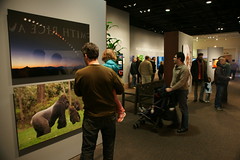
2008 Nature's Best Exhibit


2008 Nature’s Best Exhibit

Originally uploaded by naturesbestblog

My photo Lunar Eclipse Over Mt. Shasta won Best Creative Digital Photograph in the 2008 Nature’s Best Photography, Windland Smith Rice Awards and is currently on exhibit with the rest of the winners at the Smithsonian Museum of Natural History in Washington DC. I have not been able to get to DC to see the exhibit myself, so I was interested to see my winning photo in this image of the exhibit posted by Nature’s Best Magazine

Filed Under: Photography Journal

2008 Nature's Best Photography Exhibit Now Open at Smithsonian

December 5, 2008 by Sean Bagshaw 2 Comments

2008 Nature's Best Photography Exhibit Now Open at Smithsonian

My photograph Lunar Eclipse Over Mt. Shasta was recently named Best Creative Digital Photograph of 2008 by Nature’s Best Photography Windland Smith Rice International Awards. I’m excited to announce that It is now on exhibit at the Smithsonian National Museum of Natural History in Washington, DC from November 2008 through April 2009.

Out of 22,000 entries, award-winners were chosen in 19 categories. A selection of 40+ images are included in the exhibition of large-format prints accompanied by captions telling the stories behind the shots, as well as an HD video by the Discovery Channel. Through these photos, visitors will gain an appreciation for the wild through the art of nature photography.

This exhibition has been named in memory of Sandra Windland Smith Rice for her steadfast support of emerging photographers worldwide. She was a skilled nature photographer and a champion for wildlife around the world. She did work for National Geographic, Nature’s Best and Coldwater Creek and won many awards. Mrs. Rice served on Nature’s Best Foundation board and on the board for Earthfire Institute, an Idaho based nonprofit that provides safe homes for wildlife no longer able to survive in the wild.

See the Fall 2008 Special Collectors’ Edition of Nature’s Best Photography magazine for the complete catalog of 102 Winners and Highly Honored images from the 2008 contest. The winning images have also been featured on AOL, MSNBC and Pixcetera

Filed Under: Past Events, Photography Journal Tagged With: ashland photographer, competition, landscape photographer, lunar eclipse photography, nature's best magazine, nature's best photography, photography award, smithsonian national museum of natural history, southern oregon photographer, Windland Smith Rice Awards

On the Edge at Palouse Falls

November 26, 2008 by Sean Bagshaw Leave a Comment

On the Edge at Palouse Falls

At the beginning of October, David Cobb and I were returning from a productive ten day photo trip in Montana and Idaho. We decided to detour slightly for a final stop at Palouse Falls in eastern Washington. We took a 30 minute stop for lunch in Baker City, Oregon which caused us to miss the sunset at the falls. We arrived at the falls about 30 minutes after sunset thinking that we had missed our window. However, the final glow on the horizon before the scene went totally dark was amazing. The orange post sunset glow in the sky reflected nicely off the cliff walls creating a moody, alien scene.

Palouse Falls drops over 150 feet into the deep and winding Palouse River Canyon in eastern Washington. The landscape in this area, not far from the Snake River Canyon, was carved by the massive Misoula Floods created when an enourmous ice dam broke in Montana at the end of the last ice age. Taking this photo required positioning my tripod legs right on the edge of the 370 foot high canyon rim and fighting back sensations of vertigo while standing on tip toe to see through the viewfinder.

Canon 5D, 16-35mm f/2.8 L lens, circular polarizer, 3 stop GND, 30 seconds @ f/13

Filed Under: Photography Journal Tagged With: canyon, landscape, Palouse Falls, Palouse Region, photography, southern oregon photographer, southern oregon photography, sunset, Washington, waterfall

Blue October Sea

November 19, 2008 by Sean Bagshaw 1 Comment

Blue October Sea

From a trip to the southern Oregon coast with a group of Ashland photographers a couple of weeks ago. I liked the barnacle patterns on this rock and spent some time working on longer exposures to capture some wave motion for an interesting middle ground. As many of us who like to capture wave motion in our ocean photos well know, it is hard to get in the right position and still stay dry. I ended up stranded on this rock for several wave cycles until the surf went back out enough for me to wade to shore…the surf here wasn’t dangerous, just wet.

On the hike back to the car a woman approached me on the beach and said, “are you Sean Bagshaw?” I immediately wondered what I was in trouble for. It turns out she was with someone in the group. I had wandered off for quite a while and they were ready to go. Since she was walking my way they asked her to have me get a move on. Apparently they had told her I would be easy to spot because I would be carrying a tripod and most likely be wet up to the waist. I hate being so predictable.

Canon 5D, 16-35mm f/2.8 L @ 28mm, 2 sec @ f/18 and ISO 50, 3 stop ND filter for longer exposure time.

Filed Under: Featured Photo, Photography Journal Tagged With: bandon, Bandon Photography, beach, coast, landscape photography, ocean, Oregon, Oregon Coast Photographer, Oregon Coast Photography, pacific, photography, Sea Stacks, sean bagshaw, surf, waves

Photo Journal: Photographing Double Falls

November 14, 2008 by Sean Bagshaw 3 Comments

Photo Journal: Photographing Double Falls

This amazing location required a 4:00 AM wake-up and a cross country hike through grizzly country in the dark up on Logan Pass in Glacier National Park. It was well worth the effort. Streams cascading off all sides of a bowl shaped valley converge at this narrow slot in the rocks. During the summer, melt water flows off the canyon walls in several places creating four of five separate falls, but in the fall just the two main falls remain.

I first became aware of this waterfall from Galen Rowell’s classic photograph. A couple of years ago it ran on the cover of Outdoor Photographer Magazine and included the following caption: “Light conditions like this are notoriously difficult to photograph. The contrast between the sky and the shadowed ground is too much for film or an image sensor to handle. At the time Rowell made this image, he used a split neutral-density filter to control the contrast. If he was alive and photographing the same scene today, Rowell would have used a digital camera. He’d have known that he could employ some sophisticated RAW-software techniques to double-process the image file.”

I took that advice and photographed the classic scene in two separate exposures, one for the sky and one for the dark foreground and then manually blended the two images in Photoshop to allow the entire range of light that I experienced to all be contained within a single image.

The magazine caption also noted the irony that in a location famous for being on the continental divide, a place where water usually flows in opposite directions, toward the east or the west, would also be a place where so many streams flow together.

Two exposure manual blend. Canon EOS 5D, Canon 16-35mm f/2.8 lens, 3 stop Sing-Ray split neutral density filter, circular polarizer, 3.2 sec @ f/10 (sky), 15 sec @ f/10 (fore ground), ISO 100

Filed Under: Digital Photography Tips, Featured Photo, Photography Journal Tagged With: glacier national park, landscape, logan pass, montana, mountains, photo, photography, scenic, sean bagshaw, sunrise, technique, waterfall

Southern Oregon Photographers Mount Fine Art Exhibit

October 16, 2008 by Sean Bagshaw Leave a Comment

Southern Oregon Photographers Mount Fine Art Exhibit
The Southern Oregon Photographers Forum, a group that I am a member of, announces its first annual group photography show. Extending from November 7 though December 1, at Studio 5, 258 A Street across from Ace Hardware in Ashland’s Railroad District. The show features the works of 17 local photographers including myself and the renowned David Lorenz Winston. A First Friday reception will be held from 5:00-8:00 p.m. on Friday, November 7.
Works in the show include digital and film photography in a variety of genres. 33 photographs will be exhibited. Visitors will have the opportunity to meet the exhibiting photographers and talk with them about their works. In addition, a slide show presentation will feature photographic works by members of SOPF. Refreshments will be served.

SOPF was formed in January 2007 by eight photographers and has grown to a membership of 21. An organization of fine art photographers, SOPF was established to encourage and support individuals in achieving their photographic goals and to promote an appreciation of photography in our community. Members share a love for the medium of photography & the power images have to evoke strong emotional responses.

Filed Under: Photography Journal Tagged With: David Lorenz Winston, exhibit, fine art photography, gallery, photographer, photography, show

Longer Exposures For More Saturation and Luminosity

October 6, 2008 by Sean Bagshaw 1 Comment

Longer Exposures For More Saturation and Luminosity

Â

In situations involving low levels of light it can often be beneficial to obtain a longer exposure to allow the sensor/film more time to absorb color and glow. There can be a lot of color and light bouncing off clouds and hills that our eyes can’t pick up. Cameras are able to “see” into low light scenes by leaving the shutter open and collecting more light. If I really want to pull as much light and color from a scene as possible I’ll often use a neutral density filter (ND) along with my usual filter stack (polarizer and graduated neutral density when needed) and also set the ISO on my camera down to 50 in order to extend what was already going to be a long shutter speed.

A neutral density filter is a neutral gray piece of glass or plastic that is placed in front of the lens. Since it is neutral it doesn’t change the color of the image or do any other special effects. All it does is reduce the amount of light that can pass through the lens to the image sensor or film (kind of like wearing color neutral sunglasses). By reducing the amount of light coming in, the exposure time needs to be longer to get a properly exposed image. One effect of longer exposure times is the blurring of anything moving within the image (water, clouds, wind blown trees, etc.). Another affect is that if there is low level colored light washing over the scene it will saturate in the image over time. I use Singh-Ray neutral density filters because they are some of the most color neutral filters available and give excellent results. I also use Singh-Ray Graduated Neutral Density (GND) filters. GND filters are neutral gray at the top and fade to clear near the middle. They are used to hold back the light in one part of an image (like a bright sky) in order to balance the light across the scene.

The two photos above were taken one right after the other, the first at 6 sec @ f/20, ISO 100 with a 3 stop GND for the sky. The second was taken at 30 sec @ f/20, ISO 50 with a 3 stop GND and a 3 stop ND. Quite a difference 24 seconds of shutter time can make.

Filed Under: Digital Photography Tips, Photography Journal Tagged With: digital photography, exposure, filters, graduated neutral density, help, light, long exposure, neutral density filters, photography, pointers, saturation, singh-ray filters, techniques, tip, tips, tutorial

« Previous Page
Next Page »

© 2026 · Sean Bagshaw Outdoor Exposure Photography