Sean Bagshaw Outdoor Exposure Photography

Images from the edge

See all image results...

Search Criteria
Exact matches only
Search in title
Search in content
Content Type
Select all
Search Posts
Search Prints & Stock Photos
Search Events
Search Pages
  • About
    • Sean’s Biography
    • A Look Through My Lens
    • Social Media
    • Alliances
    • Sign Up For My Newsletter
    • Website Tour
    • Interviews And Podcasts
    • CV
  • Tutorials & TK Photoshop Plugins
  • Learn Nature Photography
  • Videos From My YouTube Channel
  • Signed Prints
    • Favorites Of 2023
    • OREGON
    • CANYONS AND RIVERS
    • CITYSCAPES
    • COASTAL
    • DESERTS AND PRAIRIES
    • FLOWERS AND PLANTS
    • FORESTS AND TREES
    • MOUNTAINS AND LAKES
    • NATIONAL PARKS
    • STREAMS AND WATERFALLS
  • PRINT OPTIONS
  • Stock Photography
    • OREGON
    • NORTH AMERICA
    • THE REST OF THE WORLD
    • AGRICULTURE AND VINEYARD
    • BUILT BY PEOPLE
    • NATURAL BEAUTY
    • OUTDOOR AND ADVENTURE
  • Books & Calendars
    • Calendars
    • Washington Evergreen
    • Oregon, My Oregon
    • Photographing Through The Seasons
  • Workshops
  • Events
  • Photography Blog
  • Contact
  •  

Red Willow Sea Wins in the ICP Awards

September 19, 2008 by Sean Bagshaw Leave a Comment

Red Willow Sea Wins in the ICP Awards
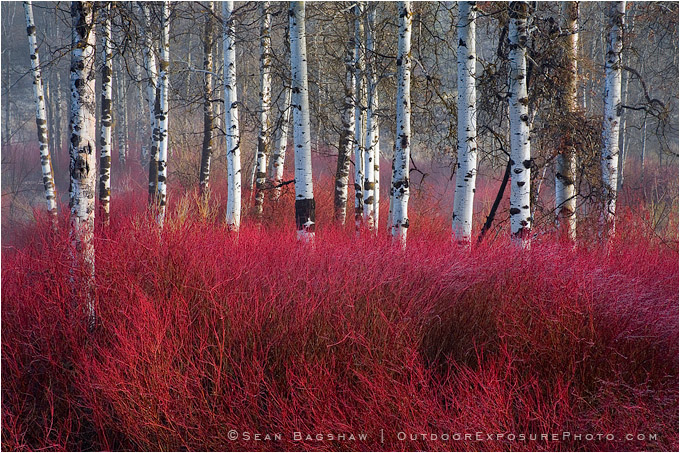
Red Willow Sea

Two of my prints were juried in to the International Conservation Photography Awards exhibit this year. Red Willow Sea was the winning image in the Flora category and Lunar Eclipse Over Mt. Shasta was also accepted in the highly competitive Landscape category.
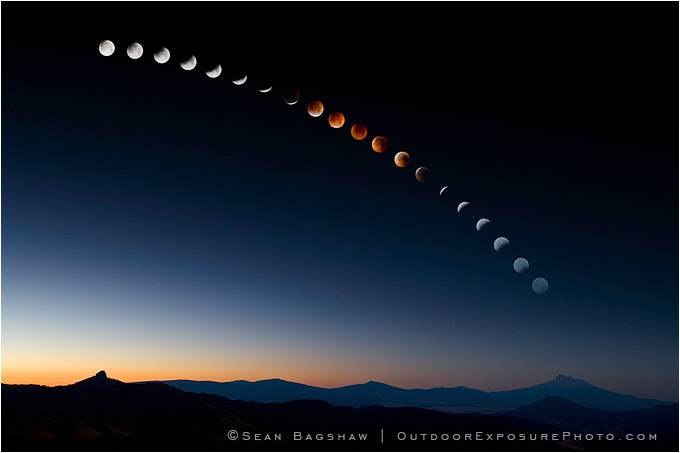
Lunar Eclipse

The International Conservation Photography Awards (ICP Awards), is a premier worldwide photography event. The biennial juried photo competition includes an online exhibit, a six week museum gallery show at the Museum of History and Industry in Seattle, Washington, and publication in a prestigious photography magazine. The selected prints celebrate the world’s diversity along with the creativity and originality of photographers.

Known for his passionate advocacy of the environment, world renowned nature photographer Art Wolfe created a conservation-themed photo contest in 1997 as “an event for the advancement of photogaphy as a unique medium, capable of bringing awareness and preservation to our environment through art.” The 2008 International Conservation Photography Awards is the latest incarnation of Art Wolfe’s vision. The ICP Awards is a biennial (every two years) community event involving foundations, sponsors, politicians, and photographers to promote environmental and cultural conservation.

Filed Under: Photography Journal Tagged With: Art Wolfe, International Conservation Photography Awards, landscape photography, lunar eclipse photography, Museum of History and Industry, nature photography, Seattle Photography Exhibit, southern oregon photographer

Photo Tip: The Difference Light Makes

August 18, 2008 by Sean Bagshaw Leave a Comment

Photo Tip: The Difference Light Makes

Photography is all about light. Without it, no photo. However it goes far beyond that. The type, direction, color, amount and quality of light, as well as the photographer’s ability to see and manage the light, are serious contributors to the success of a photo. The ability to see, feel and anticipate light as well as know how the camera will capture light are skills that take a long time to acquire. Some light is right for some scenes but completely wrong for others. The best way to learn what works and what doesn’t is to get out and shoot in all lighting conditions and stick around to shoot the same subject as light is changing, all the while making special note of how the light looks to the eye.

Sometimes it is difficult to know by eye just how much impact the light going to have on a photograph. The best way to realize the impact of light is to compare photos of the same subject matter under different lighting. The following two photographs really illustrate the value of such an exercise. These photos were taken less than two minutes apart, one before the sun rose over the horizon and the second, just after. There are times when the soft glowing light that comes just before sunrise gives perfect even, luminescent lighting to a scene, picking up subtle details and working its way into the deepest shadows. However, in this case, there isn’t enough separation of elements or correctly angled surfaces in the scene. The even lighting causes the tree, rocks and mountains to appear muddy and not well defined and the sky washes out to an unattractive white.

tree 1
tree 2

What a difference a little time makes. In the second image, just a few seconds later, bright, warm, low angle direct sunlight has broken over the horizon, side lighting the scene. It brings out color and adds needed definition and depth to the image, all things the eye looks for. In addition, the direct sunlight coming in at 90 degrees to the camera lens allow for the best polarization effect from a circular polarizer, enhancing the color of the tree and rocks and helping to darken the blue sky.

The composition itself isn’t particularly interesting, but the addition of the right light can make a surprising difference in how appealing it is to the eye. This is a great example of a particular type of light enhancing an image. Unfortunately, it isn’t a perfect formula for success and you shouldn’t try to achieve the same type of lighting for every image you take. In another situation you might find that the pre sunrise light actually creates the most appealing image.

It all comes down to time spent shooting in all lighting conditions, becoming more familiar with what works and increasing your chances of being there when the light is right.

Filed Under: Digital Photography Tips, Photography Journal Tagged With: landscape photography, light, outdoor photography, photography, photography technique

Sean Featured In Outdoor Photographer Magazine

July 19, 2008 by Sean Bagshaw 1 Comment

Sean Featured In Outdoor Photographer Magazine
Outdoor Photographer Magazine

A few months back, Christopher Robinson, editor of Outdoor Photographer Magazine, contacted me to see if I would be interested in being one of the featured photographers in the upcoming annual Landscape Photography Special Issue. I was astonished to find out that I was on OP’s radar and that they were interested in featuring me in the special issue. Outdoor Photographer is the foremost US publication on outdoor photography with an annual circulation of over 2.3 million. The magazine regularly features the work of many of the best known landscape and outdoor photographers including David Muench, Frans Lanting, Art Wolfe, Thomas Mangelsen and Galen Rowell. To be published alongside so many who have given me inspiration is pretty humbling stuff.
In the upcoming Landscape Special, author William Sawalich interviews myself and two other on-the-rise outdoor photographers. Here is a brief excerpt from the intro to the article. “The Outdoor Photographer 2008 Landscape Annual features the work of three artists who each takes a somewhat different look at landscape photography. Rodney Lough, Shane McDermott and Sean Bagshaw are all widely recognized photographers who have made their mark by taking steps away from the more staid, traditional landscape scene.”

Subscription issues are already in the mail and copies should hit the news stands soon if you want to pick one up. You can also read the article online HERE (my feature is on the third page). The online article gives readers the option to leave a comment at the bottom of the page if you are so inclined.

Filed Under: Photography Journal Tagged With: Christopher Robinson, Landscape Annual, New Photographers, Outdoor Photographer Magazine, outdoor photography, photography article, Rodney Lough, Shane McDermott, William Sawalich

Creating Mystery With Motion And Blending

April 29, 2008 by Sean Bagshaw Leave a Comment

Creating Mystery With Motion And Blending

Griffin's Dream 1

One of the goals of my photography is to create images that have a sense of mystery and the surreal. Photography is so often based in pure realism, but I find that I am attracted to images that give a glimpse into fantasy or imaginary worlds. Many of my friend DAVID WINSTON’S photos have such a quality and I have also mentioned MICHAEL KENNA more than once. Although their subject matter is very different from my own, I am inspired by the photography of NICK BRANDT and GREGORY COLBERT.

Dark Places

In my photography I am often trying to show familiar subjects and locations in a way that is familiar while at the same time mysterious and fantastical. Unique perspectives, purposeful composition, extreme weather, motion and magical lighting can often create something extraordinary in an ordinary setting, but such conditions are not always available. Recently I have been experimenting with some techniques, both in the camera and in the computer, that give me more options when trying to achieve something mysterious and stylized.

Lunar Eclipse

Three of the oak forest photos accompanying this article are from a series I call Griffin’s Dream. I used a slow shutter speed (about .4 seconds or more) and panned my camera vertically during the shot. This caused the trees and grass to blur into streaks of light and dark that look somewhat like brush strokes and help to remove fine details from the scene, leaving only the main elements of form and color.

Griffin's Dream 2

In the right kind of light, panning, zooming and other camera motion effects can create a great final image. However, for the Griffin’s Dream series the light was very flat giving the scene low contrast and washed out colors, so I employed a second technique to arrive at the final interpretations. In order to increase saturation, contrast and dynamic range in the initially lifeless images I used different combinations of blending modes in Photoshop. Darkroom technicians first developed the practice of stacking transparencies or negatives in various ways to produce different effects, and similar effects can be achieved with blending modes in Photoshop. To use blending modes you start by creating one or more layers that are exact copies of your original image (Layer>Duplicate Layer). Then in the Layers Pallet select each layer in turn and change the blending mode in the drop down menu at the top of the pallet. The blending mode defaults to “Normal”, which means that no blending between layers is taking place. For low contrast images I find that a combination of Multiply, Overlay and Soft Light blends work the best, but you have to experiment and see what works for each image. I also individually control the degree of each blend using the Opacity slider on each layer. I think the final result is painterly, surreal and fantastical, more like an impressionistic painting or a forest vision from a child’s dream.

Griffin's Dream 3

Filed Under: Digital Image Editing Tips, Featured Photos, Photography Journal

Photo Travel: Sayulita, Mexico Is A Little Bit Of Paradise

April 26, 2008 by Sean Bagshaw Leave a Comment

Photo Travel: Sayulita, Mexico Is A Little Bit Of Paradise
fishing boat

Thanks to my Wife’s parents, we recently took a family vacation to Sayulita, Mexico. While this was a true vacation in every sense of the word, and I spent most of my time lounging, playing on the beach with the kids, surfing and ingesting large quantities of fresh tortillas and Corona beer, I also managed to get myself up at 5 AM most mornings to spend a couple of hours photographing the landscape.

crashing waves

Sayulita was, until the last 15 years or so, a little known and sleepy fishing village on a beautiful sandy bay about 45 minutes north of Puerto Vallarta, Mexico. I spoke to a few long time residents who remember when the whole town was nothing but grass palapas. It is now “on the map” for its surfing, sandy beaches, laid back art community and good food. Even with the recent tourist boom and large numbers of gringos living there it is still retains enough of its authenticity, laid back living and small town charm to make it a refreshing and unexpected departure from the scene down around Puerto Vallarta, with its high rise hotels, traffic, shopping malls and golf courses.

fabric

ocean black and white

The photography opportunities were plentiful within walking distance of town and a bus or taxi ride up the coast provides access to many more beaches and even smaller and more remote coastal towns. It was also a great place for the entire family with plenty of fun hiking, beach activities, music, great food and a fun and active town square.

fishing boats

Filed Under: Photography Journal, Photography Travel Journal

Questions About The Photo Biz: Part 2

March 6, 2008 by Sean Bagshaw Leave a Comment

Q: How would you advise a budding photographer such as myself or classmates to begin marketing themselves? And how do you market yourself now if different than before?

A: A lot of marketing depends on the type of photography you plan to specialize in. Portrait and wedding work is a very different business from commercial photography or photo journalism and they all require different approaches. Landscape, nature and travel photography like I do is different again. I can’t speak too specifically about portrait, commercial and journalistic photography, but there are tons of good websites, books and seminars out there. Portrait and commercial photography probably have the greatest potential to make money.

My goal is to work for myself, shoot what I want to shoot on my own schedule and then find markets for the images I create. At this time, my main markets are art collectors, corporate art collections, print media (magazines, calendars, cards, posters, etc.), advertising and web design. For students interested in this type of photography, word of mouth and name recognition is huge. Developing a web presence is critical these days by building a professional web site, blogging, posting on photo forums, and entering contests on a regular basis. I also keep a growing email client list and send out regular email newsletters. At the student level, this is also a good time to begin making contacts in the industry and getting to know publishers, gallery owners, seasoned photographers, art consultants and so on. Assisting an established photographer or working for a publisher can give a good idea of how the system works. Getting your work out in public is another key factor. Look for contests, community art shows, restaurants, banks, galleries, art fairs, offices and any place else that shows photos to the public. Don’t count on selling a lot of work early on in these venues, but look at it as good exposure, a chance to meet people, share your ideas, get reactions from the public (wear your thick skin), see what others are doing, learn how to develop a first class way of presenting and try to stir up some buzz around your name.

I’m at the point where I also give presentations to groups, send out postcards to potential photo buyers, submit images to magazines and publishers and work with galleries, art consultants and stock agencies that help to market me and get me out to even broader audiences. It takes time and constant work to build this all up. I’m not sure I’m doing much different now than before, I just keep adding new branches to my strategy, improving my approach and broadening my reach.

Q: Have you dealt with stock photo companies at all? If so what are your thoughts on them?

A: I work with a couple of stock agencies that represent my work. There are many dedicated stock photographers who make a good living. To succeed solely as a stock photographer, you have to be willing to shoot any subject that there is a need for (puppies, babies, medical equipment), have an understanding of the elements of what makes a valuable stock image and produce huge quantities of work every month. There is an old adage that says you can expect your stock sales to average out to $1 per image per year. That means to make $30,000 a year you need to have 30,000 images on file and being actively marketed, and those images need to be constantly added to and updated.

That being said, I know that I can’t produce enough quantity, nor am I willing to shoot things I’m not interested in, to support myself strictly on stock. However, I have an ever growing collection of images that I might as well have available for licensing as one of my sources of income. I license stock through my own website and with two other agencies that market to different types of clients. Some agencies will want you to sign an exclusive contract that doesn’t allow you to work with anyone else. Almost all stock agencies will want exclusive rights to market the specific images you submit to them for a period of a few years.

It is important to find the right fit when deciding how to represent your stock. Self representation gives you the most control and the most profit, but it is hard to have the kind of reach and connections that an agency does. The right agency can get your photos out to a much bigger audience, but of course they take a cut.

The big thing to watch out for is the new trend of stock agencies on the web that will take pretty much anyone and all you need to do to be represented is pay a monthly or yearly fee for hosting your gallery. Such outfits don’t actually care if they sell a single image since their income comes from the fees and the more photographers they get to join, the more they make without the need to sell anything. Agencies that only get paid when they sell images have a much bigger incentive to bring in good photographers, aggressively market your images and actively search out and stay in contact with reliable photo buyers. Avoid any stock agency that wants you to pay them a fee to represent you.

Q: As far as your intent goes when it comes to taking photo’s do you have a client or market in mind when you shoot a photo? Or do you seek potential clients after you have the images?

A: I do some of both. I really like to shoot for myself and chase my personal vision, but I also go after specific shots if I think there is a market for them. However, I do this all within the framework of my style of landscape, nature and travel photography. I have never set up a studio shoot, or hired models to create photos that I thought would sell. However, when I’m out shooting the landscape, I will also look for compositions that include roads in them because I work with an agency that provides backdrops for computer generated car ads. Normally I would rarely include a road in my photos. I also try to shoot some of my images composed in a way that would allow for text to be added or to be conducive to fitting in an ad layout. I also do assignment work from time to time, where I’m hired to create specific photos. This is when I most often end up shooting something I wouldn’t otherwise, such as furniture, architecture, cars and people.

Q: What would you have done differently (in regards to your photography career), knowing what you do now?

A: If I could start all over I would get into it as a career much earlier, when I was still single, so that I could have moved around, taken a variety of types of jobs, spent time on the road, lived on a modest income and spent more time being in the main flow of the industry. I also would have looked for some formal education in running a business instead of learning it the hard way. On the other hand, I think starting out later like I did I’m much more confident, focused, mature and world wise than I would have been starting out in my early 20’s, so perhaps I’m doing it right.

Filed Under: Photography Business, Photography Journal

Questions About The Photo Biz: Part 1

March 4, 2008 by Sean Bagshaw Leave a Comment

Preston, an aspiring photographer and photography student at U of O recently had some questions for me to help him in preparation for a class presentation. Below is the first part of our Q & A. Part two is to follow.

Q: Is your photography your main source of income? If not what is?
A: Photography is my main source of income, but let me qualify that a bit. First off, I didn’t leave teaching and go full time photographer until I had the financial resources to support myself while I built my business. I gave myself 5 years to replace my teacher’s salary. I’m coming up on year 4 as a full time photog. I’m optimistic that I’m going to get there. Also, I have a very understanding and supportive wife who has been the major source of family income over the last 3 1/2 years. I couldn’t do this without her. On the other hand, I started this career after I was already married, had house payments and two kids. Without those responsibilities I would be more free to invest time and money in my business without the pressure to turn a substantial profit right away.I don’t think that the kind of photography that I do and the way that I do it is a get rich quick kind of a career move, but I’m confident that it will continue to grow. Most outdoor photographers I know who are well established have been in the business for 20-30 years and even then, most of them aren’t wealthy…but job satisfaction is high.

Q: Where in your travels, is your favorite place to photograph?

A: I have a real connection to the mountainous regions of the world. The Himalayas certainly tops my list, but getting there and spending enough time to do the region justice is difficult and cost/time prohibitive for me at this stage. I also love the American West, especially the southwest. However, this is an area that is largely over-photographed in my mind. I want to take photos that are fresh and different. As I evolve as a photographer, I’m finding that my favorite work comes from the Pacific Northwest where I live and have a lifetime of knowledge and experience. I think my familiarity and proximity to the northwest allows me to make much more personal, nuanced and original images than anywhere else.

Q: How did you first start shooting professionally?

A: In the late 1980’s and into the 1990’s I started doing a bit of adventure travel and participating in climbing expeditions. I was the guy willing to get up for the sunrise, hike ahead to get a photo, carry the extra equipment and deal with taking pictures when no one else wanted to, so I was usually elected to be the team photographer. Since I was the guy with the photos, by default I was also the guy who would present slide shows of the climbs and provide photos for newspaper articles and the like. Every once in a while I would get lucky and take a photo that was more than just a record of what we were doing…something nice to look at. I began trying to take photos that had some sort of artistic or dramatic element to them. Around that same time I became aware of Galen Rowell, first as a climber and then as a photographer. I was greatly inspired that he was able to create such powerful artistic images of the places, people and landscapes he visited and also realized that photography was actually a real career. By that time I had already started my career as a science teacher, but I began to read up on photography techniques and teach myself how to be a better photographer. My trips slowly shifted from being all about climbing to being all about photography. About 8 years ago I built my first web site, printed some business cards that said “Photographer” on them and began selling a few of my best shots in my spare time for about $20 each. Looking back, they probably weren’t worth that much. It was a fun hobby and I always wanted to have more time to devote to it. After my second son was born about 4 1/2 years ago I found it difficult to be as good a teacher as I had been and as good a father as I wanted to be. That’s when I made the decision to “take the plunge”, as they say, and try to make my part time hobby a full time career.

Q: Who inspires you professionally?

A: As I said above, and like so many others, Galen Rowell was the first big influence on me. Artistically I am very excited by the work of William Niel, Michael Kenna, David Lorenz Winston, Art Wolf, Frans Lanting and John Wimberly to name a few. Professionally I see people like Art Wolf, Tom Till, George Lepp, Frans Lanting and Tom Mangleson as being masters of marketing and getting their work known by the public. There are also some young, high energy photographers from Oregon who are really breaking boundaries and setting new standards in outdoor photography right now. Marc Adamus and Zack Schnepf are two of my favorites.

Q: What has been your greatest career accomplishment so far?

A: Wow, that’s a hard one to answer. Every time I sell or publish a photo, or get acknowledged in a competition I feel validation as a photographer. For me, however, when I feel I have created something new, better and different, or reached a new level of knowledge and skill as an artist, that feels like my greatest accomplishment. It’s really a personal thing, but if it leads to generating income or public interest in my work, then that’s a bonus.

Q: What has been your biggest struggle in your career?

A: The biggest struggle in my career has probably been my lack of training and skill as an entrepreneur and business owner. That, combined with the fact that I live in an area that is off the beaten path of the photography industry have made it a real challenge for me to make the right contacts and know how to sell myself and my work. Those pieces have been more time consuming and challenging than the photography.

Filed Under: Photography Business, Photography Journal

Sean Bagshaw Photography Screensavers

March 1, 2008 by Sean Bagshaw Leave a Comment

Sean Bagshaw Photography Screensavers
Rogue Valley Screensaver

One of the things I enjoy most about being a photographer is sharing my images, vision and experiences with others, and I’m always looking for ways to make my photography accessible. Fine art prints are a great way to experience the full impact of my work, but books, posters, cards, slide shows and even my website are other ways that I have been able to share my photos publicly. For quite a while I have wanted to offer sceensavers featuring collections of my images because it is an inexpensive way for people to acquire a collection of my work, but I didn’t have a good way to create screensavers files.

I’m excited to say that I have found a solution to that problem. A software application I recently discovered, called Pictures to EXE, allows me to create stand alone screensaver files that can be delivered via email and easily installed in the Windows screensaver menu. Each screensaver can also be run as a slide show, independent of the screensaver mode.

landscape and nature screensaver

At this time I have completed two screensaver collections, which are available HERE. The Landscape and Nature screensaver features 30 of my most dramatic and well known outdoor images. The Rogue Valley screensaver is a collection of 30 iconic images from around the Rogue Valley which is my home.

In the future I will be adding additional screensaver collections with themes like Winter, Mountains, Adventure and Water. The images in my screensavers have been optimized for viewing on a computer monitor and have amazing color, sharpness and contrast.

The screensavers are safe and easy to use on any Windows based PC computer. They arrive as an email attachment which you save on your hard drive. Once saved, right click on the file and select “Install” and it will be added to your screensaver menu. By double clicking on the screensaver file it can also be viewed as a slide show independent of the screensaver mode.

Unfortunately, the screensaver file format created by Pictures to EXE is not supported by the Mac operating system, so my screen savers are only available to PC users at this time.

Filed Under: Past Events, Photography Business, Photography Journal

Photo Tip: Foreground, Middleground, Background

February 13, 2008 by Sean Bagshaw 1 Comment

Photo Tip: Foreground, Middleground, Background
aspen

Successful landscape photography brings the viewer into the scene, making a two dimensional image feel three dimensional. It also tells a story, leading the eye through it, revealing more and more the further you go. There are many composition and lighting techniques that landscape photographers use to achieve these effects. One of the most powerful is the use of a wide angle lens and the careful placement of foreground, middle ground and background elements.

return

Ansel Adams was a pioneering master of this technique and used it in many of his famous landscapes of Yosemite and the American west. Some photographs that illustrate the foreground, middle ground, background technique include Sand Dunes, Sunrise Death Valley , Mount Williamson and White Branches, Mono Lake.

Galen Rowell’s photography has had a great impact on my work. He brought wide angle, foreground, middle ground, background technique to color photography and the 35mm format. Galen worked hard to create compelling, dynamic and dimensional compositions and to reveal the landscape in new ways. Examples of his work that exemplify the technique include Cuernos del Paine at dawn from Lago Pehoe, Valley Of Ten Peaks, and Wild Iris At Dawn.

William Neil is another one of my favorite outdoor photographers who often uses the technique in his work. I particularly like how he uses very subtle subjects and ethereal compositions to lead the eye through mysterious and somewhat abstract landscapes.

Mark Adamus is a relatively new photographer whose dynamic and powerful landscape images are pushing the fore/middle/background technique to new levels. Some examples of his work include Coast Of Wonders, Edge Of Dreams and The Reflection Tarn.

The concepts involved in taking deeply dimensional, wide angle landscapes such as these are basic and complex at the same time. They are easy to learn, but can take a lifetime to master. Here are some technique tips I find helpful.

smith rocks

Use a wide angle lens. While fore/middle/background photos can be made using longer focal length lenses, they have the most dimension and depth when taken with a very wide angle lens. I like to use my 16-35mm zoom. For APS format digital SLRs that have a “crop factor” an even wider lens is needed.

Find a suitable landscape. Look for exciting background and middle ground elements first, such as dramatic sky, mountains, trees, streams, or shapes and patterns in the land that lead into the distance. Then look for an interesting subject that you can get close to for the foreground, such as a flower, plant, rock, log or intimate landscape feature.

Try many different camera positions to bring the elements together in a way that draws the viewer into the image. I like to use lines, light/shadow or motion to form a connection between my foreground and background, such as the S curve of a stream or ridge, a line of trees or rocks, or shadows cast by low angle sun. Sometimes moving the camera back and forth or up and down just a few inches will completely change the relationship between the different components.

Get close to your foreground. Wide angle lenses make distant objects look even more distant. To emphasize and showcase your foreground element you need to get close, sometimes within a few feet or even inches. Setting up too far away from your foreground feature makes it fade into the middle ground and leaves your foreground empty.

rainforest runoff

Use light and shadow to create the perception of depth. Side lighting helps reveal texture and shape and gives objects a more three dimensional look than direct front lighting. Also, within a composition, using areas of light and shadow to illuminate elements of the fore, middle and background add to the perception of depth.

Use a split neutral density filter to highlight the foreground and darken the more distant objects and the sky. The viewers eye will be drawn to the lighter foreground element first before being led into through the image towards the background. The darker background will appear more distant.

Filed Under: Digital Photography Tips, Photography Journal

Beyond My Control, And I Like It

January 9, 2008 by Sean Bagshaw Leave a Comment

As an outdoor photographer I work in conditions beyond my control. The unpredictable, mysterious and surprising elements of nature are precisely what compel me to spend time outdoors attempting to photograph the landscape at its defining moments.

A trip I took last fall is a great example. Excited by the promise of fall color and dramatic skies, I took a nine day trip to Montana and Idaho. 1,200 miles later I arrived at Glacier National Park on the edge of an approaching storm. Hunkered in my van, I was buffeted by high winds and rain for three days, during which I was able to get out and take photos for an hour or two. Undeterred, I headed south in hopes of better weather. In the Sawtooth range of Idaho, low cloud cover and snow kept the mountains hidden for all but a few minutes of the next three days. During the long stretches of time alone in my van, I read, scouted locations, studied the landscape and weather and got up before dawn so that I’d be ready if something magical happened.

The mountains were still shrouded when my time came to an end. As I drove back across the high desert of eastern Oregon, the skies opened for a brief sunset at the John Day Fossil Beds, but by morning the clouds were back and it was snowing.

The day after returning home, I decided on a whim to make a quick visit to the upper Rogue River, an hour’s drive away. I was completely caught by surprise when one of the most beautiful sunrises I’ve experienced illuminated the sky and I rushed to capture the event. For the rest of the day I hiked and photographed brilliant fall foliage along the river at the height of color in perfect soft light. On that single day I created more good images than the previous nine combined, including one of my all time favorites. All of my experiences with nature during those ten days: the cold, the gray, the quiet, the slow, the subtle, the brilliant and the unexpected, they all keep me anticipating what nature will show me next.

Filed Under: Photography Journal, Photography Travel Journal

Featured Photographer: David Lorenz Winston

January 8, 2008 by Sean Bagshaw Leave a Comment

Featured Photographer: David Lorenz Winston

David Lorenz Winston is a highly talented, respected and well known photographer whose career has spanned 30 years. I am fortunate to live in the same town and call him a friend. In the past couple of years he has greatly inspired and influenced my work. I highly recommend visiting his site at www.davidlorenzwinston.com and his BLOG. Below he explains the importance of relationship in photography.

Yellow Leaves In Fog

For me, photography is about relationship. At times the relationship is between me and my subject(s), but more often its between subjects, animate or inanimate within the picture frame. To emphasize relationship I like to juxtapose, contrast, uncover humor and create mystery. Often these elements weave together. Sometimes relationship is about alienation, a sense of isolation in relation to self or surroundings. Ultimately, my photographs reveal a lot more about how I perceive the world than the subjects they depict.

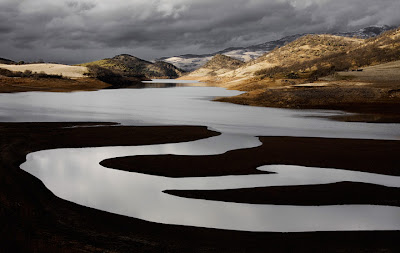
Meandering Lake Bed

Without relationship a photograph remains in a sense, two dimensional. With relationship there is always the possibility of transformation, creating more than the sum of the parts.

Filed Under: Featured Photographer, Photography Journal

Getting Our Images To Match Our Vision

November 15, 2007 by Sean Bagshaw Leave a Comment

Getting Our Images To Match Our Vision
Donna, a fellow photography enthusiast recently emailed me for some suggestions on two of her photos. Both photos clearly show a strong sense of purpose and concept, but she felt that the results did not match what she envisioned when she took them. Her questions reminded me of my own struggles to create images that live up to my vision, percpetion and experience. I thought the content of our diologue might prove helpful to other photographers who are inevitably confronted with the same challenges.
Hi Sean,
I couldn’t resist sending you a couple of photos that I have taken recently. I am learning to try to see things from a different perspective.

donna1

The first one is so you can tell me how I could have made it better. It was such an interesting contrast. The bright autumn tree standing at the far edge of the old, subdued cemetery. I was using my little Fuji and it just doesn’t do as well with dim light. I took some shots up closer to the tree, but I like this one best. It just didn’t quite come off as I had hoped.

donna2

The other is by the Lithia fountain in the park. It was shot hastily when I was there with guests. I wish you had been with me on both occasions, I think you would have come up with some really good versions of what I was attempting.Thanks for your help.

Donna

Hi Donna,

I see what you are going for with both shots and both are very worthy subjects. You obviously have an eye for elements that make an interesting image. In the first there is the juxtaposition of color and mood, and a sense of perspective that draws the eye along the headstones, through the cemetery to the orange tree. In the second I can almost feel the warm glowing light transmitting through the trees and bathing the autumn scene in soft, magical tones.

I think you did particularly well with both of these images for the circumstances. There are a couple of composition choices that I might have made differently, but that is hard to say without actually being there. For example, in the cemetery image, it feels like there is too much empty space in the lower left corner. My instinct would be to move a bit and to adjust the composition, but then the headstones might not line up or the tree might lose its central focus. It is hard to know without being there.

I think most of what isn’t meeting your expectations in these images are functions of lighting, atmosphere, equipment, technique and post processing. The same cemetery shot taken at sunrise on a misty morning, with warm light casting long rays and shadows across the scene and lighting the tree would give it some of the drama you were perhaps feeling when you were there. A dense foggy day would give another mood, but also add to the image.

I have made many trips to, and shot hundreds of photos of, the Rogue Gorge in a variety of conditions. I was never happy with a single photo, even though I felt there was something there worth capturing. So, I kept going back. Finally I happened to be there on an amazing morning last month when the elements all came together and I made a photo that captured something of what I had been visualizing. It took me five years to get that photo and I will probably never again be able to get such a shot (although there is always the chance I’ll experience something different but just as good). I really can’t overstress the value of timing, perseverance and luck in outdoor photography.

Crimson Gorge

The equipment, techniques and post processing used in creating a photo also have a great deal to do with getting a shot to match your vision. The same Rogue Gorge shot wouldn’t have been possible with my handheld pocket camera. I was using a camera with a large, high resolution sensor and a high quality lens. The exposure lasted for several seconds so I was shooting on a tripod. I used a polarizing filter to help cut the glare off the water and the wet rocks and a graduated filter to try to hold back the exposure of the sky. I also took two different exposures and blended them in Photoshop because the sky was so much brighter than the dark foreground that the camera couldn’t record the entire range of light in one shot even with the graduated filter. All told, including learning the techniques, I may have spent hundreds of hours creating that one shot.

So, I guess what I’m getting at here is that I think you are completely on the right track with your photos. Keep looking, seeing and photographing things that get your attention when you find them. This is how you develop your personal vision. I think developing that vision is the most important step, but it is only one step in getting your photos to match the vision. The other steps are a little harder to pin down. Learning the camera and processing techniques takes time and practice, getting the equipment takes money and finding the right conditions takes perseverance, patience and luck. In the end, however, it is the vision that matters the most. The best part is you don’t even need a camera to explore your vision. I’m always visualizing photos in my mind, as I drive or walk down the street. I often hike through the woods without taking photos, instead holding up my fingers to help me frame and visualize my “virtual photographs”.

I think every photographer is constantly struggling to create photos that best express his or her inward impression of the experiences he or she has with the surroundings, but I don’t think anyone fully achieves that. I’m content knowing that my images are incrementally getting closer to my vision, but that I’m not in any danger of putting away my camera because I have done all there is to do.

Best,

Sean

Filed Under: Digital Photography Tips, Photography Journal

Overcoming Public Perception In The Digital Photography Age

October 24, 2007 by Sean Bagshaw Leave a Comment

Overcoming Public Perception In The Digital Photography Age

In a recent discussion with a friend of mine who owns an art gallery, and is herself a photographer, she confided that she finds it much more difficult to sell photography to collectors than other types of art. I attribute this phenomenon, in part, to photography’s history as a documentary tool and, in part, to the public perception that it is a product of technology, not a skill of the body and mind. Now that cameras are ubiquitous, there may also be the impression that, while not everyone can paint or sculpt, anyone can take a photograph.
In the last decade digital technology has completely revolutionized photography, not only making it possible for more people to easily and economically shoot, print and electronically share images, but also for art photographers to access a whole range of creative tools that were previously expensive, required specialized equipment or were not even possible. And yet, the new creative possibilities seem to have only decreased photography’s artistic value in the eye of some of the public. In fact, digital photography may now fall into a new category in the public view that is separate from and, for some people, lesser than, traditional film photography.

Through my own experience and conversations with professional art photographers and gallery owners, I have noticed a perspective that troubles me. With increasing regularity, people confronted with a stunning photograph that they clearly find engaging and pleasing are compelled to ask if it is a digital image, and if so, what’s been done to it. The general perception that seems to be emerging is that film photographs are more valuable as art than digital photographs. Additionally, digital photographs that have been digitally processed in any way often are given the least artistic value despite the fact that nearly all digital images are processed to some extent either in the camera or later on. I attribute this attitude, once again, to the technology involved and the access the general public has to it. Film photography is now seen as something a bit more archaic and requiring a set of skills not readily available to just anyone, while digital photography can be done by anyone with a cell phone camera. In addition, some would think that since digital processing or enhancing an image requires even more technology, it therefore requires less skill. With the use of Photoshop, people perceive that anyone willing to spend the time on a computer can turn any digital snap shot into a work of art. I also sense that the viewing public is wary of digitally processed images because of the potential to add, remove, drastically alter or completely fabricate the content of an image. It is accepted that a painting is simply a portrayal of the artist’s vision and not necessarily reality. In many styles of abstract painting the artist is intentionally trying to get away from reality. However, people tend to want their photography to be “real”, although real is very hard to define in any visual medium.

Computer technology certainly has enhanced the ability to do all sorts of interesting things, combining components of various images, adding textures, modifying colors and even entirely and virtually generating an image. However, even though I greatly admire and appreciate this as a completely valid art form, I’m inclined to call this type of art photo illustration or digital illustration, not pure photography. The knowledge that such manipulations are possible may partly be to blame for the public’s paranoia that any visually captivating digital image must have been created in this way. However, I strongly believe that digital photography that doesn’t require these techniques is equal to traditional photography.
I would like to think that with some education, the art viewing public can learn to have a much greater appreciation for the techniques, skill, craft, creativity and mastery required to produce fine photography, whether it is film or digital. Like painters, true photography masters spend years developing their eye, style and technique and they both have the goal of creating an image that communicates an idea or emotion, defines an element of design or embodies the personal vision of a scene. Photographers, like painters, use a variety of tools and techniques to best achieve this goal. Some of these are done in the camera at the time the photo is taken, while others are performed later in the process, but all require a level of competence and ability not possessed by the unpracticed. Many photographers spend days, weeks or years waiting for the right combination of elements to come together in a photograph, and even the masters may only be able to create a few truly great photos in their career.

The public does appear to accept the darkroom processing of black and white film, even though the skill isn’t necessarily understood or properly appreciated. I have yet to hear someone ask, “how has this been altered”, or “is that what the scene really looked like” in regard to a black and white darkroom print, but these are the most common questions asked of digital photos. However, a great black and white photo wouldn’t be nearly as great without superb darkroom skills and creative techniques. Ansel Adams is an obvious and overused example, but many people don’t realize just how much time he spent working on each of his famous images in the darkroom to get them to convey his vision the way he intended. Earlier in his career he was often frustrated by the lack of skill and technology needed to create a print that matched his vision. Much later he went back and remastered many images using new techniques and improved skill. I attended a show of his work that exhibited some of his original prints side by side with the remastered ones. There was no doubt in my mind that the latter photos were better and I didn’t hear anyone complaining that the remastered images were products of technology, not a sign of his matured mastery.

digital before
digital after

I would like to see digital processing achieve the same level of acceptance and respect as darkroom processing and for fine digital photography to rise above its “anyone with a camera could do that” reputation. I spend a lot of time carefully composing what I hope are visually captivating images, searching out exquisite light and using my knowledge of the physics of photography to get as much quality and detail from my equipment as possible. However, similar to a great black and white film print, the job is not done when I press the button. A digital sensor does not see in the way a human does, with mental filters of emotion, perception, context and experience. A raw digital image can be very flat and lifeless. Not unlike the traditional photographer, nearly every image I take requires some degree of processing using software, such as Photoshop, in my computer or “digital darkroom”. My goal is to get each image to adequately express my personal vision. Four different photographers will create four different photographs from the same location and time. This is partly due to where they decide to point the camera, but it is also due to the fact that each one of them experiences the scene differently depending on mood, perception, personality and prior experience. The digital darkroom is one of the most important tools for bringing out this individual and personal vision.

Unless I’m intentionally trying to create a photo illustration or composite, I do not alter or significantly manipulate the content of a photo. I do, however, regularly use technique and craft to adjust the contrast, correct the color, enhance or tone down saturation and vary luminosity in my images. These are very painstaking steps in the processing of an image in an attempt to bring out what I saw, felt and experienced at the time I took it. Some images require only a few seconds of my time to bring them to this state, while others I work on and struggle with for hours or days. Some images never achieve what I had hoped. Like Ansel Adams, as I learn new techniques or get better at old ones, I often go back and rework images in the hopes of making them better. My purpose is rarely to deceive or mislead (unless it is inherent in the natural composition or light), but rather to create and enlighten. The processes that I use are not a short cut and they are not an example of technology doing the work. Like a painter, or a film photographer, I use tools, as well as long practiced skills and techniques to achieve my intended final piece. Photoshop is a critical and necessary tool.

It may just be a matter of time, but my hope is that one day digital photography will be respected for the skill ,craft and mastery required to do it well in the same way that fine art film photography and other forms of art are. I look forward to a time when a digitial photo is appreciated for its content and the skill involved in creating it instead of questioned suspiciously, as if the photographer had somehow faked his ability to create something pleasing, engaging, controverial or interesting to look at and enjoy.

Filed Under: Digital Image Editing Tips, Photography Business, Photography Journal

Fun Photography at the Montague Balloon Fair

October 24, 2007 by Sean Bagshaw Leave a Comment

Fun Photography at the Montague Balloon Fair
balloon fair

A year ago I was traveling through the southwest right about the time of the world famous Albuquerque International Balloon Festival. With as many as 700 colorful hot air balloons taking to the skies it is a big attraction for photographers and I was tempted to add it to my itinerary. However, I had also heard about the crowds, traffic jams, shortage of places to stay and all the other headaches you would expect with any event as big and widely known. I decided to pass.

balloon fair

This year I found a great substitute in the Montague Rotary Balloon Fair in northern California the third week of September. What it lacks in sheer volume of balloons it more than makes up for with a great setting in the Mt. Shasta Valley, friendly organizers and balloon teams, easy access, on sight camping, plentiful parking and minimal crowds. Spectators have access to the launching field and can walk among the balloons during the inflation and launch process, making this an easy photo op for anyone with a camera. Spectators can even volunteer to crew for a balloon team, helping them to inflate and launch as well as chase, land and pack their balloons.

balloon fair

This year about 30 balloons took part in the fair. While a far cry from 700, 30 balloons is still an impressive site and makes for an exhilarating visual and photographic experience. Montague is about seven miles east of Yreka, just off of Interstate 5 in northern California. Montague is less than an hour from where I live in southern Oregon. I was so enthralled photographing the balloons on Friday morning that I returned on Saturday and Sunday as well. I recommend this event to anyone, especially families.

balloon fair

For more information you can visit the balloon fair website at http://clubs.district5110.org/shastavalley/balloonfair/

Filed Under: Past Events, Photography Journal, Photography Travel Journal

Southern Oregon's Best Fall Color

October 22, 2007 by Sean Bagshaw 8 Comments

Southern Oregon's Best Fall Color
Rogue River Fall Color

Compared to the aspen groves in the Rockies or the large deciduous forests in the north east, Oregon isn’t particularly known for its fall color. However, just because it doesn’t blanket the countryside doesn’t mean that pockets of great fall color don’t exist in Oregon. Many towns have planted maple, ash, birch, alder and elm trees, creating capsules of reds, yellows and oranges within city limits. There are also numerous parks and Asian gardens around the state that are brilliant in the fall. One of the best places to search out fall color is along the banks of mountain streams, lakes and rivers.

Rogue River Fall Color

In southern Oregon, one of the best shows of fall flare is along the upper Rogue River between Prospect and Union Creek early in the month of October. The conifer forest that lines Hwy. 62 is full of dogwood which turns pleasant but subdued hues of red and orange. The real show is to be found right on the river banks where the vine maples can make it look like the forest is on fire. The Rogue River Trail follows the Rogue River along this entire section and makes for excellent hiking in the fall when the temperatures are cool and the air is crispy. However, keep in mind that fall color season is also deer hunting season, so wear bright colors, announce yourself as you hike and be prepared to see camouflaged sportsmen toting rifles coming out of the underbrush.

Rogue River Fall Color

To get to the upper Rogue River, take Hwy. 62 from Medford. You can also get there coming the other way on Hwy. 62 from Fort Klamath or on Hwy 138 which runs between Roseburg and Hwy 97. Accessing the trail is easy. Several side roads along Hwy. 62 between Prospect and Union Creek provide access to the river and the trail. Traveling from Prospect the river is off the left side of the highway. The roads that will take you down to the river are River Bridge, Woodruff Bridge and Natural Bridge. On each of these roads the river is two miles or less from hwy. 62. Where each road meets the river there is a parking area and access to the Rogue River Trail. The distance on the trail between each of the three roads is about four miles. The distance from River Bridge all the way up to Union Creek is between 15 and 20 miles, but it is very easy to day hike shorter sections of trail. For shorter hikes or with a single car it is great to make one or two mile, out-and-back treks. In this way it is possible to hike a section of trail from each of the bridges in a single day, covering a fair portion of the river. With two cars you can also leave a shuttle and hike point to point as far as you like.The trail is mostly flat as it follows the river and never strays far from the river bank.

Rogue River Fall Color

My favorite section of the trail is upstream from River Bridge where it ducks through glowing tunnels of vine maple and stands of large fir trees. Along sections that have a view up and down the river both banks are fringed with reds and oranges bright enough to hurt your eyes. After about two and a half miles you arrive at Takelma Gorge. At more than a mile long and, in places, only 20 feet wide and 80 feet deep, the gorge is a fantastic geological feature. Take care along this section. The trail follows the rim of the gorge, there are no railings or signs and many of the rocks are moss covered and slick. A fall into the rapids below would be nearly impossible to survive. In most places the water carved canyon is so deep and narrow that it isn’t possible to see down to the bottom. Along the gorge itself the fall color isn’t particularly dense, but there are some great patches close by.

One of the most visited spots on the river is Natural Bridge. As the name implies, the entire river flows through an underground lava tube which forms a natural bridge. Hundreds of thousands of gallons of water per minute disappear into a large hole in the riverbed and then come bursting from the rock again a hundred feet or so down stream. There walls of the canyon at Natural Bridge are mostly basalt rock, so there aren’t many trees with color growing near the river, but a short hike upstream or downstream will reveal more crimson and yellow lined banks.

Rogue River Fall Color

Just past Union Creek is the Rogue River Gorge viewing area. While not as long or as deep as Takelma Gorge, the Rogue River Gorge is very dramatic, with steep basalt cliffs and a series of waterfalls entering the canyon where the terrain drops radically. The parking for the Rogue River Gorge is only a few feet off the highway and there are paved paths, railings and viewing platforms, making it an easy stop even if you are just passing through.

Rogue River Fall Color

Past Union Creek toward Diamond Lake there is a pretty good gain in elevation and the color producing deciduous trees mostly give way to high altitude confiers and the color becomes much less intense. However, the hiking is still great and the river becomes more rugged and cascading. National Creek Falls is worth the short drive back into the woods and Muir falls makes a great five mile round trip hike.

Filed Under: Adventure Journal, Photography Journal

Photographing A Lunar Eclipse

September 5, 2007 by Sean Bagshaw 9 Comments

Photographing A Lunar Eclipse

Since the beginning of human existence night sky events have inspired in us wonder, awe, inquiry, fear and superstition. Solar and lunar eclipses are particularly inspiring because they affect the largest and most important objects in the sky, the Sun and Moon. Armed with some basic knowledge they also provide us with a real-time opportunity to observe and understand the motion, relationships and interactions among the Earth, Sun and Moon. Solar eclipses (the Earth passing through the Moon’s shadow) happen less frequently than lunar eclipses (the Moon passing through the Earth’s shadow) and, due to the harmful effects of staring at the sun, are also harder to observe directly. Lunar eclipses occur about twice a year and, other than happening in the dark, are easy and safe to view. As such, they provide an excellent photography opportunity, one that can yield great documentation of a cosmological event and, with a little creative vision, compelling artistic imagery.

On August 28, 2007 a total lunar eclipse was visible from the western portion of North America. With clear skies and summer temperatures in the forecast a photographer friend and I decided to take the opportunity to try our hand at photographing the event. Even though lunar eclipses are common on a cosmic scale, they are rare enough in the course of a photographer’s career that there might only be a few chances to be in the right place at the right time to photograph one. Neither my friend nor I had photographed one before, so a little research and education was in order. There are many good sources of information on lunar eclipses on the Web. The following two links were particularly helpful in preparing to capture the eclipse on camera.

NASA’s Eclipse Info Site

The eclipse photo site of the famed “Mr. Eclipse”

A lunar eclipse only occurs during a full moon because that is when the Moon is situated directly opposite the Sun with the Earth in the middle allowing the Earth to cast its shadow on the Moon. An eclipse doesn’t occur with every full moon because the Earth casts a shadow along a plane in line with the Sun, but the Moon’s orbit only crosses some portion of that plane two to four times per year. The rest of the time the full moon is either above or below the plane of the Earth’s shadow and no eclipse occurs. Additionally, a full moon can only be seen at night due to its location opposite the sun. This means that even if an eclipse happens, you must be on the night side of the Earth to observe it. The day side of the Earth faces the Sun and faces away from the full moon, so people on the day side of the Earth during an eclipse will not be able to see it. The NASA link above provides some excellent diagrams showing how this works.

Photographing a lunar eclipse presents some challenges, but due to the slow speed and predictable nature, it is possible to prepare before hand and do a lot of trial and error while photographing one. The first challenge is being in the right place at the right time. Some enthusiasts will travel to a place on the planet where it is known an eclipse will be visible. Others, like myself, wait until an eclipse will be visible where they live. Weather is another challenge. If the sky is cloud covered the eclipse will not be visible. Many eclipses occur late in the night and getting out of bed can be a particular challenge for some. Also, a total eclipse can last up to several hours from start to finish, so some commitment and patience is required to photograph the entire thing.

Photographically speaking there are several considerations to take into account when preparing to photograph a lunar eclipse. To see the surface of the moon with a great amount of detail, a large telephoto lens is necessary. Lenses in the range of 300mm to 500mm will enlarge the moon enough for sufficient detail, but even larger lenses or small telescopes fitted for photography are needed to get a full frame image of the moon. A wider angle lens can be used with a film camera to take multiple exposures of the moon on a single piece of film. If exposures are taken every ten minutes or so, the final image will show the actual arc of the moon in intervals throughout the period of the eclipse. Most digital cameras aren’t able to take multiple exposures in one image, so to get this affect, individual exposures of the moon must be taken and then placed together in an arc in a computer using image editing software like Photoshop. For my image of the full eclipse arc I took photographs about every 10 minutes during the five hour duration of the eclipse. Then I selected 20 photos that I felt made a good sequence. In Photoshop I cut the moon out of each imaged, sized them and placed them in an arc on a black background. Then I superimposed the moon arc onto a foreground image that I took from the same location on the same night. The final image does not show the actual path of the moon in the sky, but does give a pleasing and somewhat accurate representation of the event. I chose to include the pre-dawn colors on the horizon for artistic affect even though a full moon is actually located directly opposite the rising sun.

Regardless of whether you want to take close-ups or a wide angle, multiple exposure image, you will need to be prepared to adjust the length of exposure as the eclipse progresses. A fully lit full moon is very bright and has the same exposure requirements as sunlight on rock (since that’s what it is). But, as the shadow passes over the moon and the light shifts from direct light to indirect light, the exposure times will lengthen considerably. For the completely lit full moon my exposure times were 1/400 of a second at f/5.6 with an ISO setting of 100. As the Moon passed further into the Earth’s shadow the exposure times became longer. I bracketed my exposures on almost every image to make sure that I had at least one image in which the moon was properly exposed. Eventually I reached an exposure time of one second. From calculations made before the shoot (with help from THIS website), I knew that with a 400mm lens, any exposure time longer than one second would not be fast enough to stop the Moon’s motion in the sky, resulting in a blurry image. To maintain my one second maximum exposure time I began to adjust the ISO instead of my shutter speed to offset the drop in light. In digital cameras, ISO is the measure of how sensitive the sensor is to light. Higher settings are more sensitive so they would allow me to maintain my one second exposure time, even though the Moon kept getting darker. However, higher ISO settings also introduce noise into a digital image, so I wanted to keep the ISO as low as possible to minimize noise. When the Moon was completely within the Earth’s umbral shadow (totality) my exposure was 1 second @ f/5.6 with an ISO setting of 640. Then as the Moon passed back out of the shadow I reversed what I did during the first half of the eclipse.

Many people have asked me about the color of the Moon when it is in totality. This particular eclipse featured a beautiful brick orange/red color. The color is determined by the way light is refracted through particles and clouds in the Earth’s atmosphere as it curves around the surface of the Earth. Depending on cloud cover, pollution, fires and recent volcanic activity, the color of an eclipsed moon can vary from light orange to brick red to dark brown. The difference in brightness between the lit and shadowed portions of the Moon during partial eclipse is so great that a camera can not “see” both the dark and light side at the same time. However, the human eye can, so when we observe an eclipse we see the reddish shadow advancing across the bright face of the moon but we see detail in all areas. What a camera sees is either the red shadowed side with the light side completely white, or the light side with the shadowed side completely black. By blending two different exposures of the moon in Photoshop, I was able to create an image that shows detail in both the shadowed and lit portions of the Moon during partial eclipse, much closer to the way it would appear the human eye.

I hope you have enjoyed viewing my lunar eclipse photography and found the information on eclipses and how to photograph them helpful. My lunar eclipse photos are available as signed art prints as well as more affordable special editon poster prints. If you are interested in purchasing a signed art print or a special edition poster, please contact me HERE.

Filed Under: Digital Image Editing Tips, Digital Photography Tips, Photography Journal

Wedding Season

August 10, 2007 by Sean Bagshaw 4 Comments

Wedding Season

Wedding photography may be one of the most demanding and difficult types of photography to do well. As a landscape, nature and architecture photographer I am accustomed to having my subjects stand still while I compose and wait for the right light. I can even come back and shoot a scene as many times I like. Normally I wouldn’t write about a type of photography that I do not specialize in, but recent experience has given me enough respect and admiration for wedding photography as a skill and art form that I thought I would give it a nod.

wedding

The currently popular “photojournalistic” style of wedding photography requires that the photographer be able to shoot on the fly in a rapidly changing environment, often with difficult lighting, and capture all the emotion and energy of the event. In addition this all must be done without any second takes or “do-overs” and while the photographer remains as unobtrusive as possible. A wedding photographer must also be a master communicator and have impeccable people skills to be able to coordinate with the wedding planner, caterer, wedding official, wedding party, guests and family members. It can be a real puzzle to get everyone organized for group shots while not disrupting the wedding schedule or missing any of the highlights, such as cutting the cake, the first dance or the bouquet toss. The best wedding photographers do this all seamlessly, putting everyone at ease while they produce images that are works of art rather than just simple snap-shot documents of the event, and they do it once or twice a week throughout the busy wedding season.

wedding

I don’t consider myself a wedding photographer by any stretch of the imagination. I don’t think I have the fortitude or the necessary ability to multi-task. However, I like the photographic challenges and the potential for catching some high energy, emotional and sentimental moments. If nothing else, shooting a wedding is like high intensity sprint training for almost any other type of photography. So, once or twice a year I do agree to shoot a wedding, usually for people I know and who ask me really nicely. When I do shoot a wedding I put everything I have into it and strive to give the couple images that are unique, emotional, candid and artistic. I like to spend the entire day following the events as they unfold so that I have a sense of the energy and atmosphere that is unique to each wedding and couple. Famous Ashland photographer, Chris Briscoe, likes to say that he only needs two things to shoot a great wedding; light and time.

wedding

The quality of wedding photographs is largely a function of the photographer’s artistic vision and his ability to read people and be in the right place at the right time. There are also very demanding technical elements that must be dealt with, especially in the age of digital photography. When I shoot in the field I can be fairly casual about my equipment and techniques. I almost always have time to rummage through my pack for batteries, memory cards and lenses. I often carry my entire pack of gear with me just to be sure I have everything. During a typical filed session I might shoot 50 to 100 shots before a break during which flash cards can be downloaded and batteries can be recharged.

groomsmen

For a wedding I take a completely different approach. My goal is to have my rig trimmed down to only the essentials that I can easily carry or fit in my pockets. Trying to be fast, flexible and unobtrusive while lugging a big photo pack just doesn’t work. Before I begin shooting for the day I scout an out of the way place to set up my “base camp”. This is where I leave all the gear that isn’t essential and set up my laptop so that it is ready for downloading. Into my pockets go all my flash cards (formatted and ready to shoot), several fully charged batteries, lens cloth, extra flash batteries and an extra lens if needed.

wedding dance

I usually start the day with my Canon EOS 5D camera body with a 28-135mm image stabilized lens and my Canon 450 speedlight flash. I can go back to my “base camp” to switch to wide angle or telephoto lenses as needed. When the actual ceremony begins I also rig up my Canon EOS 20D with a 70-200mm lens. This gives me the ability to switch between wider shots and close-ups very quickly without needing to change lenses.

bride and groom

I find running two bodies simultaneously to be extremely handy during the ceremony when things are happening quickly and will not stop to wait for me to mess with my gear. It also means I have a back up camera on my person if one of the cameras malfunctions. After the ceremony I usually go back to shooting with just my primary camera and switching lenses as needed. As flash cards are filled up I visit my “base camp” and download them to my laptop. I have devised a very high tech way to ensure that I know which memory cards have images that need to be downloaded and which cards are ready to erase and be used again. My high tech solution is to put all cards waiting for download in my left pocket and cards ready for use in my right pocket.

bridesmaids

Weddings have become a massive industry in the US. Americans now spend more money on weddings each year than the entire GDP of many small countries. As weddings have become more elaborate photographers have also become more creative in their approach and are producing some very artistic and high quality images. My hat is off to anyone who does this work well, taking it in new directions and raising the level of artistry and creativity.

flower girls

Filed Under: Photography Journal

Two photos selected for 2007 Art Wolfe EPI Competition

May 28, 2007 by Sean Bagshaw Leave a Comment

Two photos selected for 2007 Art Wolfe EPI Competition

EPI

This year, two of my photos were selected as part of the Art Wolfe Environmental Photography Invitational (EPI) competition. Darkeness Bleeds Daylight and Winter Shore were both selected in the Landscape Category by the panel of judges with Winter Shore earning the “Highly Commended” honor. Over 1400 images were narrowed down to just 100 images by 69 photographers. Large prints of all the winning images are on exhibit in the Art Wolfe Gallery in Seattle from May 18 to June 30. To view this year’s winning EPI photos you can go to www.epinvitational.com.

The Environmental Photography Invitational is an event for the advancement of photography as a unique medium capable of bringing awareness and preservation to our environment through art. The Environmental Photography Invitational is a premier North American photography event. The selected prints will celebrate the world’s diversity along with the creativity and originality of photographers. EPI is an annual community event involving foundations, sponsors, politicians, and photographers to promote environmental awareness.

Darkness Bleeds Daylight

Filed Under: Past Events, Photography Journal

Photo Journal: Moonrise Over Mt. Shasta

May 21, 2007 by Sean Bagshaw Leave a Comment

Photo Journal: Moonrise Over Mt. Shasta

Even though Mt. Shasta is only 60 miles from my home, I find it difficult to photograph, and as a result I have very few photos of it that I like. As the full moon approached in early May this year I thought I might be able to get a dramatic photo of it with the meeting of three natural events, the near full moon rising over the mountain, lupine and other wildflowers growing in the grasslands at the mountain’s base and some great sunset light to set the mood.

Shasta

In this line of work, things rarely go as planned or hoped. The flowers and the moon were there on cue, but the sky was clear and less than dramatic. Also, the wind in the grassland was blowing enough to create entirely too much motion in the foreground flowers. In addition, the spot I needed to be in to line up the moon behind the mountain also meant the sun was directly at my back, creating very flat front lighting on all my subjects. I took several shots without really finding a good composition and not being very excited by the plain evening light. I also found there wasn’t enough light to keep the entire scene in focus while maintaining enough shutter speed to freeze the movement of the flowers in the foreground. In the end, blurred flowers, an out of focus mountain and an uninteresting sky kept me from taking any keepers.

As the light faded I packed up and started back to the car. As I hiked over the top of a hill past a patch of indian paintbrush I noticed that the mountain was glowing in the reflected twilight and the sky had become much darker and moody. The only problem was that the wind was still blowing and the forground held very little light. A full five second exposure would now be needed to get the correct exposure and still keep everything in focus. I decided that might as well try experimenting with some fill flash to see if I could illuminate the foreground.

I knew that if my flash was mounted on my camera I would have the same flat, front light issue that I had been having with the sun before it set. I also knew that at close range the shadows cast would look very unnatural. However, with the five second exposure time I had time to trip the shutter on the camera and walk off to the side to manually fire my flash at a position and distance to create some nice, somewhat natural looking fill light. The single strobe of the flash also helped freeze the movement of the flowers caused by the wind. After several tries I was able to fine tune my approach and create the photo at the beginning of this article. It still isn’t the photo I have envisioned from this location, but it is the best photo from the session. In the end I was glad I took the time to get the camera out again and experiment a bit.

Filed Under: Photography Journal

Two Sean Bagshaw Images Honored By NANPA And LACDA

March 8, 2007 by Sean Bagshaw Leave a Comment

Two Sean Bagshaw Images Honored By NANPA And LACDA

Recently, two of my images were honored in juried photo competitions. The photos “Dark Places” and “Confetti” were both printed in the North American Nature Photographers Association (NANPA) publication called Expressions. Confetti was one of 100 showcase winning images chosen from over 3,000 photos by 418 photographers. It is also featured in the Expressions showcase on the NANPA website.

Confetti on NANPA

“Dark Places” was also just selected for the “Top 40” juried competition to be exhibited at the Los Angles Center For Digital Art (LACDA). The LACDA Gallery is locted on “gallery row” in down town LA and will run the show March 8-31.

Filed Under: Past Events, Photography Journal

« Previous Page
Next Page »

© 2026 · Sean Bagshaw Outdoor Exposure Photography